Quiz Bite

Morgan Williams is a clever guy. He’s the kind of guy who makes things happen. All the time. I am constantly amazed at the ideas he comes up with. Lots of people have great ideas. Not everyone makes them happen every time.

Not long after the earthquakes in Christchurch, Morgan set up Quickie Events, an event company to get people moving again and interacting with a landscape they may have thought had betrayed them. A series of events such as a Quickie in the Forest, a Quickie in the Quarry, Quickie on the Beach and the Quarter Pounder, which, despite the suggestiveness of their names, were family friendly and allowed people to take part in mini multi-sport events and feel successful. Instead of daunting amounts of kilometres on bikes and running, Quickie Events offered short, achievable distances and a way to move on from the shaking.

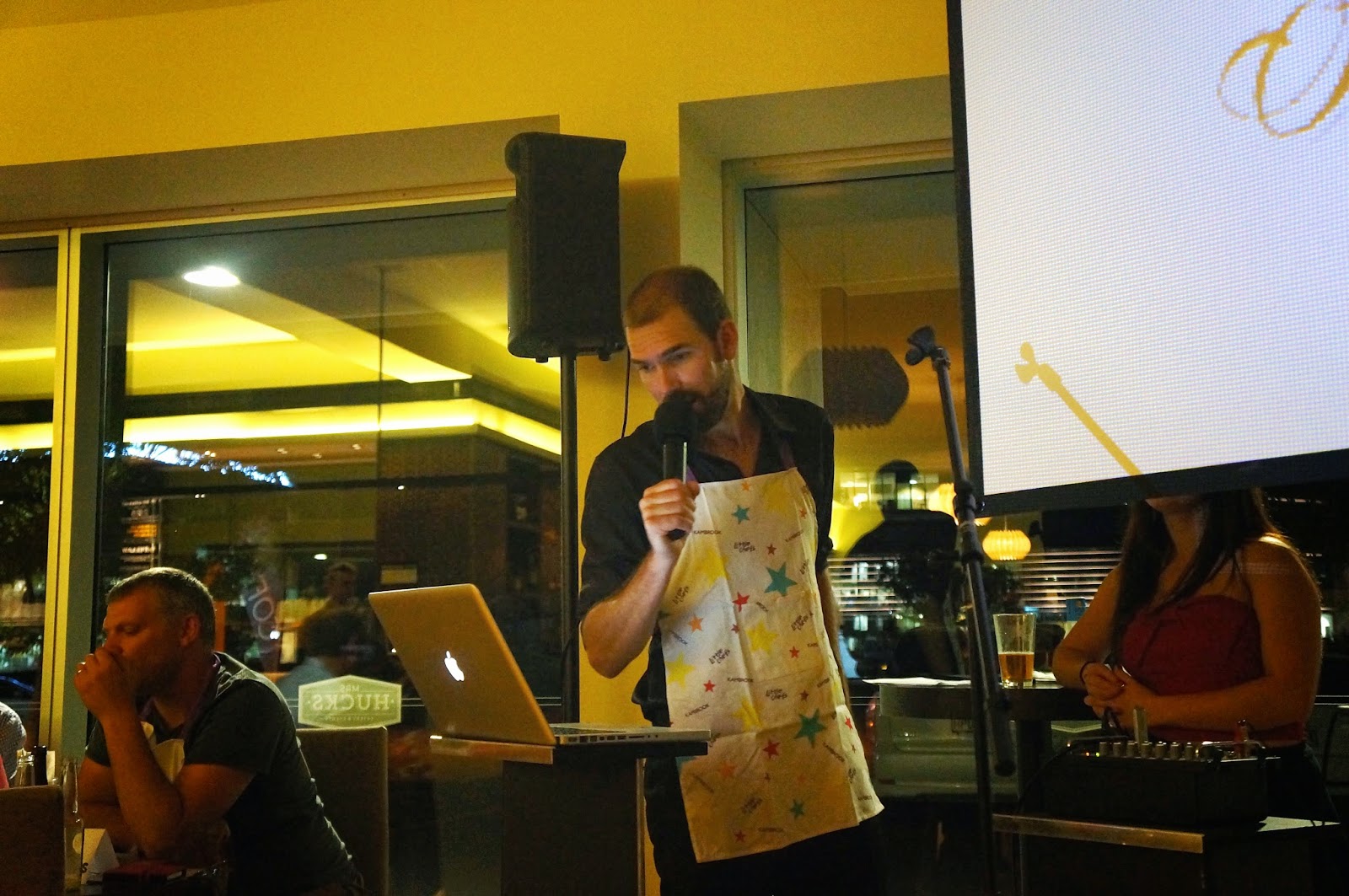
His latest idea also involves a Q and a good time. The inaugural Quiz Bite was a resounding success, sold out well before the night and resulted in a lot of happy, if perhaps also slightly-disappointed-in-their-own-lack-of-what-they-may-have-thought-was-an-incredible-culinary-knowledge people. Here read I was slightly disappointed in my lack of culinary knowledge.

Five rounds. Three involving tasting and smelling and working out just what was IN (and in one case what wasn’t in) those little pottles and slithers and morsels of entrees, mains and dessert/cheese. Two involving general food knowledge and responding to visual cues. There was also a practical bread-making challenge thrown in for good measure. I’m still not really sure what a zopf is, but there was a lot of laughing and goodness in between the furrowed brow moments.

Look out for the next one, Christchurch people. So. Good.


same, same. but different

Christchurch is home. Even if I don’t live there right now. It will always be home because I grew up there and because I know so many people there who fill me with goldenness.

It is a little uncanny to walk around your home and for it to feel so familiar and yet also so different.

I see progress every time I visit. It is slow progress for the people who deal every day with the rough roads, continuing insurance issues, and a landscape often punctuated by bright orange road cones. 

People have moved away and friendship circles have got smaller in some instances. Favourite buildings have gone. Where once there was a neighbourhood of houses and schools, now there is only parkland. The house I grew up in is no longer there. The high school I went to has been closed since the earthquakes and hasn’t yet found a new location of its own, although word is that it’s coming.
But Christchurch is home. And I love it.
Ko nga pukemaeroero oku maunga
Ko otakaro toku awa 
Ko otautahi toku whenua 
Ko Brian raua ko Trish oku matua 
Ko Jo toku ingoa

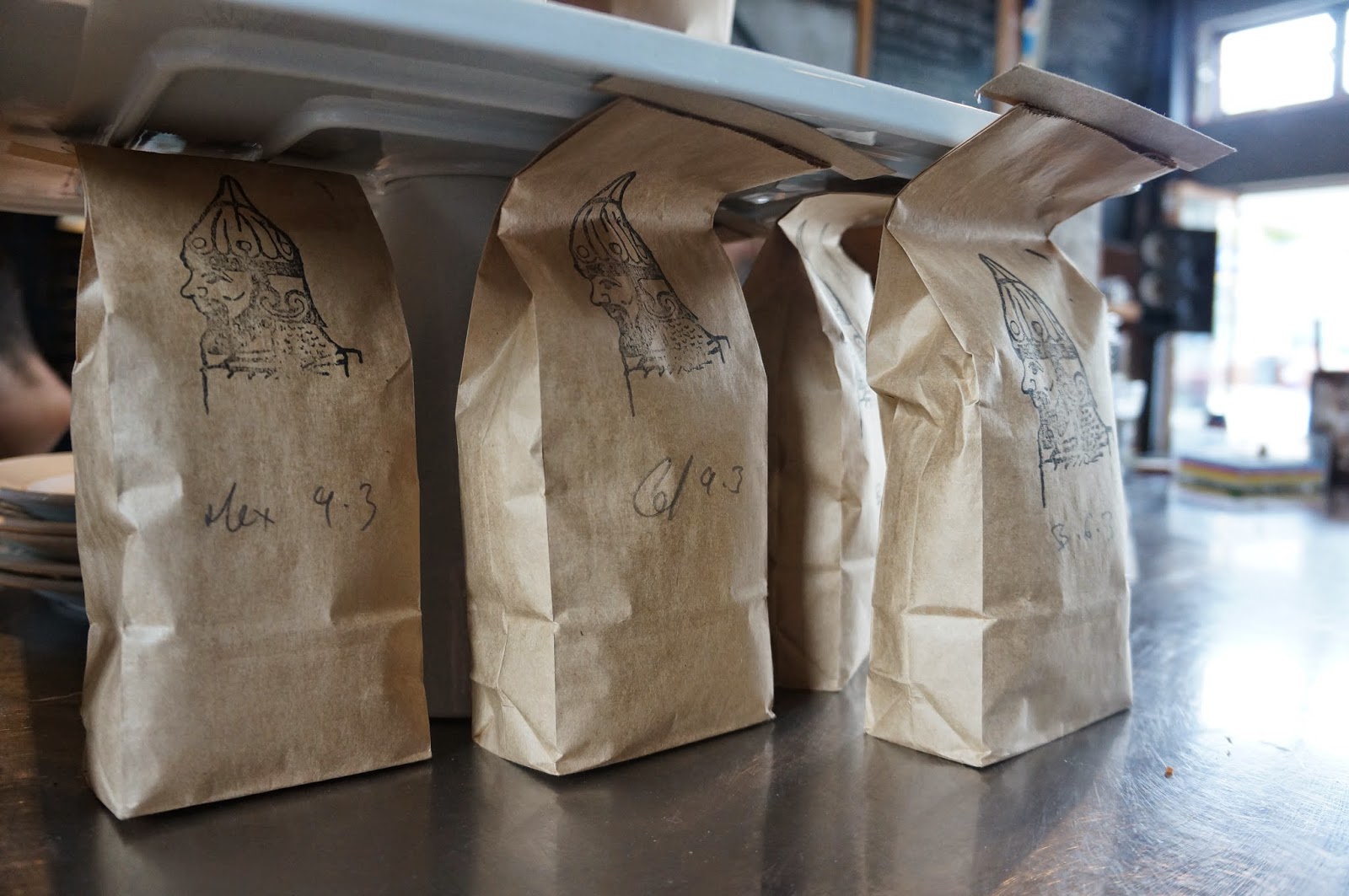
Lyttelton Coffee Company


The Lyttelton Coffee Company is like an old friend who has been away for a while but when you catch up, it’s just like old times. You pick up where you left off and feel the glow of familiarity and history.

I’ve been away and LCC had been closed until December last year for almost four years after it was badly damaged in the 2011 earthquake in Christchurch. 

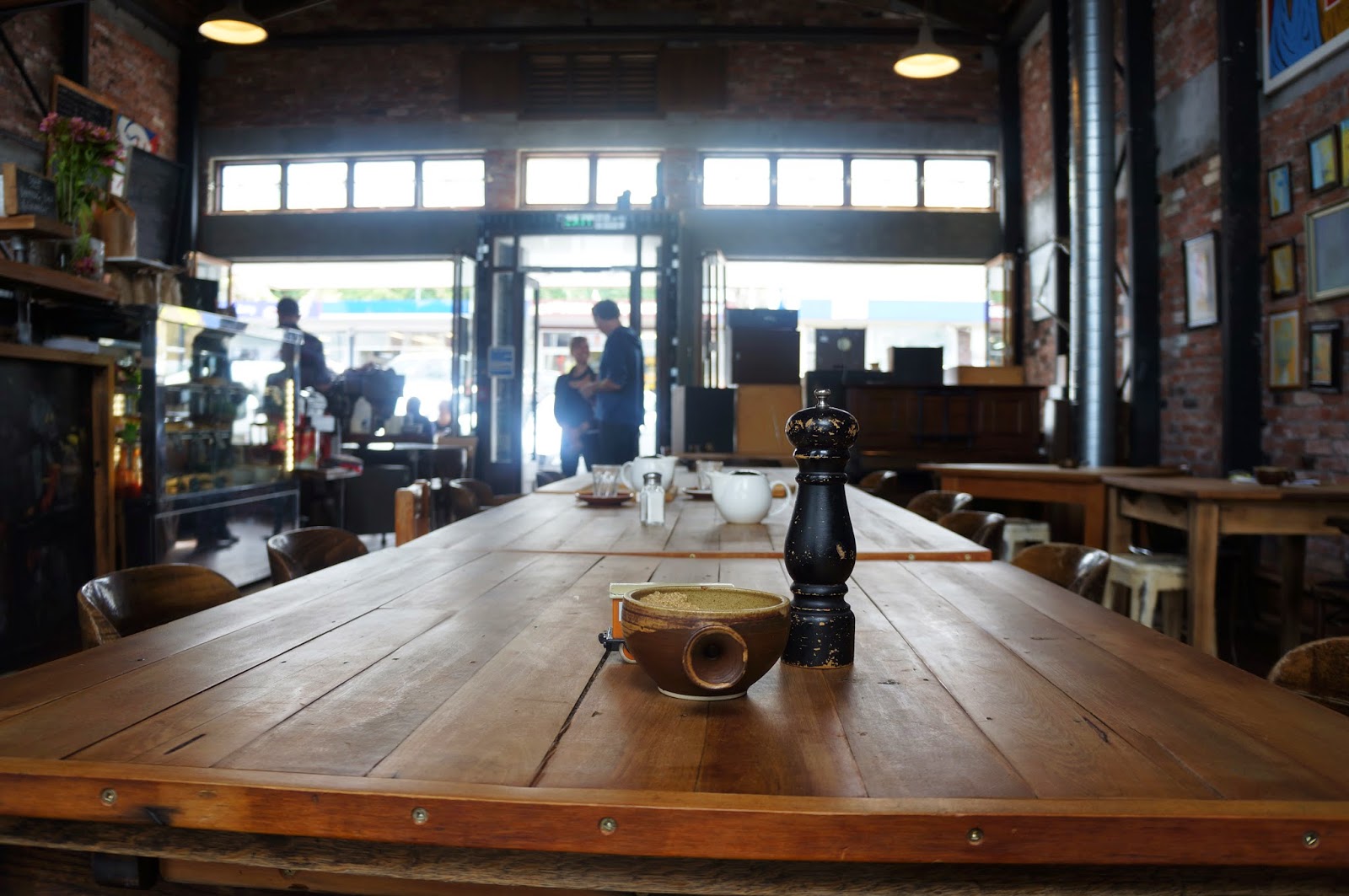
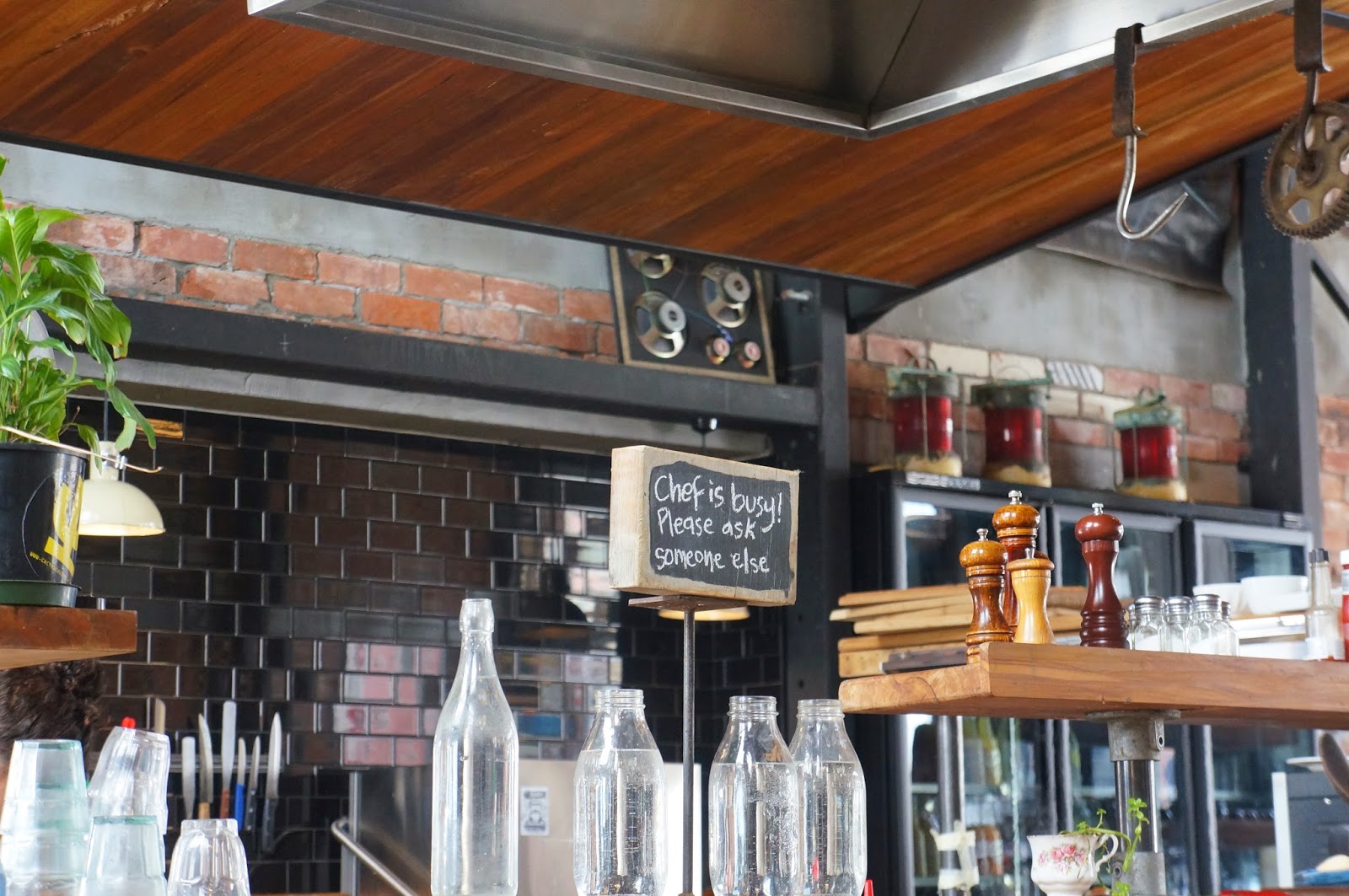
Walking in the door, it felt as though nothing had changed. Owner Stephen Mateer has done a fantastic job at rebuilding the cafe and recreating its charm, as well as strengthening and improving some aspects of the building. Industrial brick walls are easy to take for granted, but when you know that the bricks were individually salvaged, slimmed down and then pieced together again along with steel reinforcement, then the concept of a labour of love really sinks in.

A varied breakfast menu on the blackboard above the counter, a range of cabinet food served with LCC’s own great coffee and spectacular views of Lyttelton Harbour with its breathtaking landscape. What more could you want? 

when good bodies go bad

Now I preface the following with saying that I know there are people way way worse off than me and I don’t want to elicit sympathy where none is warranted. This is just my experience, as it’s unfolding, and while none of it is major stuff, the unfolding and the sum of it gives me pause.

This morning I woke up with a head cold. It’s nothing. A tingly, runny nose and a lot of sneezing. I laugh in the face of this head cold.

I actually did laugh when I realised I had it because I do feel a little as though my body is playing some kind of joke. Or it’s unhappy with me about something and it just can’t use its words.

Because, before the head cold, I had strep throat. Really great, green pus, almost abscessing, strep throat. It was awesome. I tried so hard all last weekend not to swallow. It was like a sport. A painful kind of sport where swallowing is the enemy. I am still on the penicillin. Which apparently has no power over the common cold. Horses for courses. Or something.

Before the strep throat, there was a weird earache scenario. Before that it was tonsillitis. And before that was the fifty shades of shingles which popped up out of nowhere around Christmas time and lasted and lasted.

We take our bodies for granted. And we have no idea what is going on inside them. I have a romantic idea that maybe once we were more attuned to our bodies and had more of an idea what we needed and where to get that from.

I eat pretty healthily. I go to the gym fairly often. I don’t smoke. I drink moderately. Well, why be shy, I drink really well and it’s something I have mastered. But mostly, I think I treat my body with respect. And yet I’m really not sure what it wants right now and that bothers me.

What’s more, in addition to all my other superpowers, I seem to have developed and be emitting the pheromone that attracts wasps. I have never noticed this particular ability before, but the last two weeks, they cannot leave me alone. And it’s not just fly-by checking out, it’s hovering and trying to land. It’s coming into my apartment and refusing to leave, except by force. It’s ‘following’ me all the way from the supermarket to my apartment building just now.

What does my body want from me? I feel like a metaphor I just can’t work out.

curating

Some words get out of hand.

They become overused, used in a way that no longer resembles their original use, aren’t even words at all, but text acronyms, or are just plain stupid words that get way too much airtime because someone somewhere used them with a hashtag and they became a thing.

These words generally run their course. Every year, some pretty flash and fancy pants people in the media and academia try and help some of the more ridiculous words run their course more quickly by including them in lists called The List of Banished Words. If ever a word was to feel rejected, being included on this list would be that time. Sadly, the fine work of the BBC, New York Times, Time Magazine and Lake Superior State University, are more wish lists than lists that tweeters and instagrammars actually adhere to.

There’s always hope.

The 2015 list is up and running and so far it already surpasses lists from other years in the amount of words that are so darned annoying that we want to stick our fingers in our ears and sing Shake it off maniacally to ourselves just so we can’t hear them.

What does it say about us that this list is so long?  Why are we making up so many annoying words?

Perhaps it’s a good thing. Language is evolving to meet the times and trends and in the face of certain world events and accelerated social phenomena we have emotions we just can’t express in what is currently available to us.
 
And, while I might be talking about all this in some sort of tone of superiority and disdain, I have to sheepishly admit that I’ve used some of these words myself. You know, you hear something so often, it just gets in.

I certainly have never referred to anyone as bae, the affectionate term for the person you put before anyone else, nor have I pulled out an “I can’t even” to describe a situation which the speaker can’t even comprehend, but actually sounds as though they can’t even finish a sentence. I haven’t described anyone as cra-cra or bossy (in the sense of cool).

But.

I have, sigh, pulled out foodie, polar vortex, skill set, hipster and hashtag, although with hashtag I was being ironic. These are all on the 2015 list. I’m up there with the people using the banished words. Yup. Humble pie.

But.

And here I set aside that serve of the pie to concentrate on one word that I think has completely got out of hand. It has been building for a while and it is on this year’s list.

Curate/curated.

It’s everywhere. They’re all doing it, curating this and that and trying to sound high brow.

Originally a curator was someone associated with a museum, library or archive. They had a degree in a specialised field, knew a whole lot about their particular area of content and were responsible for an institution’s collections. They would oversee the acquisition and maintenance of items in the collection and interpret these items, that is, explain their context, why they were in the collection and how they might relate to other items.

Nowadays, curate has really come to mean any act of choosing something and including it in a list, a store, a menu, a playlist. There are curated websites, like Etsy or Brainpickings, where someone else has done all the scouring the internet and found the most interesting products or articles and put them all together so you can just sit down and read. In this sense, it has replaced the term formerly known as aggregating, where software was used to pull content, particularly news reports, from a whole lot of different sources and then publishes it in one place. Curating, on the other hand, is a manual process where the most significant pieces of content for the topic and the audience are selected from everything else that is out there.

I don’t mind that use of curating. I actually kind of like it. And I understand why it is so prevalent. Currently there is a hankering for all that is artisan, done the way it used to be done, properly, with care, by hand. The manual selection of the most relevant and the best fits that way of thinking.

I don’t think that the selection of mussel dishes I tasted at the media preview of an upcoming event were curated, even though the invitation said they were. I don’t think we can curate lipsticks, cat videos, Tony Abbott memes or recipes using coconut sugar. But that’s just me.

I do think that in a world of Facebook friend lists in the several hundreds, Instagram likes and Tinder swipes, we could maybe be a little more discerning in the way we select the people we call our friends and those we discard; the information we allow ourselves to be distracted with and the information we ignore; the experiences we seek and those we overlook.

Some words get out of hand. And some could do with being taken by the hand.

Me at the museum, Tiny Ruins

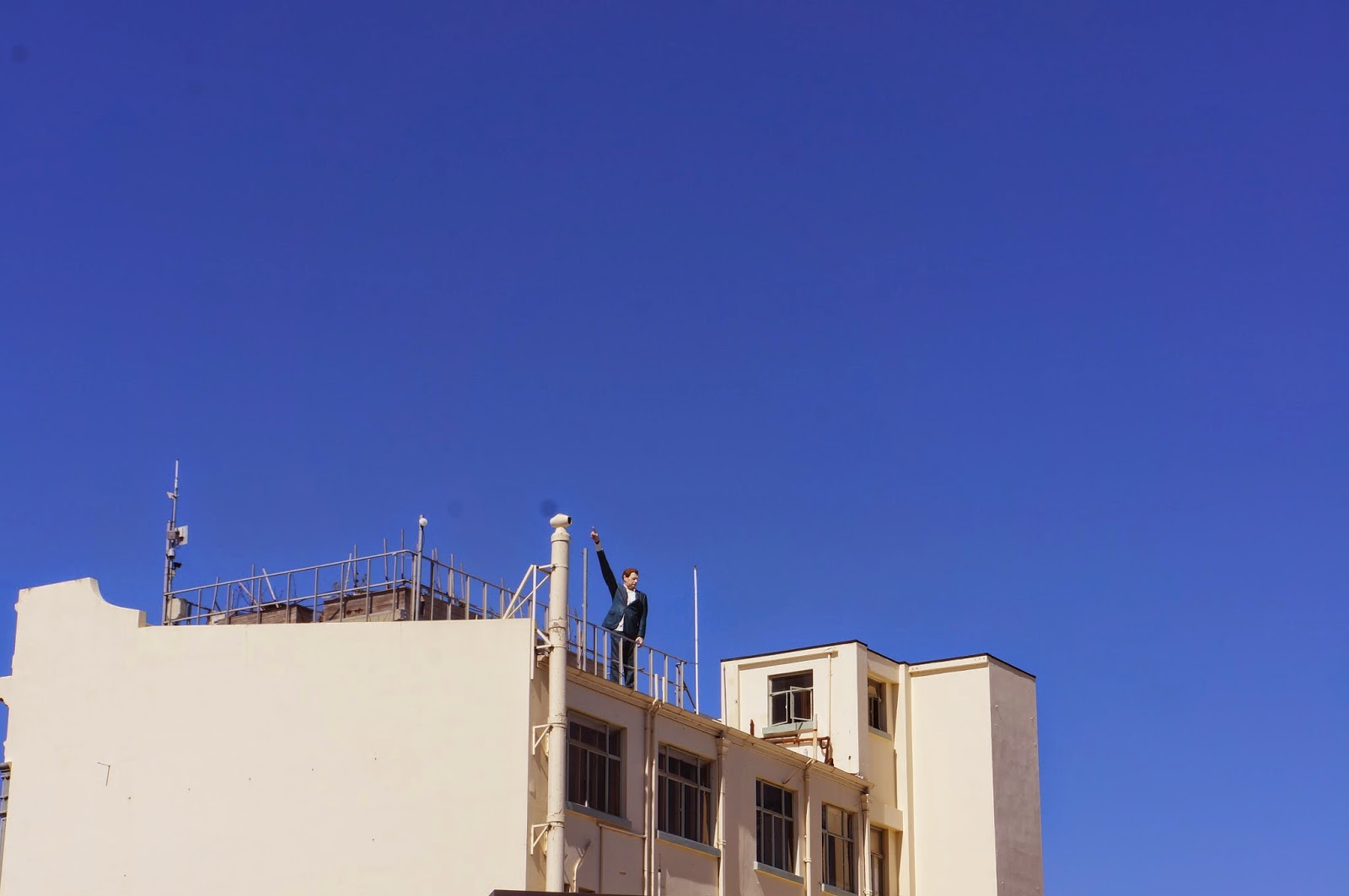
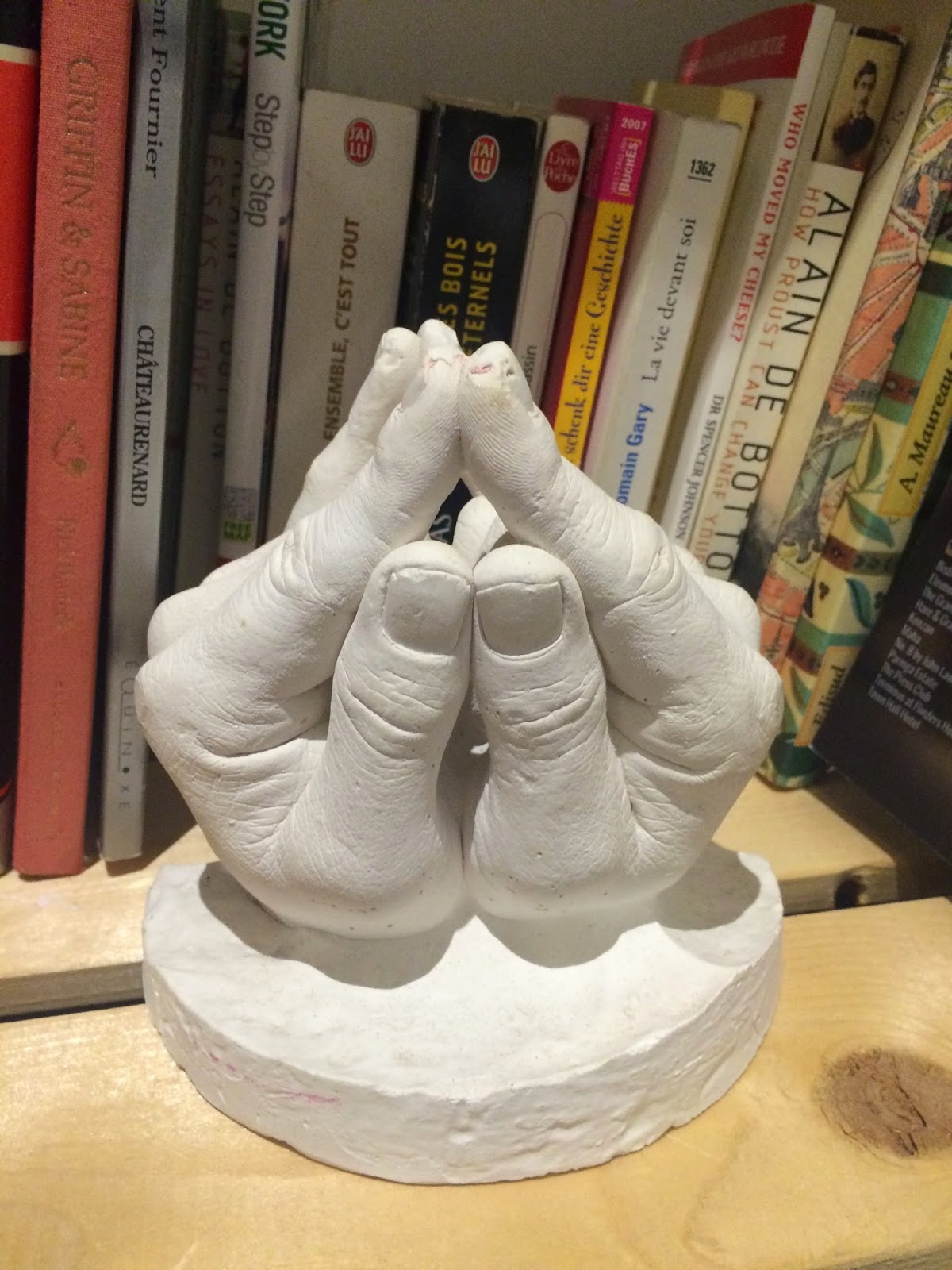
(Hand sculpture by Tim Middleton)

sauce is the key

My friend William says that sauces are like mothers; they hold everything together. This statement comes hot on the heels of his lament that Melbourne does not do Mexican food properly. It’s the lack of sauce, he says.

It got me thinking about sauces. Every culture has them. And in the whole fancy pants kitchen system, the role of the saucier or the sauce chef, is often the most highly respected role, reporting directly to the head chef or sous chef. Sauces, wowzer. They’re a thing.

Now it might come as as no surprise that I’m going to bring up frenchiness here, but France and food, meh, you know it’s going to happen.

The French appreciate sauce so much they made five of them the cornerstone of all of cooking. And they named them mothers. Yup. There are mother sauces. Béchamel, velouté, espagnol, hollandaise and mayonnaise, although mayonnaise is controversial because it’s not cooked, so there’s a bit of a maybe mayonnaise should go and tomato sauce should be in thing that I don’t feel qualified to comment on. But, regardless. These sauces…good. Béchamel, velouté, espagnol; they’re all flour-based sauces that begin with a roux and then have liquids like milk, chicken stock, and beef stock, in that order, to make them thicker. Other sauces such as the unctuous bearnaise and the garlicky aioli are derivatives of these bases. So these mother sauces are like the head of their own little sauce family because each of them form the base for a whole lot of other sauces.

So the French have the mother sauces. But other countries love sauces too. Curry, soy, fish sauce, tonkatsu. And…um…tomato sauce in New Zealand and Australia…? Anyway. Sauce. It’s what adds the je ne sais quoi to the food. It tops it off, pulls it together, makes it happen.

Mothers do that. But also fathers do it. Good friends do it. People do it who put the ones they love before themselves and bring it all together to create harmony, balance and goodness.

the green fairy says cheese


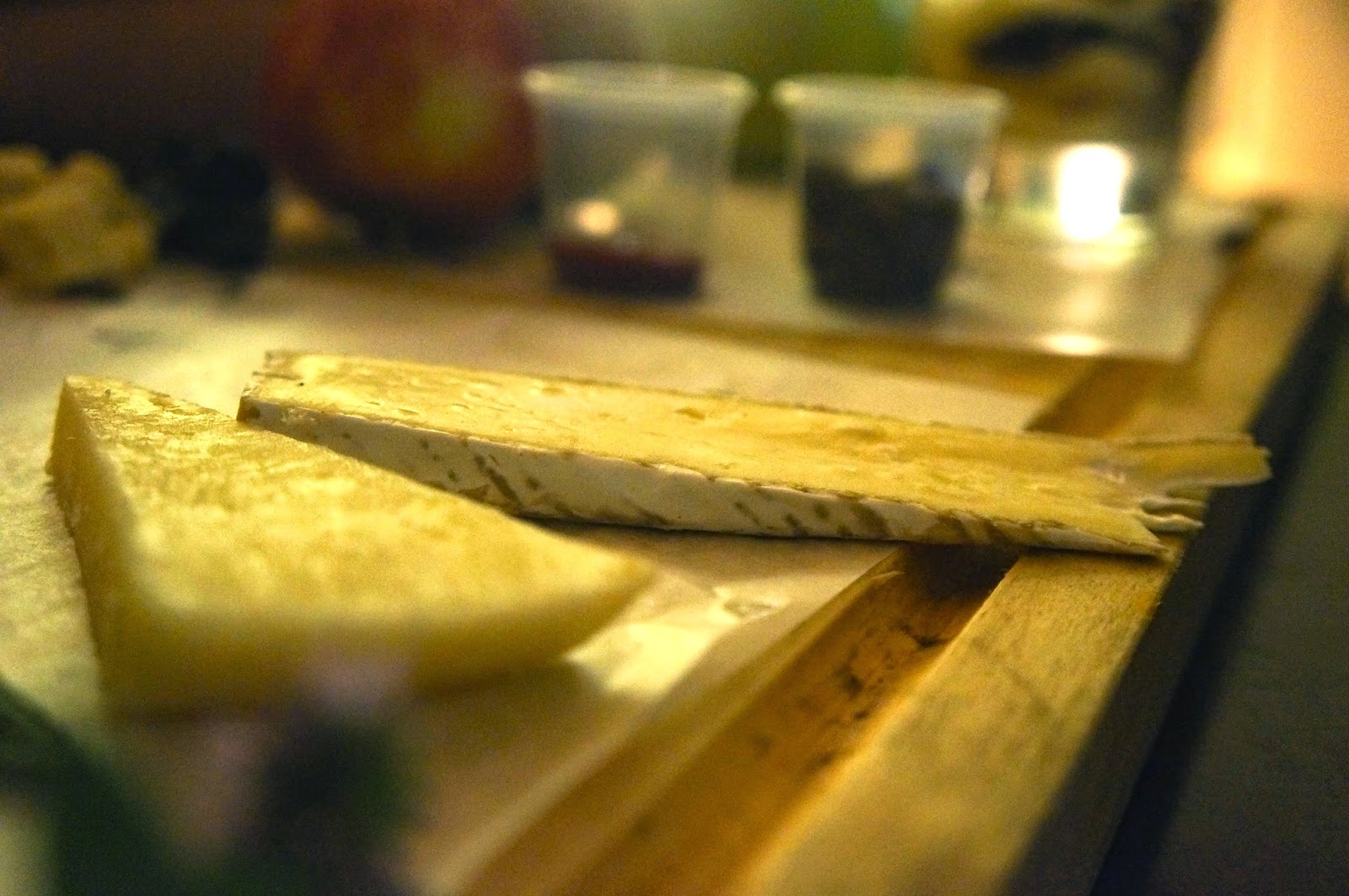
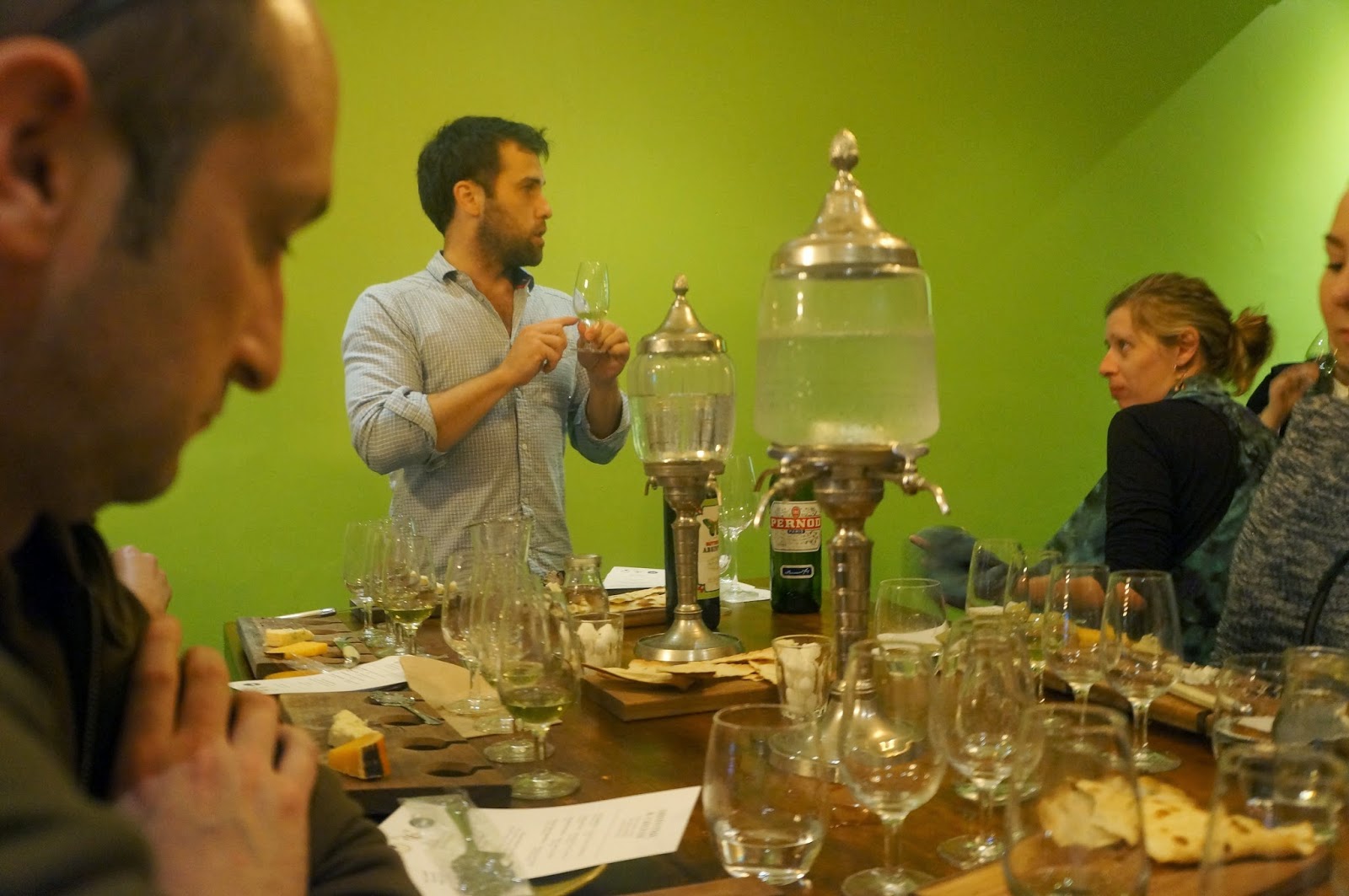
Absinthe and cheese, who knew? Well apparently Ben Luzz from Gin Palace and Bar Ampere and Laura Lown from Milk the Cow had a fairly good idea. And from their impressive collective knowledge, grew the Absinthe and Cheese tasting.
Ben wasn’t always an Absinthe fan. Having always hated liquorice flavours and avoided Pastis, he at some point decided to get over all that and see what all the fuss was about. He was immediately captivated by the history and the nuances amongst the variety of absinthes.
A much maligned drink, there is a great deal of mythologising around its hallucinogenic properties and its ability to lead astray those who imbibe. Blamed for deaths, insanity, and the apparent demise of 19th century society, absinthe was banned for 100 years until 1988, and has only recently started to make a comeback. Certainly many of the more discerning bars in Melbourne have the absinthe ‘fountains’ doing more than just decorating bars and tables.
Absinthe originated in Switzerland in the 18thcentury and is made from wormwood and anise and can have an alcohol content that can range from 45-72%. The current consensus is that it was more likely to be the large quantities consumed of this highly potent drink rather than any particularly evil ingredient in it.
 
Ben was fairly scathing of the pyromaniacal flaming of the absinthe and relegated such circus tricks to bars that stock poor quality absinthe and don’t know what they’re doing. Just as good tequila doesn’t need a wedge of lemon and salt to get through the shot, good quality absinthe does not need to be flamed.
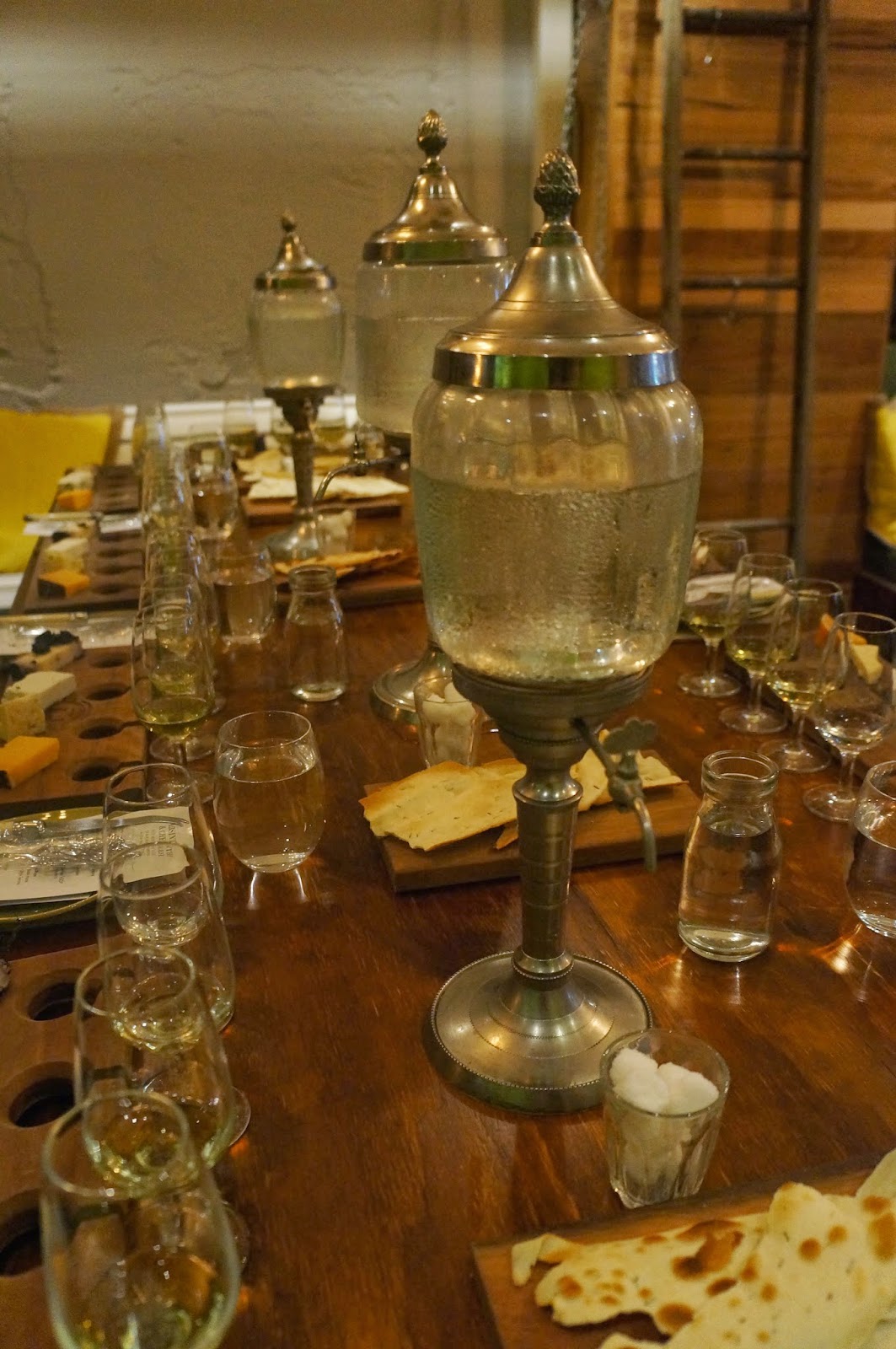
It is ok, however, to embark on the sugar dripping ritual to sweeten what is sometimes considered a slightly bitter taste. This involves the flat, perforated absinthe spoon, a cube of sugar and the very slow water-torture like drip from the absinthe fountain through said sugar cube to form a sugar syrup that produces a cloudy opalescent ‘louche’ effect in the absinthe as the essential oils from the liquor are released.
Laura is the Cheesemonger at Milk the Cow. From the UK and with 7 years in the cheese industry, Laura describes herself as a cheese nerd and really knows her stuff.
Tastings start with a milder cheese and absinthe combo and work through to punchier flavours.
1.     La Clandestine from Switzerland matched with and Italian Occelli Testun di Barolo.
Firstly, the cheese. A reasonably full flavoured pasteurised cow and goat cheese from the Piedmont region. Coated with the pressed grapes used to make Barolo wine, the flavours of the cheese and grapes mingle together to create a flavour that is creamy, sweet, winey, buttery and sharp all at once. Originally, Italian cheesemakers avoided paying extra fees and taxes on their cheeses by hiding them in wine barrels when the tax collectors came to visit. Now it’s just a matter of taste.
La Clandestine is a clear absinthe from Switzerland. This version of the drink is based on a 1935 recipe by Swiss Distiller Charlotte Vaucher. At 53% alcohol by volume, this is a mild-ish absinthe. I like the anise flavour and while I was happy to add water, sugar wasn’t necessary. Fresh herbal flavours paired well with the Occelli cheese.
2.     Francois Guy from France and Meredith Farm Chevre
Goat’s milk can be a delicate and hard to handle product. When treated well, it produces the most sublime cheese. As is the case with Meredith Farm Chevre. The Meredith Farm cheese makers have a background in animal welfare so their goats are well cared for. They only use the milk from their own stock, hand milking all their goats and making the cheese on the property. Their cheese is moist and citrusy with a juicy mouthfeel.
These elements matched well with the subtle and yet slightly more aniseedy French absinthe from Francois Guy. Francois Guy, whose father Armand founded the distillery, has been a passionate absinthe advocate, campaigning to dispel many of the lingering rumours about the drink. The Guy distillery produces its product in the traditional way, according to an ancient house recipe.
3.     Butterfly Boston and Bleu des Causses
The Bleu des Causses cheese is the little-known cousin of Roquefort, King of the blue cheeses. Originally made in the Auvergne with a blend of cow and ewe milk, it is now made entirely with cow’s milk. The Bleu des Causses flavour was a little too close to that of the King and Roquefort producers put their foot down and asked that the ewe’s milk be omitted from the lesser cheese variety. 
Bleu des Causses is aged for 3-6 months in the limestone caves of the Gorges du Tarn, producing the sharpest blue mould possible, and producing a big, bold, rich cheese with a salty finish.
Butterfly absinthe is a recreation of a classic pre-prohibition absinthe produced in Boston in the early 1900s. In its heyday, it formed the base of over 150 cocktails. American absinthe differs from its European relatives in its use of the herbs growing in the Midwest and New England. Its flavour profile is a fairly complex mix of mint, citrus zest, and other herbs as well as the obvious wormwood. A lovely contrast to the salty blue.
4.     Green Fairy Superieur from the Czech Republic and Reypenaer VSOP from the Netherlands.
The Reypenaer is a Dutch Gouda that is taken through a variety of natural maturation stages. It is aged for two years in an 100 year old riverside warehouse. Over the course of the two years it loses 25% of its original weight though moisture loss. The crunchy crystals which develop are concentrated proteins which are only found in properly aged cheeses. A lot of the lactic acid is lost in the ageing process and the result is a sweet, intense and creamy flavour with butterscotch and caramel notes.
This cheese is so good, the Dutch don’t like to export it and it is very difficult to get hold of.
Czechoslovakian absinthes are generally made with less finesse. More herbal than the others, they pack a lot of botanical punch, which was perfect with the robust and striking Reypenaer.
Good quality absinthe paired with beautiful cheese was a lovely match, as was the pairing of our hosts.  It’s a gift to listen to people who know what they are talking about it and love it. I am fairly certain my dreams were particularly vivid that night. If only I could remember.
be truthful, gentle and fearless

It Is Here
(for A)

What sound was that?
I turn away, into the shaking room.
What was that sound that came on in the dark?
What is this maze of life it leaves us in?
What is this stance we take,
to turn away, and then turn back?
What did we hear?
It was the breath we took when we first met.
Listen.
It is here.

~ Harold Pinter

feasting #2

Hummus means chickpea in Arabic. I didn’t know that. I also didn’t know that a few years ago there was a lot of controversy over the aforementioned hummus. 

Hummus has become huge in Israel. Israelis might well say that it has always been huge. Chickpeas are one of the oldest crops in Israel and Israelis consume more hummus per head of capita than any other country in the world.  But Lebanon claims to be its spiritual home, and in 2008, The Association of Lebanese Industrialists tried to go all AOC on it (Appellation d’Origine Controlée, where geographical jurisdiction and authenticity became major KPIs in Hummus Gate.

“Well, when we talk about hummus,” Israeli academic Dafna Hirsch said in 2012, “we talk on the material level and also the symbolic level. There is a mythology that completely surrounds hummus that doesn’t surround a lot of other foods. It’s a fascinating thing.” Hirsch was speaking as an expert; in 2011, she published a cultural biography of hummus in an ethnology journal.

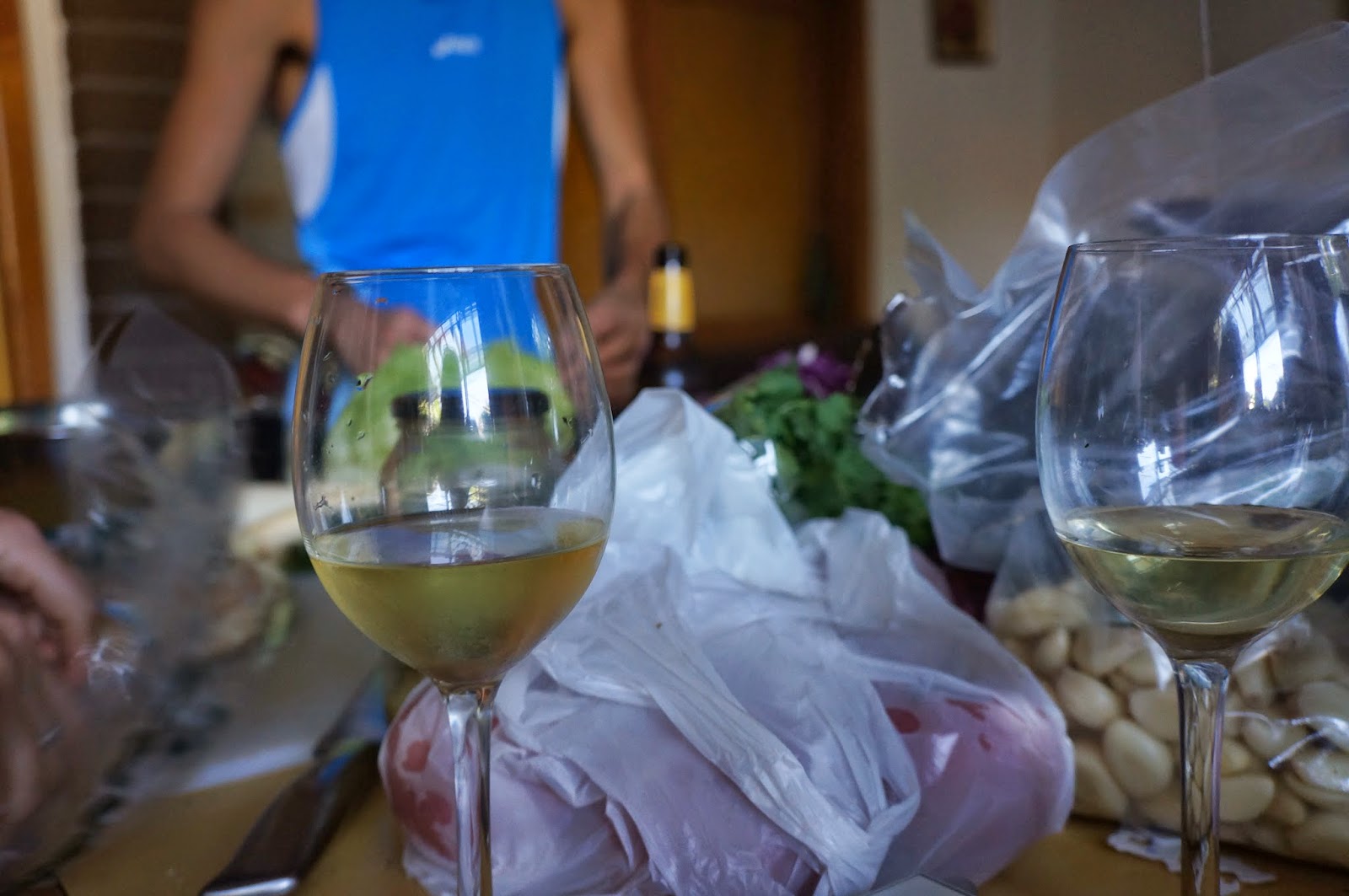
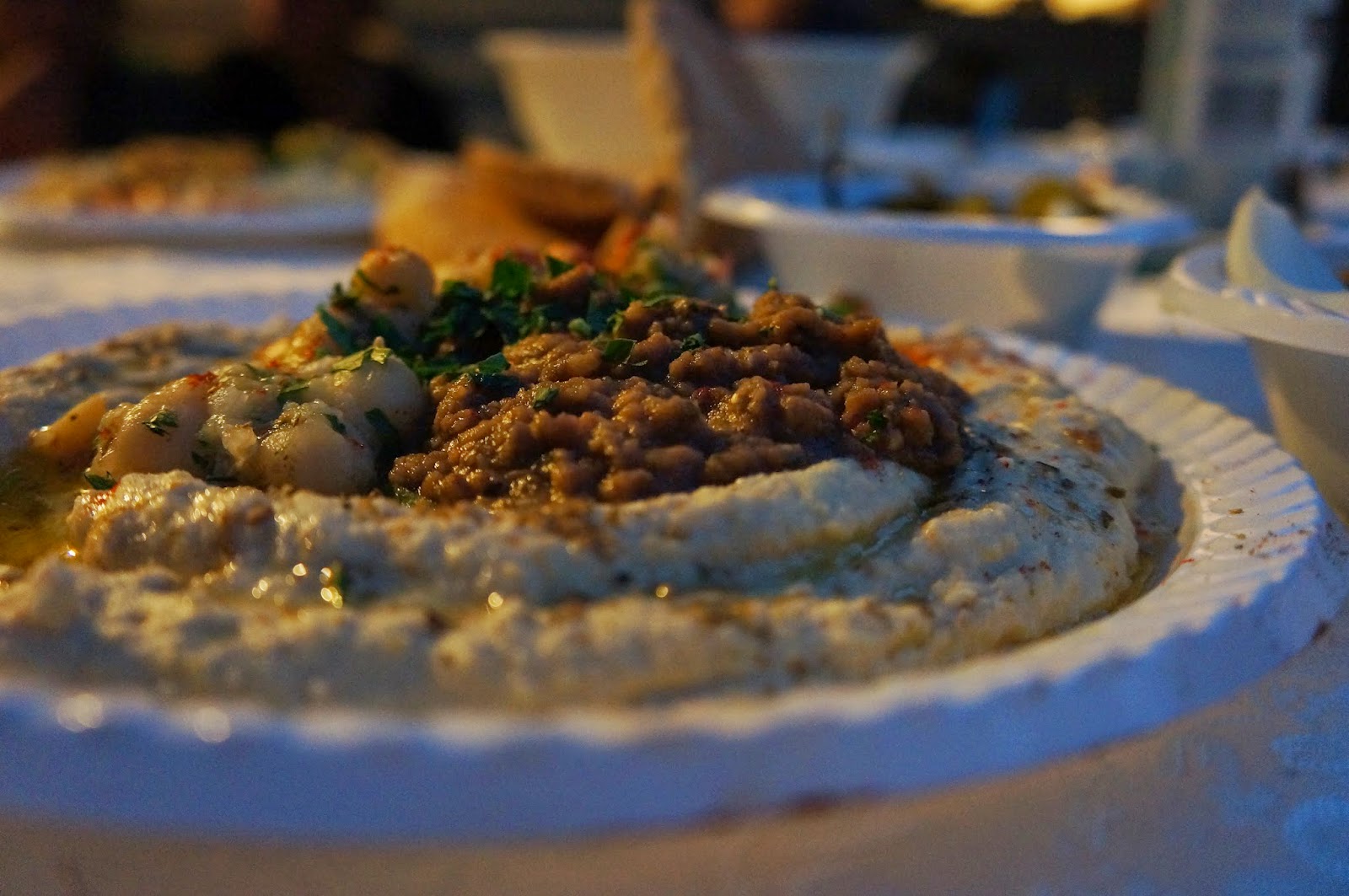
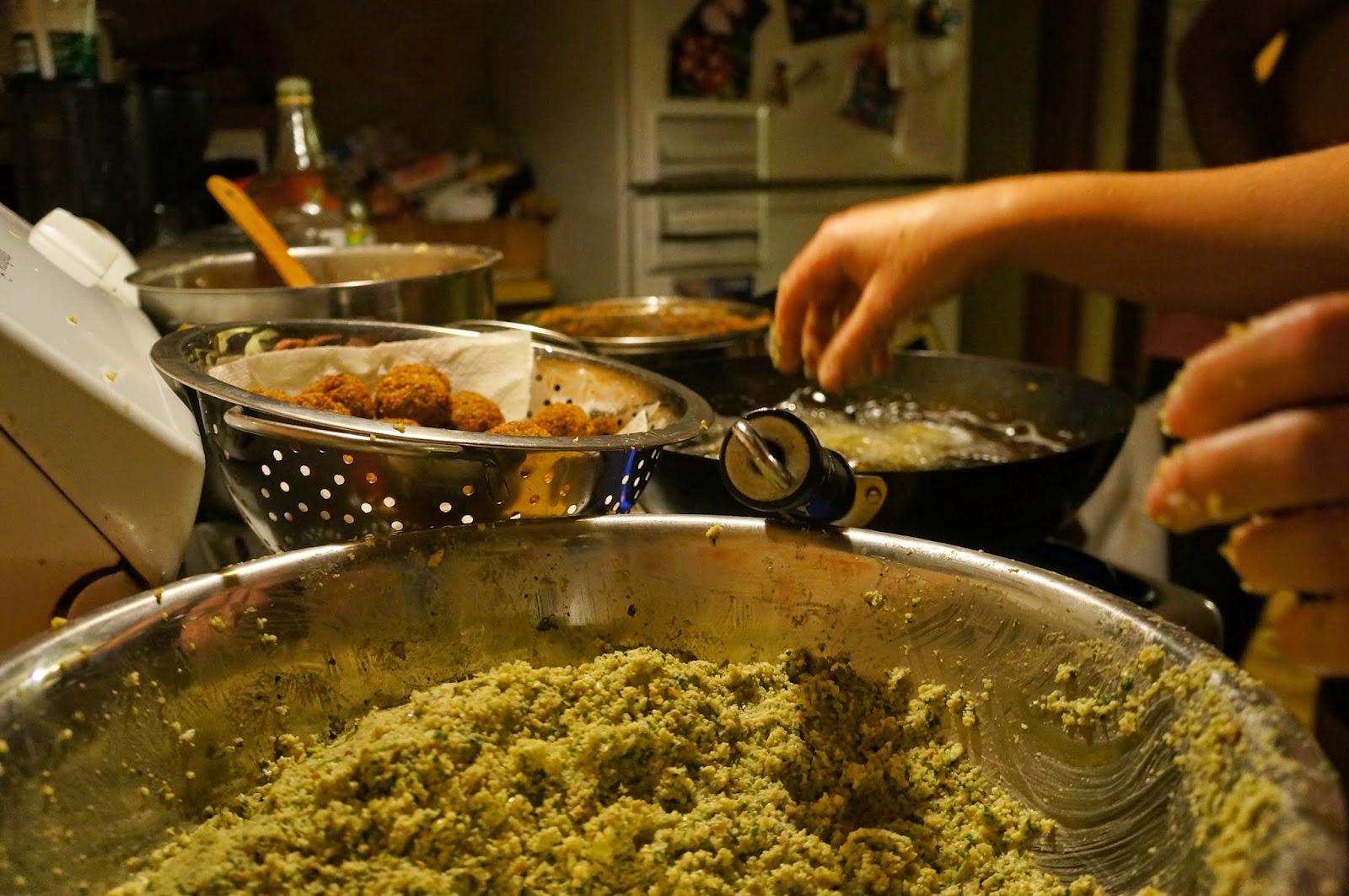
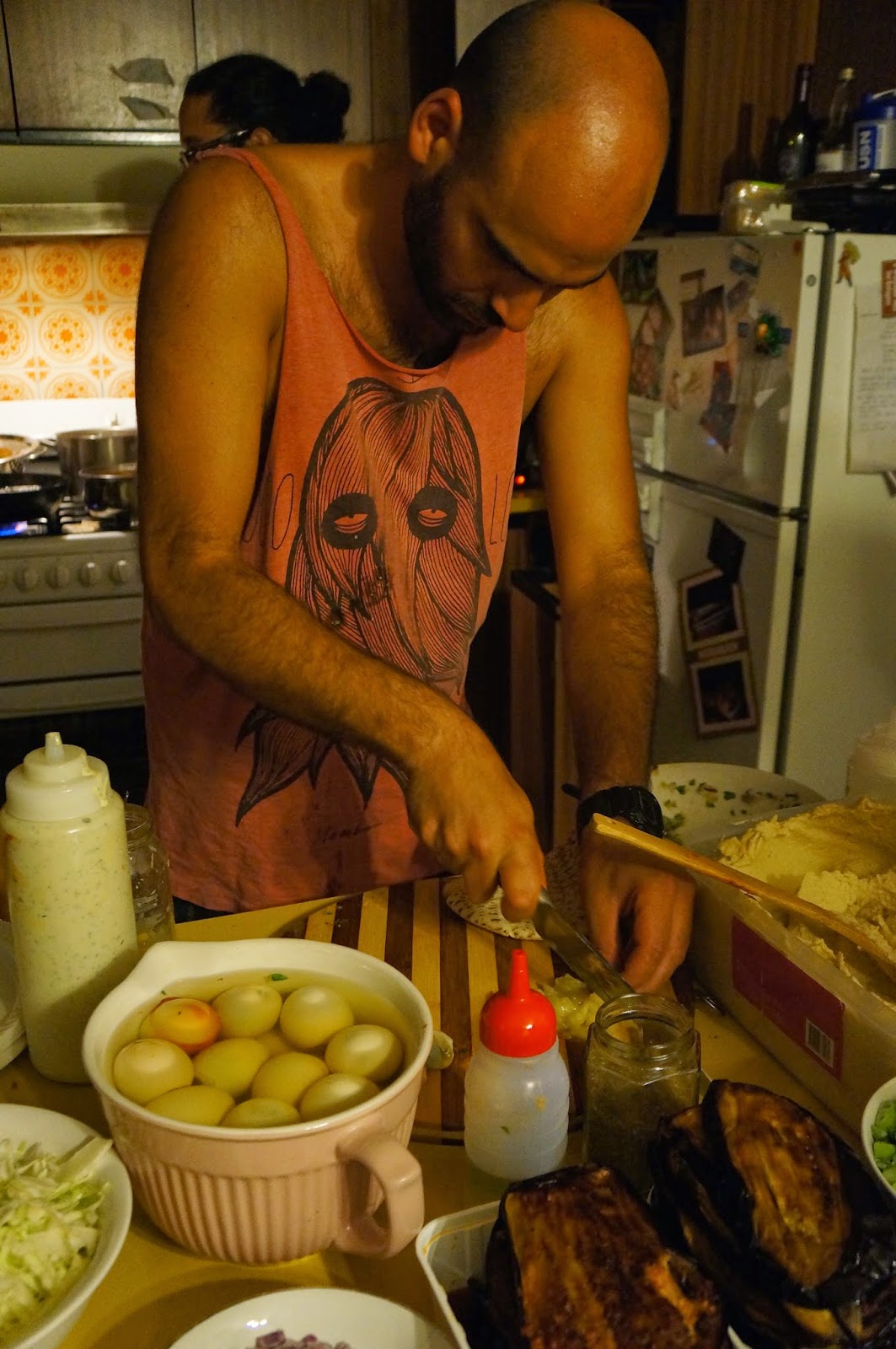
I’m not really sure where we’re at on the whole hummus status. I do know there was nothing political about the hummus Yossi made for a United Nations gathering of friends last night. But it is, without a doubt, the best hummus I have ever tasted. Smooth, creamy even. And the falafel?  Flavoursome and the antithesis of the dry offerings usually labelled falafel, these are in a category of their own. Then there was the marinated eggplant, the salads, the chilli dip, the olives, the eggs, the pita bread and all the other things that Yossi took two days to prepare.

It’s a multi-sensory experience to rival that of Heston Blumenthal. Seated outside around a long trestle table or the couch against the wall, mosquitos biting, exotic music coming out of speakers perched precariously on the windows and having the most interesting conversations. A chef originally from Massachusetts; a Hawaiian on a seven day cleanse on the brink of a most remarkable 8 month journey; a Portuguese guy who came to Australia for love; Israelis savouring the taste of home; the loveliest young French woman who reminisced about being able to wire a speaker at the age of 16 and whose equally lovely partner from Dunedin is testing the freelance waters of design and illustration. 

Some people have a knack for bringing good people together. And I feel lucky to be part of that.