I have hated words and I have loved them, and I hope I have made them right

Unfinished book #3.

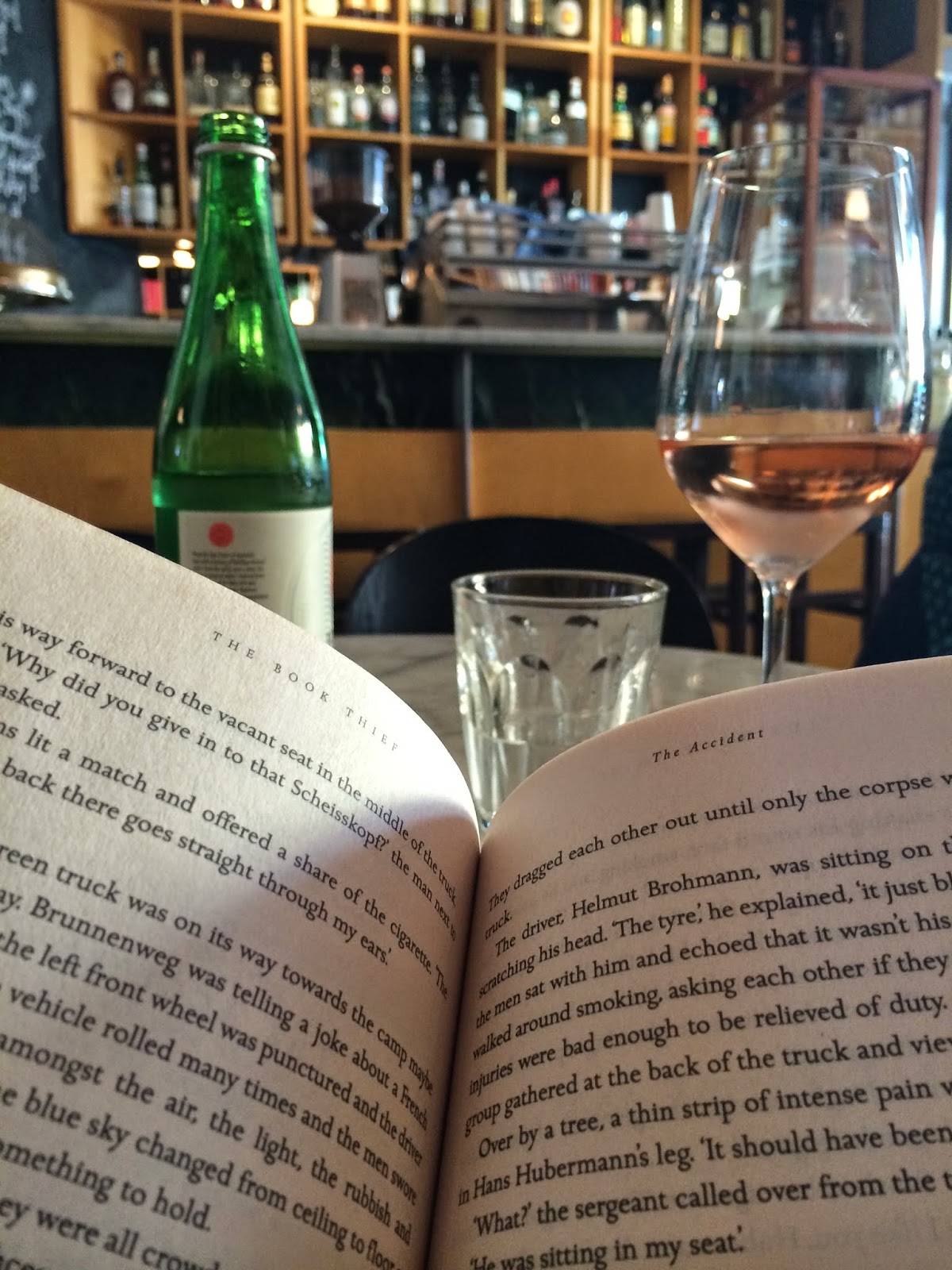
Today I finished The Book Thief. And right now, I am holding the most beautiful words in my heart and I think it will be a while before I let them go.

“She leaned down and looked at his lifeless face and Liesel kissed her best friend, Rudy Steiner, soft and true on his lips. He tasted dusty and sweet. He tasted like regret in the shadows of trees and in the glow of the anarchist’s suit collection. She kissed him long and soft, and when she pulled herself away, she touched his mouth with her fingers…She did not say goodbye. She was incapable, and after a few more minutes at his side, she was able to tear herself from the ground. It amazes me what humans can do, even when streams are flowing down their faces and they stagger on…”

And so, with a certain degree of empathy, Death observes Liesel, the book thief, and her best friend, Rudy.

There is so much that has already been said about The Book Thief. I am only one of 8 million who have read it. And there is a film that I won’t see. The book was so cinematic and evocative that I fear the film won’t match the tightness of my heart. 

I heard an interview with Markus Zusak on Summer Breakfasters on Triple rrr. And, while he said he made the book he wanted to write, Zusak also said that writing the book killed him. For him, it was three years of constant everyday work and at the end he was a mess and also happy. He went on to say that that is how authors should be, wrung dry by the final copy.

The book was the result of a writing workshop in a school. They were all writing about colour. Alongside the students, he wrote about colour and three deaths. Death was the narrator in this short piece and he decided he would include that in the book he wanted to write about Nazi Germany. He said it made sense to him because people always say that war and death are best friends. But, as he thought about this idea, he wondered, what if death was haunted by humans. Death doesn’t see us at our best, so what if there was an empathetic aspect to ‘him’?

Zusak had a veritable magic pile of ideas to work with in weaving this story. One of the other threads came from the stories his parents told of growing up in Germany during the war. When they told these stories in an Australian context, it was like a piece of Europe came into their kitchen. Zusak remembers his parents often describing things in opposites, for example: the ground was covered in ice but the sky was on fire.

For me, the most compelling threads in the story were Liesel’s discovery of her own voice: her ability to read stories and then to write her own, to be a word-shaker and a calming presence, as well as her growing love for Rudy which she discovered too late.

I finished The Book Thief in the Gertrude Street Enoteca as the sun slipped down past the buildings and the chill of a late autumn afternoon took hold. 

And it was a quiet and thoughtful walk home from Fitzroy, through Collingwood to an Easter Saturday Abbotsford.

record store day

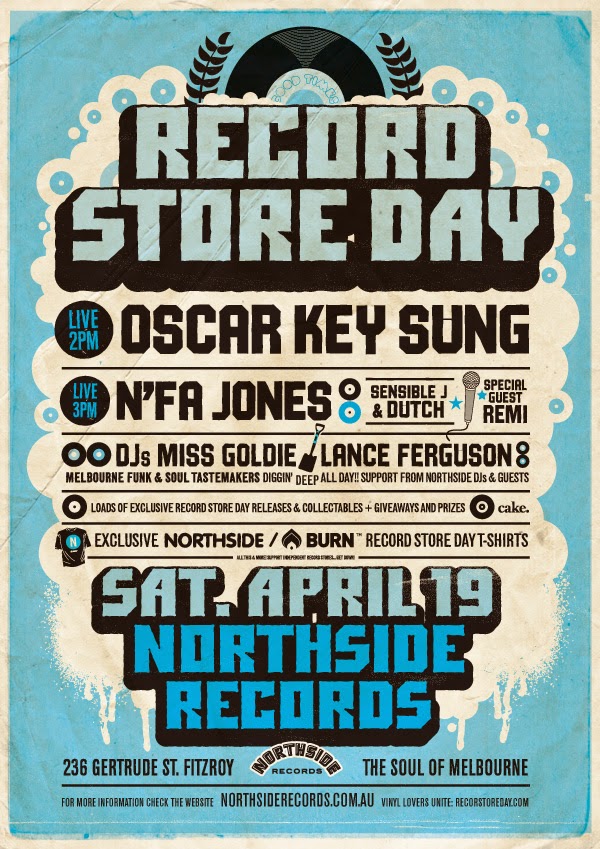
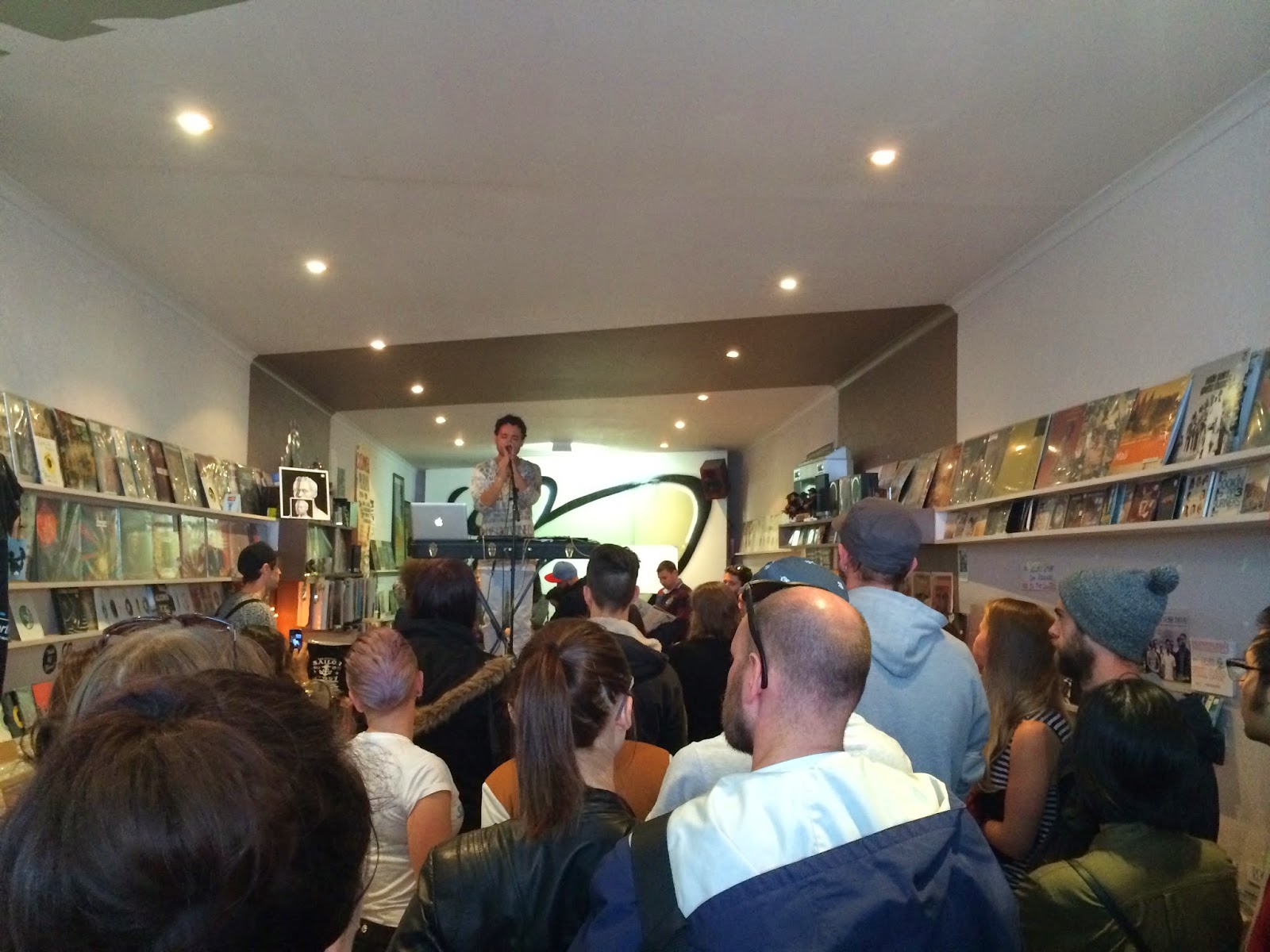
Today was record store day. I’m not sure when all these extra days started creeping into the calendar. The week before last there was international gin and tonic day. I was happy to embrace that. Record store day is potentially more expensive. Especially seeing as I don’t have a record player. And yes, I did actually think about it.

Record Store Day is an internationally celebrated day observed on the third Saturday of April. Its purpose is to celebrate the culture of the independently owned record store.

It was officially founded in 2007 after a record store owners’ meeting in Baltimore. One of those throwaway comments that made the big time. And clearly there was a global desire to celebrate the record store because it has taken off around the world. Today saw hundreds of recording and other artists participating in the day by making special appearances, performances, meet and greets with their fans, the holding of art exhibits, and the issuing of special vinyl and CD releases along with other promotional products to mark the occasion.

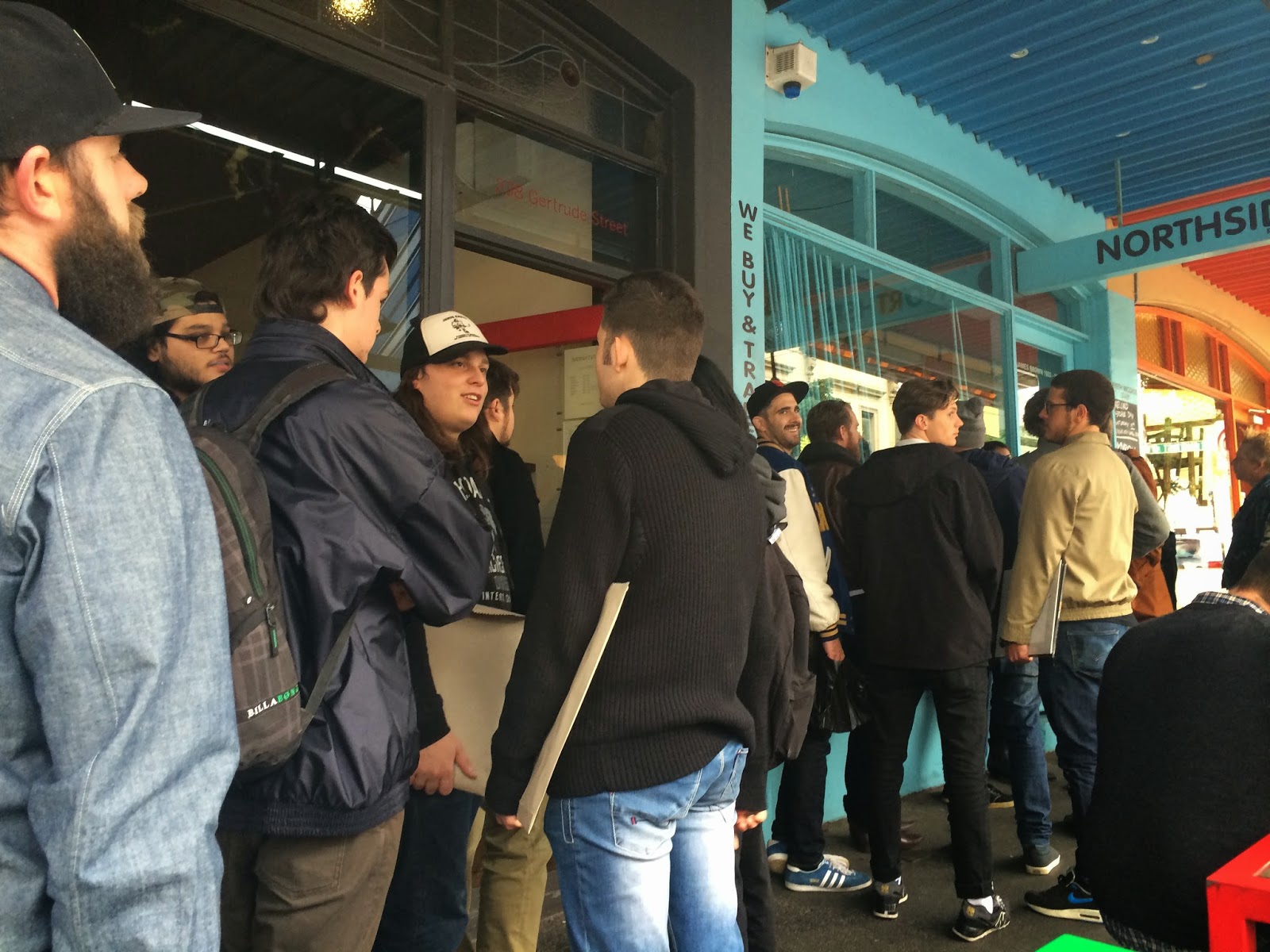
Down at Northside Records in Fitzroy, I watched the queue before the door opened. I have to say, there is a particular demographic who lines up for Record Store Day.

There were a lot of happy customers walking away clutching brown paper bags of record sized proportions. I started thinking about the whole vinyl vs. digital debate. Is it just for nostalgic reasons that vinyl has made a come-back? There are arguments about warmth of sound and analog recordings being continuous, so our ear can detect changes in pitch as a note descends or ascends, as opposed to digital recordings which are not continuous but use specific values to represent information, which imperceptibly mean change in pitch or tone would be represented as a series of information. But really, say the experts, the difference in sound quality when either of these means are employed on good quality equipment is negligible. The act of flicking through a stack or shelf of records, sliding the record out of its sleeve, putting it on the turntable, placing the needle in the groove possibly has more to do with the warmth of sound than anything else, because that all comes form the soul. 

For me, it’s a moot point. I don’t have a turntable. But I am very happy to have been part of record store day.


la délicatesse, or finishing half-finished book #2

David Foenkinos’ book, La délicatesse, or Delicacy, has polarised critical opinion. There seems to be no lukewarm reaction to this little book. In fact those who didn’t like it, used lukewarm and insipid amongst their objections.

Those who loved it, and I am among them, appreciated the simple, straightforward and yet at the same time, quirky writing style. Sometimes I had tears in my eyes and sometimes a smile as Nathalie’s story unfolds. A romantic encounter and ensuing marital bliss bathes the first 31 pages of this short book. Page 32 changes everything when Nathalie’s husband François is hit by a car and killed while out on his Sunday jog. The rest of the book recounts her descent into a long period of darkness as she mourns François and the life they had together.

Just when it seems as though no one will break through her shell, she discovers Markus, an awkward Swedish man she works with. After a few ups and downs necessary for the reader to really engage and hope that love will conquer all, the ending is happy.

When I describe it like that, the book does sound slightly predictable and saccharine. But sometimes it’s not the story that counts but the way the story is told.

I have previously expressed my admiration for writers who paint feelings and ideas in such a way that I hold my breath reading them and want to archive their words in my head and my heart. David Foenkinos produced many such phrases in this book.

<>

“We may finally ask ourselves whether coincidence really does exist. Maybe everybody we run into is walking around near us with the undying hope of meeting us? To think of it, it’s a fact that they often seem out of breath.”

And there is a film. With Audrey Tautou. One of my favourites.


classics are the best

It is not International Sazerac Day. 

Perhaps it should be.

Since 2008, the Sazerac has been the official cocktail of New Orleans. But it has been around for a lot longer. In fact, it is sometimes referred to as the oldest known American cocktail, with origins in pre-civil war New Orleans.

But there are three things that really set the Sazerac apart and make it particularly appealing is that it uses rare, strongly flavoured ingredients – including an obscure brand of bitters and absinthe -, there’s a special process in making the drink and it has an intriguing history.

Antoine Peychaud created the drink in 1838 in a French Quarter bar in New Orleans. The bar was named after a popular French brandy, Sazerac-de-Forge et fils. In 1873, the drink was changed when American Rye Whiskey replaced the cognac due to problems in the vineyards of France, ironically due to an infestation of the American aphid, phylloxera vastatrix. So this little American fly meant a more American influence on the drink. In 1873, bartender, Leon Lamothe added a dash of absinthe to the mix. Who knows why, but I am sure it was absolutely inspired. In 1912 absinthe was banned and, in some kind of full bar-tending circle, Peychaud substituted his special bitters in its place.

And I like that it’s a little bit tricky to make. You need two chilled glasses which you coat in respective flavours: sugar and bitters in one, rye whiskey or cognac in the other. Then you add the whiskey or cognac to the bitters and then coat the empty glass with the absinthe and put them all together into the first, now absinthe coated glass with lemon peel. I like that the process is complicated and takes time. You have to be patient. And appreciate the history. And really, it is absolutely worth the complication.

At Le Bon Ton in Collingwood, you can decide if you feel more Frenchy or more New York, which will dictate the choice of cognac or rye in the mix. Surprisingly perhaps, I went New York. I’m sure my recent Carrie Bradshaw assimilation is to blame. Absinthe was absolutely there. And a lemon twist. And a floaty old school feeling that I completely recommend.

the greening of my backyard

Somebody thought of it, and someone believed it. And look what it’s done so far.

AstroTurf. A great invention.

Did you know that the first fake grass was patented in 1964 by Donald L. Elbert and that he originally called it ChemGrass? No? ChemGrass. Not the most inspiring name. 

Lucky for ChemGrass, two years later, having tried and failed to cultivate real grass in their indoor stadium, The Houston Astros, a major league baseball team, decided to give ChemGrass a go.

And then everyone wanted in on this great new product and it was renamed Astroturf by a Monsanto employee, John A. Wortmann.

AstroTurf has gone from strength to strength as ground cover and and has now morphed into a political and business verb where a group will attempt to create an artificial movement to sway political opinion on a topic by making people think that everyone – even ordinary people – are behind a movement.

Facebook and other social media platforms have helped astroturfers enormously.

The US Government hired a software company in 2011 to create special astroturfing software to sway public opinion about various topics that weren’t getting much credence on their own.

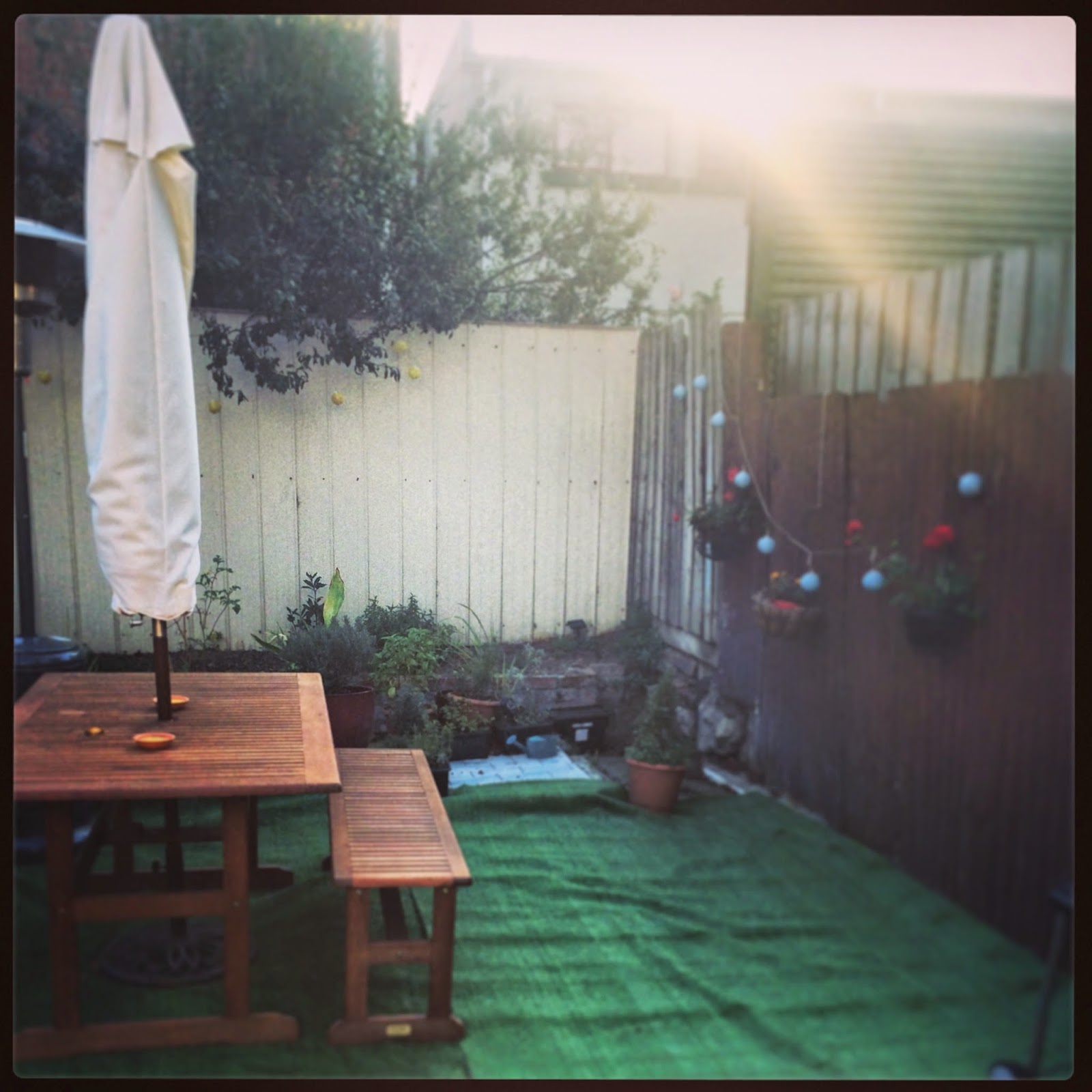
I’m just happy that my backyard looks tidier and is greener than ever before.

part of me is glass, and also I love you

When given the opportunity to promote my blog through the local newspaper I write for, I had to stop and think, how would I describe this blog?

I reached out to the people I care about most and who I feel would know me and understand my writing. And I did some research about words and writing and how we approach the archiving of our thoughts, our inspirations, our fiction and our lives.

Amongst my googling, I came across an author who I would like to have a glass of wine with. Nicole Krauss. Beautiful writing which resonated with my unspoken thoughts. The quotes came from a book which I would like to read. Once I have completed the three books remaining on my finishing list. The interesting thing about Nicole, at least it is interesting to me, is that she is married to Jonathan Safran Foer, also an author. Foer wrote Extremely Loud and Incredibly Close, a story narrated by a 9 year old following the death of his father in the twin towers on September 11, 2011. I have read this novel. And I felt very drawn to the protagonist as he searches to make sense of loss and connection and self-destruction and self-preservation. 

Obviously I don’t know Jonathan Safran Foer. But, on reading about Nicole Krauss today and discovering that she is married to Foer, I had a two degrees of separation moment. Nicole’s (and I’m not quite sure why I am referring to her by her first name and him by his second name…perhaps it’s a woman thing) book, A History of Love, came out in the same year as Extremely Loud and Incredibly Close and critics have drawn comparisons between the two. Whether that is fair or inevitable is probably a moot point. Couples talk. At least, you hope they do. There are probably shared ideas and reactions and explorations.

But to get back to me. And my blog. What I read of Nicole Klauss made me wonder why I write when she has so perfectly espoused the ideas and the observations and the pain and the joy already. Let me share some of the quotes with you, so you understand what I am saying. There are a few quotes and if you abhor when writers reference other writers, then please do skip over this. But please understand, for me this was momentous.

“Once upon a time there was a boy who loved a girl, and her laughter was a question he wanted to spend his whole life answering.” 

“When will you learn that there isn’t a word for everything?” 

“So many words get lost. They leave the mouth and lose their courage, wandering aimlessly until they are swept into the gutter like dead leaves. On rainy days, you can hear their chorus rushing past: IwasabeautifulgirlPleasedon’tgoItoobelievemybodyismadeofglass-I’veneverlovedanyoneIthinkofmyselfasfunnyForgiveme….

There was a time when it wasn’t uncommon to use a piece of string to guide words that otherwise might falter on the way to their destinations. Shy people carried a little bunch of string in their pockets, but people considered loudmouths had no less need for it, since those used to being overheard by everyone were often at a loss for how to make themselves heard by someone. The physical distance between two people using a string was often small; sometimes the smaller the distance, the greater the need for the string.

The practice of attaching cups to the ends of string came much later. Some say it is related to the irrepressible urge to press shells to our ears, to hear the still-surviving echo of the world’s first expression. Others say it was started by a man who held the end of a string that was unraveled across the ocean by a girl who left for America.

When the world grew bigger, and there wasn’t enough string to keep the things people wanted to say from disappearing into the vastness, the telephone was invented.

Sometimes no length of string is long enough to say the thing that needs to be said. In such cases all the string can do, in whatever its form, is conduct a person’s silence.”  

“I like to think the world wasn’t ready for me, but maybe the truth is that I wasn’t ready for the world. I’ve always arrived too late for my life.”

“Then I turned the page and at the top it said THINGS I MISS ABOUT M and there was a list of 15 things, and the first was THE WAY HE HOLDS THINGS. I did not understand how you can miss the way somebody holds things.”  

The author herself, explains the reason behind her writing:

“Why does one begin to write? Because she feels misunderstood, I guess. Because it never comes out clearly enough when she tries to speak. Because she wants to rephrase the world, to take it in and give it back again differently, so that everything is used and nothing is lost.” 

I’d like to rephrase the world and perhaps that is it, this need to be heard through my observations and reflections.

I have recently undertaken a Sex and the City marathon. Having never ever watched it before, I have osmosis-ed it in a very short space of time. For better or worse. It has cultural importance.

It really does! As with a few things, I was late in my acknowledgement of its importance.

Tonight I watched the very last episode and again I was struck by another – my new hero, Carrie Bradshaw’s (fictional words):

“Later that day I got to thinking about relationships. There are those that open you up to something new and exotic, those that are old and familiar, those that bring up lots of questions, those that bring you somewhere unexpected, those that bring you far from where you started, and those that bring you back. But the most exciting, challenging and significant relationship of all is the one you have with yourself.” 

For me, writing is about noticing and feeling and sharing.

Thank you to those who summed up my blog in words I had hoped for but couldn’t find myself.

blood moon

A lunar tetrad – four total lunar eclipses in a row begins tonight. Now, when they say ‘in a row’, there is some time in between them, 6 lunations, to be exact. Now I have two new words of the day. So, just to save you counting up lunations on your fingers, the tetrad includes tonight, the 15th of April, the 8th of October this year and the 8th of April and 28th of September next year.

Astronomers say a twilight total lunar eclipse is quite rare.

The rarity of the occurrence as well as the nature of this particular tetrad, has given rise to a host of speculation, prophecy, astrological warnings and religious concern.

Some see the four blood moons as evidence of apocryphal prophecy that predicts the end times. The total eclipses coincide with important Jewish festivals. Today is the second day of Passover, for example. But then again, Jewish festivals often coincide with full moons and full moons are essential for a total eclipse.

For those who look to astrology for answers, the lunar eclipse will apparently bring into focus our relationships and can symbolise powerful endings and completion. This is a time for sudden breakthroughs, they say, a time for cleansing and shifting.

And then there are the physics of the thing. A lunar eclipse occurs when the Moon passes directly behind the Earth into its shadow. This can only occur when the Sun, Earth and Moon are aligned in syzygy, my third great word of the day, with the Earth in the middle.

The blood moon aspect is due to sunlight passing through the Earth’s atmosphere and refracting to the red end of the spectrum. The Moon is made of rock so it does not emit light on its own, but reflects light from the sun. In this instance, the Earth is between the two celestial bodies and the light is ‘scattered’.

Whether tonight heralds for you a new beginning, an ominous sign or a fascinating astronomical occurrence, I think it is always good to be reminded that we are little parts of a greater whole. The Sun, the Moon, the Earth and the stars keep doing their thing in spite of what may be going on for us in our heads and our hearts. A little bit of awe and wonder is good for the soul. Embrace it.

they will not see me. I will not be there

I think I might be a little bit jealous of Hannah Kent. Is jealous the right word? Envious of her talent, perhaps.

Hannah Kent has written a book. A first book. And a first book which has done very well.  

I don’t really know why I put Burial Rites down halfway through. Perhaps I wasn’t in the right space when I started to read it. Once I took the time to breathe and sit, and give it my attention and time, I realised that this is exactly the kind of book I love. 

Thoughtful and considered, with a cinematic beauty which was palpable, I became completely caught up in the unfolding story of Agnes Magnisdottir, the last person to be executed in Iceland.

Hannah, is it ok if I call her Hannah?, spent a year in Iceland on a rotary exchange programme when she was 18 years old. She lived in a small, remote and closely-knit fishing community in the northern part of Iceland. While she was there, she heard of Agnes’ story and was drawn to it, sure there was so much more to the tale than what was recorded in the history books. 

Several years later, Hannah went back to Iceland to research every detail of the life and times of Agnes. She describes, Burial Rites as her dark love letter to Iceland.

Growing up in the Adelaide Hills, Hannah had never seen snow. The barren Scandinavian landscape in which she found herself made a huge impression on her. In the book, the landscape has such a presence that it is almost as though it is a character itself, and certainly it shapes the people who move within it.

The description of the backdrop to Agnes execution day is an example of the way Hannah uses landscape to reflect soul and the  inner-workings of the characters’ minds, particularly that of Agnes:

“Now comes the darkening sky and a cold wind that passes right through you, as though you were not there, it passes through you as though it does not care whether you are alive or dead, for you will be gone and the wind will still be there, licking the grass flat upon the ground, not caring whether the soil is at freeze or thaw, for it will freeze and thaw again, and soon your bones, now hot with blood and thick-juicy with marrow, will be dry and brittle and flake and freeze and thaw with the weight of the dirt upon you, and the last moisture of your body will be drawn up to the surface by the grass, and the wind will come and knock it down and push you back against the rocks, or it will scrape you up under its nails and take you out to sea in a wild screaming of snow.”

As in any based-on-history story, we know what the ending will be. We know that Agnes Magnusdottir will be beheaded. The suspense comes from the unfolding of her story; the understanding of the person behind the crime. For me, the execution became a side issue, I wanted to know about the woman who, on first encounter seemed so cold and distant, and who seemed to have been depicted by those around her as calculating and dangerous. 

Hannah’s portrayal of Agnes is one of a woman who had experienced a childhood full of hardship and abandonment and a life of continued sadness. Misunderstood and scorned, she just wanted to be seen and loved.

I feel for the Agnes I got to know in the pages of Burial Rites. It feels as though she somehow represents what we are all capable of: loving and being confused and feeling lost and making good decisions and bad decisions. Love and life are confusing things and the decisions we make don’t make us good or bad. They just make us human.


you need a certain darkness to see stars

So says the ringmaster of Celeste’s dreams in the Flying Fruit Fly Circus’ Circus Under My Bed, a high energy theatrical circus performance which is one of the shows in the Melbourne Comedy Festival.
I realise that I just used the word circus three times in one sentence. It’s not often you get to do that. And it’s not often I get to go to the circus. In fact, I have never been a circus-goer. I believe we may well, as a family, have attended an erudite (and I use that word in its purely ironical sense) performance in a park somewhere in Aranui, it’s a suburb in Christchurch. Today’s spectacular show was the complete opposite of that experience. If this is circus, I’m going to be uttering 3-circused sentences as often as I can. 
The Flying Fruit Fly Circus is Australia’s National Youth Circus, a specialist circus school based in Albury-Wodonga. The Youth Circus trains young circus artists aged 8-18 to tumble, flip and soar to very impressive heights.
But Circus Under My Bed wasn’t just a string of incredible, yet meaningless tricks. Drama, romance, adventure and incredible acrobatic feats are all seamlessly woven together. With the help of an unseen narrator, the audience is taken on a journey through a young girl’s vivid imagination, watching as a make-believe circus comes to life. 
A lot can happen in fifty-five minutes. Faced with the task of packing her suitcase as her family moves house, Celeste feels despondent. But not for long. When the ringmaster arrives with his troupe of tumbling sheep, a plate-spinning chef, a grumpy young woman in quest of an errant balloon and a sad clown, Celeste realises that she is not alone. The impossible is very very possible, as the ringmaster tells her. 

Looking around the intimate setting of the Fairfax Studio in the Arts’ Centre, the demographic was certainly young. But children and adults alike, were captivated by the story and mesmerised by the strength, mutual trust and talent of the young performers as they leaped, swung from sheets attached to a hook in the ceiling and climbed a precarious stack of beautifully coloured chairs.
  
I asked the children sitting next to me how they would describe what they had just seen. The older girl said “Colourful and exciting.” Her younger companion just said, “Amazing!” and his eyes were shining.
At one point in this charming story, the ringmaster tells the assembled cast to ‘celebrate what you have accomplished,’ and there ensues a festive party scene. The Flying Fruit Fly Circus should certainly celebrate what they have accomplished. The music, choreography, lighting, costumes and the breath-taking tricks were all of such a high standard that it was an enthralling experience. 
I had a free ticket so I coud review it for the paper. I would have happily paid for it. Loved it.

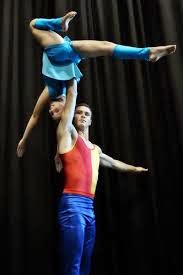
This is not my photo as photography was not permitted during the performance. This image has been borrowed from http://www.cyberpaddock.net.au