a ruffian wind is bliss

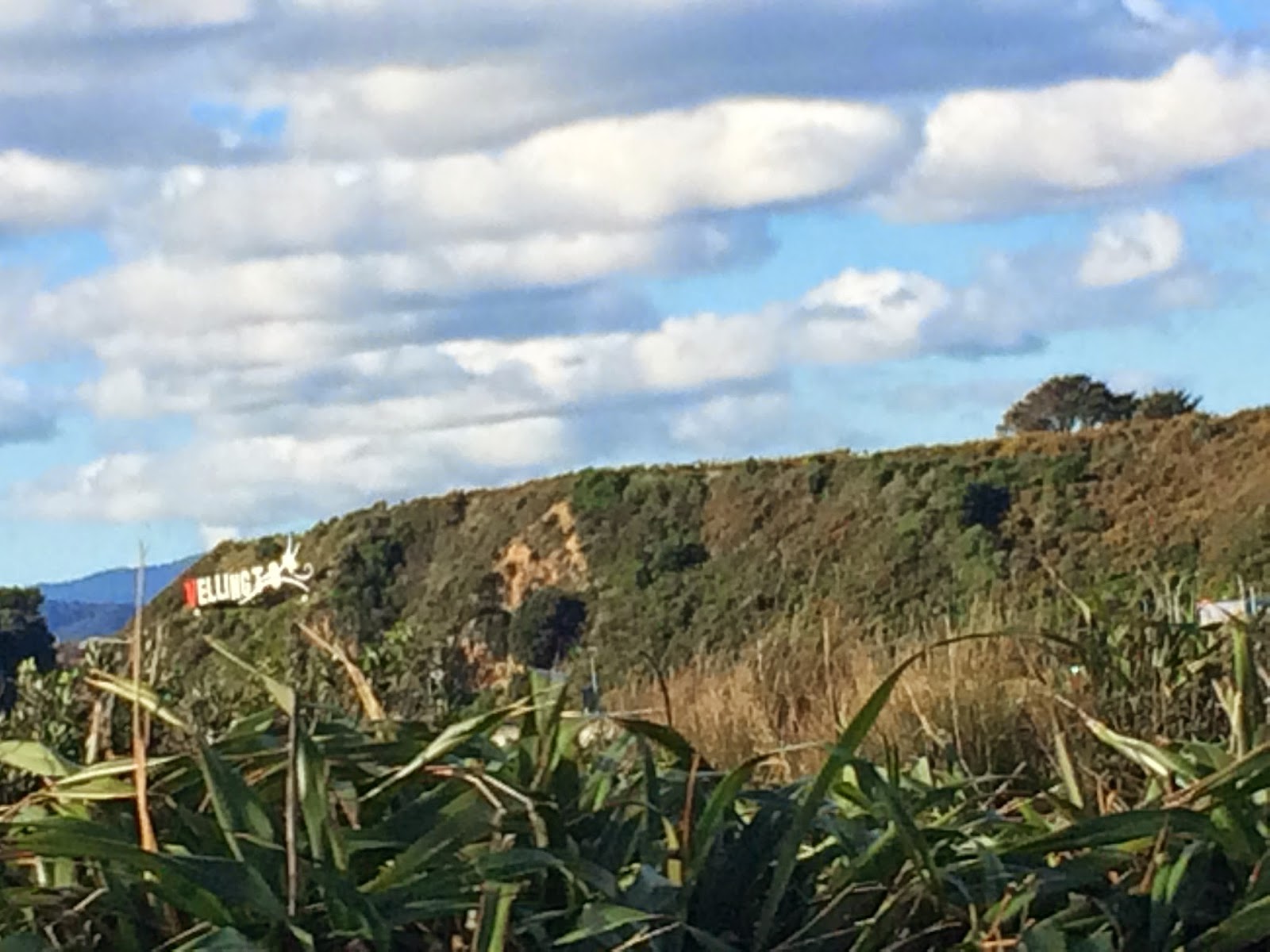
Wellington. Our nation’s Capital. Some say the Melbourne of New Zealand, although I’m not sure why we have to categorise cities as particular genres. I understand the comparison. Terrible weather, ergo rich and quirky cultural life. But Wellington is really very different to any other city.
7 Fort Lane or 44 Queen Street, Auckland
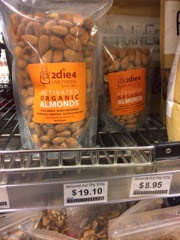
Activated nuts. What’s the deal? And are they just another ploy to hike up the price. Because I am telling you, free range organic grass fed activated almonds. They are worth their weight in gold. Gold, I tell you.
Today I had to learn how to drive the school mini-bus and be assessed by an RACV instructor.
When they say mini, it really does not feel that mini to me. It goes a long way back.
So. Me in assessment-type situations. My amygdala combined with my pre-frontal cortex both send distress signals to my hypothalamus, which then goes into some kind of frenzy at the perceived threat of failure and I believe it very elegantly shuts down, rendering all common sense null and void.
This is not so good when driving a long mini-bus and pretending that you have students in the back. Although possibly this scenario is much better than if I had actually had students in the back.
First step to hypothalamus shutdown: step up into the high driver’s seat in front of two colleagues, bang first knee on entry, shut second leg in the door as it swings shut. I know, how is this manoeuvre even possible? Don’t ask me, but I do have the bruises.
Next, struggle to locate which are side are the indicators vs window wipers on…yes, yes, I have a French car, I’m a French teacher…I knew my clichéd lifestyle would get me in the end… also struggle to locate brake and accelerator…where is the clutch, oh ok it’s automatic…and what do they mean, press button to release handbrake? What button?? Reddening cheeks, breathing a little faster. And I haven’t even turned the key. Do I need to adjust the mirror? Yes, probably. What about the seat? OK. Turn key. Did I properly check the blindspots? The van is extra long, you know? Breathing. Now, turn into this narrow street with parked cars on either side. How do you feel about reversing into a driveway and turning the van around? Um what? How do I feel? I feel like No…? Apparently an option is indeed no, and allowing a colleague to reverse the minibus if it will ensure the safety of the students is a good choice. I think if I still have students actually in the van with me, safety is not a word they are going to be using. So No, may be an option but furious scribbling on the assessment page does slightly suggest otherwise. Ok. Back out on wider roads. Possibly a good idea to indicate before changing lanes, not as you are changing lanes. Yes. Of course. And, did you just fail to give way to a person turning left when you were turning right into the same road? Ummm. Yes. Is that a thing? Did I just break a rule? Because you see the rules are different in New Zealand…voice tapering off to very small voice as hypothalamus-impaired brain doesn’t want to, and yet must acknowledge that I have been a) driving around in Melbourne for three years and b) they actually changed that rule in New Zealand to align with everywhere else in the world. Because it’s a stupid rule that makes no sense. To the whole world except me. Apparently.
Time to let someone else drive. Relief floods my body as a burst dam floods a parched desert. Or something.
But the pop quiz does not stop for Jo. Oh no. On the Freeway, luckily not driving or having to change lanes and relive the whole indicating vs window wiper vs time between indicating and moving debacle…Jo, what would you be looking for when you drive under an overpass? Picture rabbit in headlights, stricken-type look, lots of blinking. What’s the correct answer? Um. In winter, there’s more shade, so um is there more potential for ice? No? The overpass might collapse? Also no? Oh right, someone might throw something off the overpass onto the vehicle. Ten people died last year because of that very action. Note to self, be more cynical, trust no one, expect the worst. Jo: where are your tyres positioned on the road when there are tram tracks. Um. Not on the tram tracks? Well…yes, but to the right or to the left? Again, is that a thing? We don’t have tram tracks in New Zealand…small tapering off voice.
I have won myself and my impaired hypothalamus an extra hour and half in the mini-bus with the RACV instructor and I am probably lucky I still have my licence.
Moral of the story: if you hear that I am going to be driving somewhere, perhaps take public transport. And do not put me in any kind of situation where you are asking me hard questions or watching how I do something. I am not very good with practical life stuff. I am an academic. But the kind of academic who needs time to think about things and write them down, not a sitting exams type.
Look, they didn’t even have cars in Medieval France…
Named after its owner and head chef, Shu restaurant provides a modern take on Sichuan cuisine and dining. Shu Liu is originally from Chengdu, the provincial capital of the Sichuan province. With a background in fashion and a love of cooking for his friends, Shu is not classically trained, but combines his adopted city’s range of good quality and often organic produce with his mother’s recipes and his own flair to produce exceptionally clean and fragrant flavours.
There is an à la carte menu, but much better to just go with the dégustation menu and allow Shu and the team to create a feast based on the daily procured vegetables, meat and fish. For $45, you get an array of little palate cleansers and refreshing salads and larger dishes packed full of chilli and Sichuan spice.
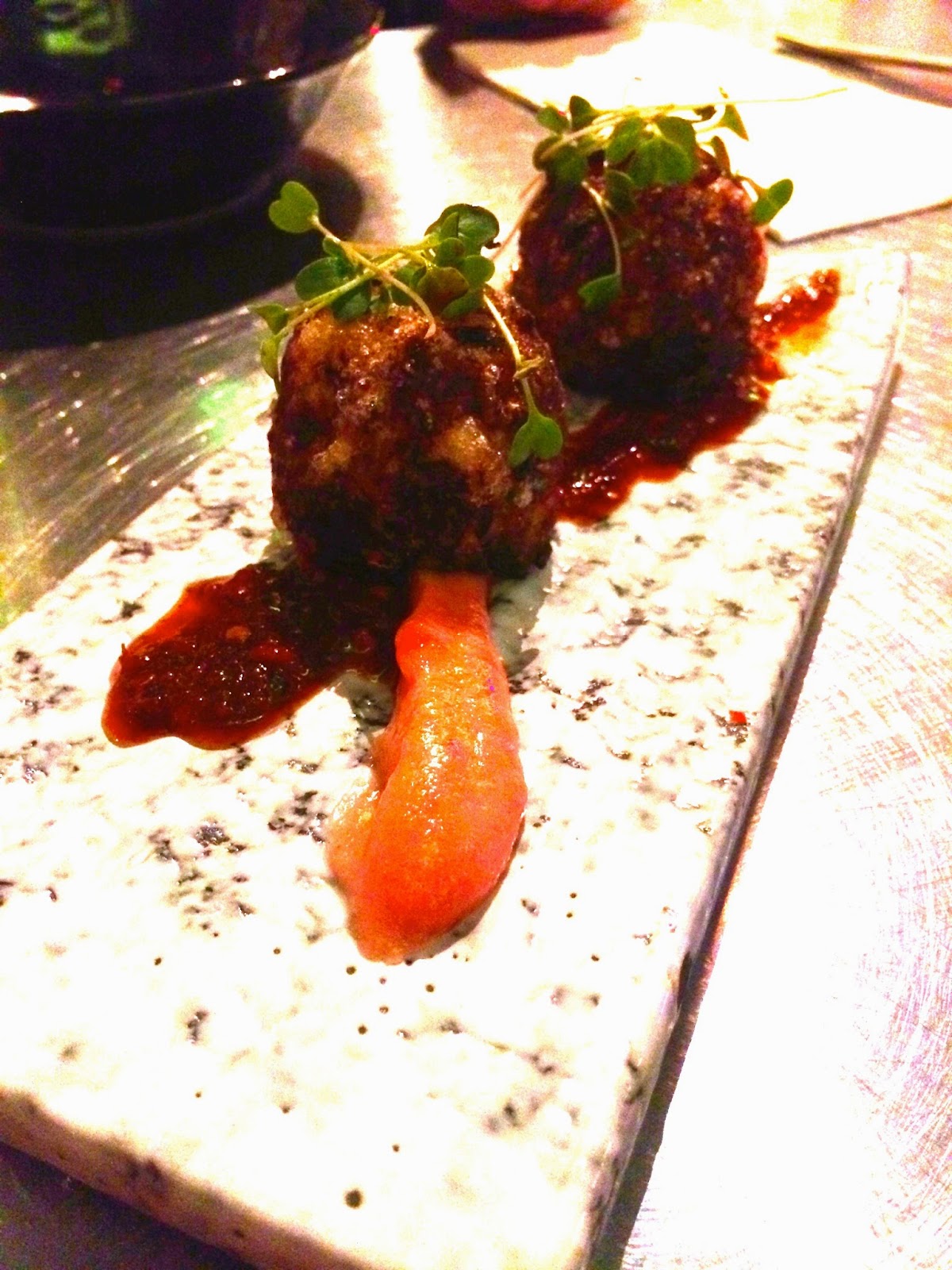
Organic beef dumplings with chilli sauce.
The above photo ended up a lot more phallic-looking than I had intended…flathead cakes with two dressings.
Thin slices of peppered beef with kale.
Eggplant rolls with ground cashews.
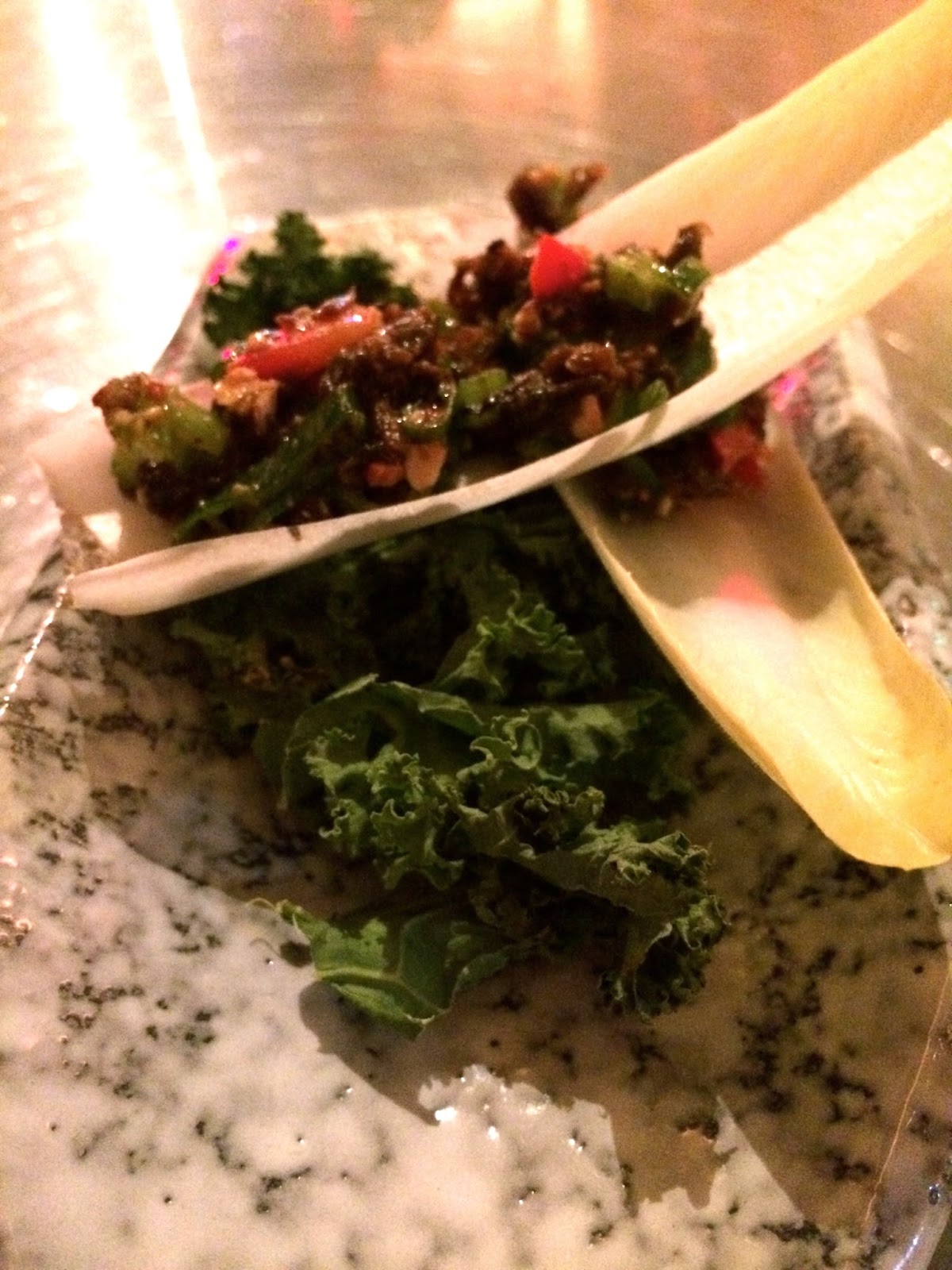
Succulent chicken wings and tiny diced vegetables with spice in an endive leaf.
And then a tofu and fresh broad bean salad.
Finally a lamb and fennel dish. Smoky and rich.
All in an industrial and psychedelically-lit space. Shu was a surprise to me, from the fit-out to the flavours. Soooo good.
I have recently been intrigued by the concept of logistics.
Don’t ask me why.
Third party logistics, to be precise.
But let’s start at the beginning. The term logistics comes from the Greek logos, meaning “speech, reason, ratio, rationality, language, phrase”, and more specifically from the Greek word logistiki, meaning accounting and financial organisation. The word logistics, of course, and perhaps that’s why I am so drawn to it, has its origin in the French verb loger; to lodge.
It started being bandied around as a ‘thing’, by the military. They needed to supply and maintain arms, ammunition and rations as they moved from their base to a forward position. In ancient Greek, Roman and Byzantine empires, military officers with the title Logistikas were responsible for financial and supply distribution matters.
Logistics started being used as a business concept in the 1950s. It was around then, post-war, that supplying businesses with materials became more complex and more globalised. So then a new fancy pants job was created: supply chain logisticians. They were all about having the right quantity of the right item at the right place for the right price. That’s a lot of rights.
So just going back to the start and the ideal of logos. Logistics are really all about communication. And communication, of necessity, involves other people, unless you are communing with the other personalities in your mind…and even then…it IS still communication.
So logistics = communication and relationships.
Ergo, trust.
It fascinates me that these business concepts proliferate and I hear them and think, nah, no idea, I’m a French teacher, what would I know about logistics. And granted, if anyone actually IN logistics read this, they are probably saying oh là là, stick to the French letters and leave the logistics up to us.
But.
Communication, relationship and trust.
From the outside looking in, that’s what it’s all about.
So when I heard the term, THIRD PARTY LOGISTICS, or TPL or even 3PL, its little fancy acronyms, I did think, now this is where the trouble starts. Or where the negotiation and trust and ease start, perhaps. Depending on your baggage. And communication. And honesty.
Because whenever you bring in a third party, you’re increasing the need for trust.
So. Third party logistics is about outsourcing and trusting who you outsource. Third party logistics involves using an outside organisation to execute logistics activities that have been traditionally performed within the organisation itself. Some examples of this are warehousing, transportation management and freight consolidation.
It appears that there are layers of logistics. Of course. You can’t get to 3PL without 1 and 2PL. Surely.
So First Party Logistics refers to a situation where the shipper, such as a manufacturing firm delivering to customers or a retailer picking up cargo from a supplier, dictate the origin and the destination of the cargo and it is all handled in-house. Sole provider. Handling it. Perhaps well, perhaps, fraught. Certainly lonely.
Second Party Logistics are the ones providing a transport service over a specific segment of a transport chain, so by sea or rail or a trucking company. They are probably taking cargo from a distribution centre to a port terminal. Here, we start allowing another to share the journey.
Then there’s the third party who are a bit like intermediaries who are the connection between the shipper and the rail company, for example. So, freight forwarders, courier companies.
Now, apparently, there is 4PL, the companies who oversee the overseeing….or more pertinently, perhaps, streamline the logistics and oversee the overall supply chain and ensure that best practice is being adhered to and that their client is making lots of money. Or at least, the money they have the potential to make.
There are whispers of 5PL and some kind of crow-barring of e-business into the mix. I think that’s just trend analysts playing with our minds.
Because really, it does all still boil down to how we work with others and what we tell them we need and what we expect them to supply and how efficiently that all goes down.
Possibly, the way that is going to work in the 3PL world, is when parties act simultaneously in their own best interests and in the best interests of the group.
And in order to do this, businesses seeking a 3PL relationship need to think about what their needs actually are, before they seek a provider. What is the desired outcome? What will they put up with and what is an absolute line in the sand?
Sometimes it is necessary to stray from the fixed idea one party might have in how supply is going to happen. But the end result still has to be mutual benefit, not one party feeling compromised and bewildered at the turn of events.
When choosing a potential partner…3PL partner that is…there is apparently a recommended selection process:
Product type. Can the 3PL handle what you need them to handle…are there fragile, precious aspects which need to be considered?
Geography. Can the 3PL handle distance?
Service. Does this occur when and in the way you need it?
I didn’t ever imagine that I would be writing or thinking about Third Party Logistics. And yet here I am, fascinated.