a year in Provence

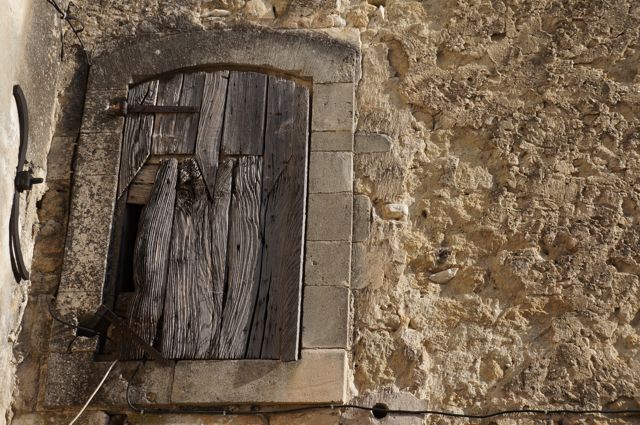
Menerbes, Peter Mayle country.

Ménerbes became famous in the English-speaking world when in 1990, British author, Peter Mayle, regaled his readers with the highs and lows of a British expat who settled in the village of Menerbes.  One of his books was made into a film, A Good Year,  (2006) directed by Ridley Scott and starring Russell Crowe when he wasn’t “fighting ’round the world”…  The area was, of course, already famous for a far more previous inhabitant, the Marquis de Sade who lived in Lacoste, which you can see from Menerbes.

Swimming in Monaco

Open air salt water pool in the port. Older women with dark brown, wrinkled leather tans. Topless. Deck chairs around the pool. Monaco high-rises, limestone cliffs, preparation for the Monaco Super Yacht show, luxury super yachts, marquees, sponsors, trucks delivering chairs, pot plants, wine.

Hot.

Some lengths. The salt slightly stinging the inside of my nose. Some sun. More lengths. Sandwich jambon fromage. Sparkling water.

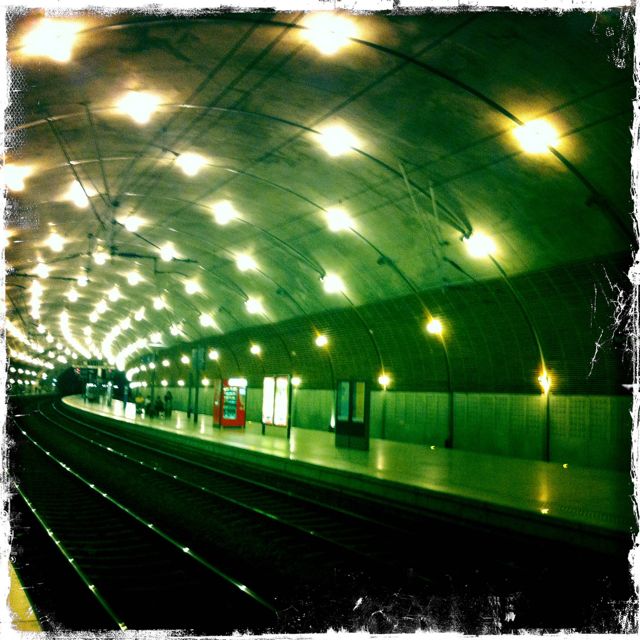
Train back around the coast.

the cultivation of impertinence

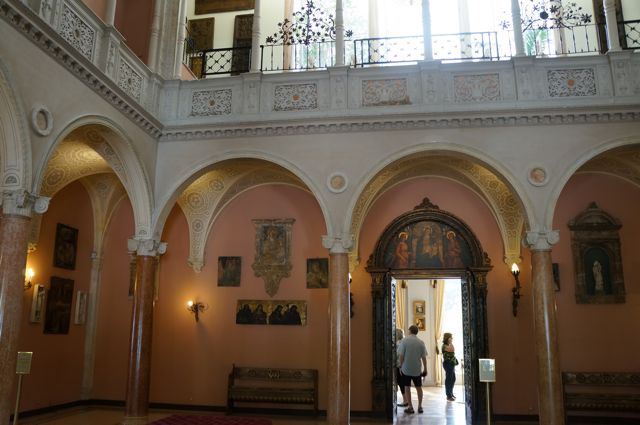
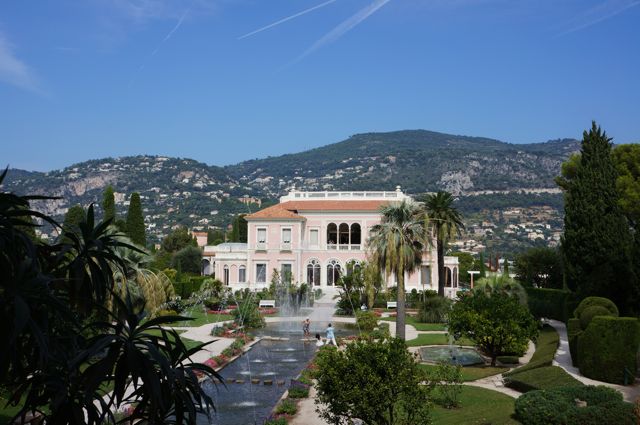
Beatrice Ephrussi de Rothschild, the daughter of the banker and major art collector, Baron Alphonse de Rothschild. Charming and very flamboyant, Beatrice married Maurice Ephrussi, a man fifteen years her senior who had a penchant for gambling and also for women and his gift to his young wife was an illness which prevented her form having children and an enormous amount of debt. The Rothschild family stepped in and took errant husband, Maurice to court to demand a separation and finally, after 21 years of marriage, Beatrice and Maurice separated.

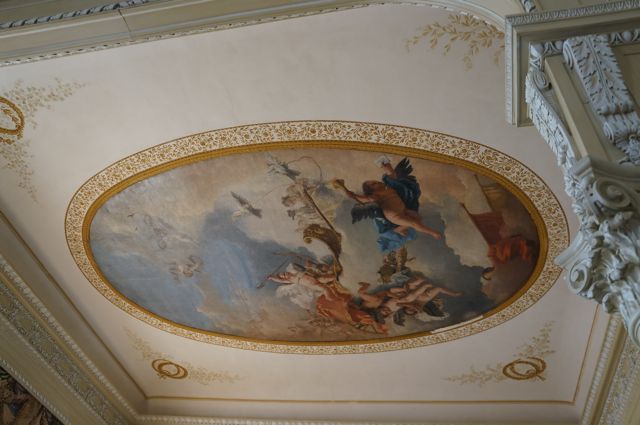
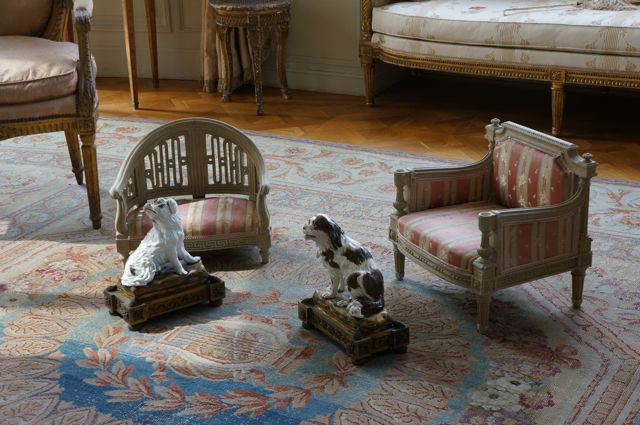
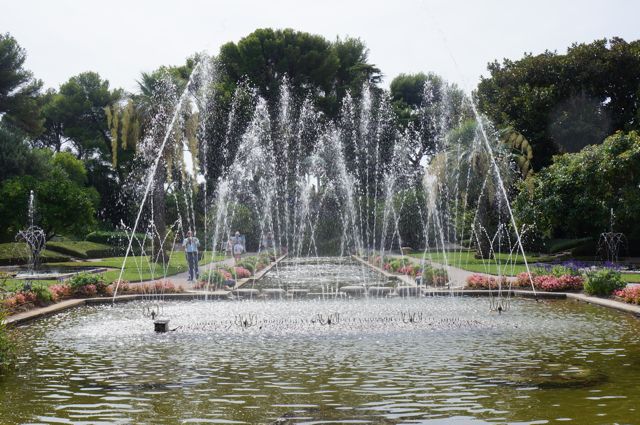
The following year, Beatrice’s father died and left her incredibly wealthy. She bought the house which is today the Villa Ephrussi de Rothschild in Beaulieu, just along the coast from Nice, and set about collecting…animals, tea sets, art, plants. When she died, Beatrice left her house and collections (although not the animals) to the Academie des Beaux Arts.

Nice…it’s nice…

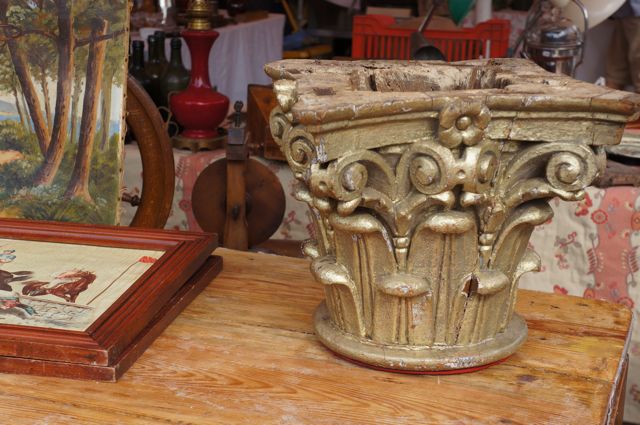
Landing at 2.30 in the afternoon, a big smile on my face, ready for the frenchiness to unfold. Limestone backdrops, sweeping coastline, heat haze, a city which from above seems to pile up on itself, vapour trails against a blue sky, the antique market in Cours Saleya, Vieux Nice, rosé de Bandol on the terrasse.

Nice.

I think I may well have been French in a past life. Something opens inside me when I’m in France, walking down the narrow streets, seeing the labels in French on cuts of meat in the butcher’s hearing French, speaking French. The little seed opens and blossoms.

the weight of the absence of knowledge

I am often struck with how little I know. And when I say struck, I mean struck with a debilitating blow. All those years of education, all the hours upon hours of learning, a curiosity about the world and its people…and there is SO MUCH that I don’t know. Even some of the things I once knew are no longer there. For example, last night I wondered why squid have ink, apart from the cool factor involved with being able to serve squid jauntily perched on top of squid-ink pasta in some kind of animal-kingdom-meets-culinary diptych. And you have to realise to what point I am exposing myself publicly to even admit such a wondering. I mean, I did gaze off into middle field and think that they probably have ink for protection reasons…and I was right in a sort of vague way. Squid have a sac, a bit like a bladder, and when threatened, their muscles contract and then release an ink-like liquid which carries their scent so as to confuse their predator. So there you go. Tick.

One of the many areas of knowledge, (or its absence) I struggle with is art. In the face of the collective creative enigmatic theoretical force known as ART, I feel small and slightly stupid. I like looking at art and reading about it and thinking about it and what it makes me think about and I like talking to people who know about it and who make it and I like wondering about what it must feel like to be creative and skilful and to translate the idea from their heads to the paper or canvas or object or yet to be formed substance…but from the outside looking in at me, I HAVE NO IDEA, and I don’t like that this is the case.

I went to the Heide Modern Art Museum and Sculpture Garden on Sunday. The four year old whose art exhibition featured in a previous post went into the exhibition with his dad. Apparently, the aforementioned four year old was a bit taken aback by some of the pieces and asked one of the gallery attendants how the white fluffy cube was art. The attendant didn’t have an answer.

I’ve been thinking a lot about his question. Because I didn’t go in and see the exhibition for myself or do any sort of preparatory research, I didn’t make the connection with the Less is More sign, which was the name of the exhibition. Nor did I realise there was a minimal art movement. Well, maybe I did, but it hadn’t sunk in to a part of my consciousness where I owned that piece of knowledge to the point where I could apply it in any sort of meaningful way in this context. Or perhaps any context.

So. I have now looked it up. I read about American artist Robert Morris and his statement that: “Simplicity of shape does not necessarily equate with simplicity of experience”. Then there is his peer, Donald Judd, who maintained that his art was complex rather than simple. For him, less (or none) of some things – like symbol, narrative, illusion, incident – meant more emphasis on others,

like dimensionality, shape, material and an engagement with real space. “It isn’t necessary for a work to have a lot of things to look at … its quality as a whole is what is interesting,” Judd said.

I didn’t realise that ideas related to the art object’s relationship to architectural space and the role of the spectator, (ideas that I actually have been thinking about lately…no, really…but in a very vague, oh hey, I’m aware of the space the artwork is in and isn’t that interesting sort of way) are ideas that came from Minimal art, or, at least from discussions and theories on this movement.

I’m not really sure I can explain to my nephew that the sensuality of synthetic fur softens and transforms the minimalist cube, or why Kathy Temin’s White Cube might be called Fur Garden. But it did occur to me, that if we don’t give something the label of ‘art’, then we don’t have to question its validity or how it fits in with what we think of as art, but we can just have a personal response or gut reaction to it. My nephew might still think…’that’s just silly’ and wonder why a cube has fur on it, but he has such an amazing imagination that without the burden of the label, ART, he might be able to come up with a really cool name for it or wonder what other ‘plants’ in the fur garden might look like. How a 4 year old already has such distinct, and, perhaps, snobby ideas on art, I don’t know. Especially considering his father was a sculptor before he became a film-maker. But already his wings are clipped, if not by his parents, then by some pervading social idea of what ‘art’ might be.

daffodils in the setting sun

Daffodils

I wandered lonely as a cloud
That floats on high o’er vales and hills,
When all at once I saw a crowd,
A host, of golden daffodils;
Beside the lake, beneath the trees,
Fluttering and dancing in the breeze.
Continuous as the stars that shine
And twinkle on the milky way,
They stretched in never-ending line
Along the margin of a bay:
Ten thousand saw I at a glance,
Tossing their heads in sprightly dance.

The waves beside them danced; but they
Out-did the sparkling waves in glee:
A poet could not but be gay,
In such a jocund company:
I gazed–and gazed–but little thought
What wealth the show to me had brought:

For oft, when on my couch I lie
In vacant or in pensive mood,
They flash upon that inward eye
Which is the bliss of solitude;
And then my heart with pleasure fills,
And dances with the daffodils.

 
William Wordsworth


a crash of rhinos

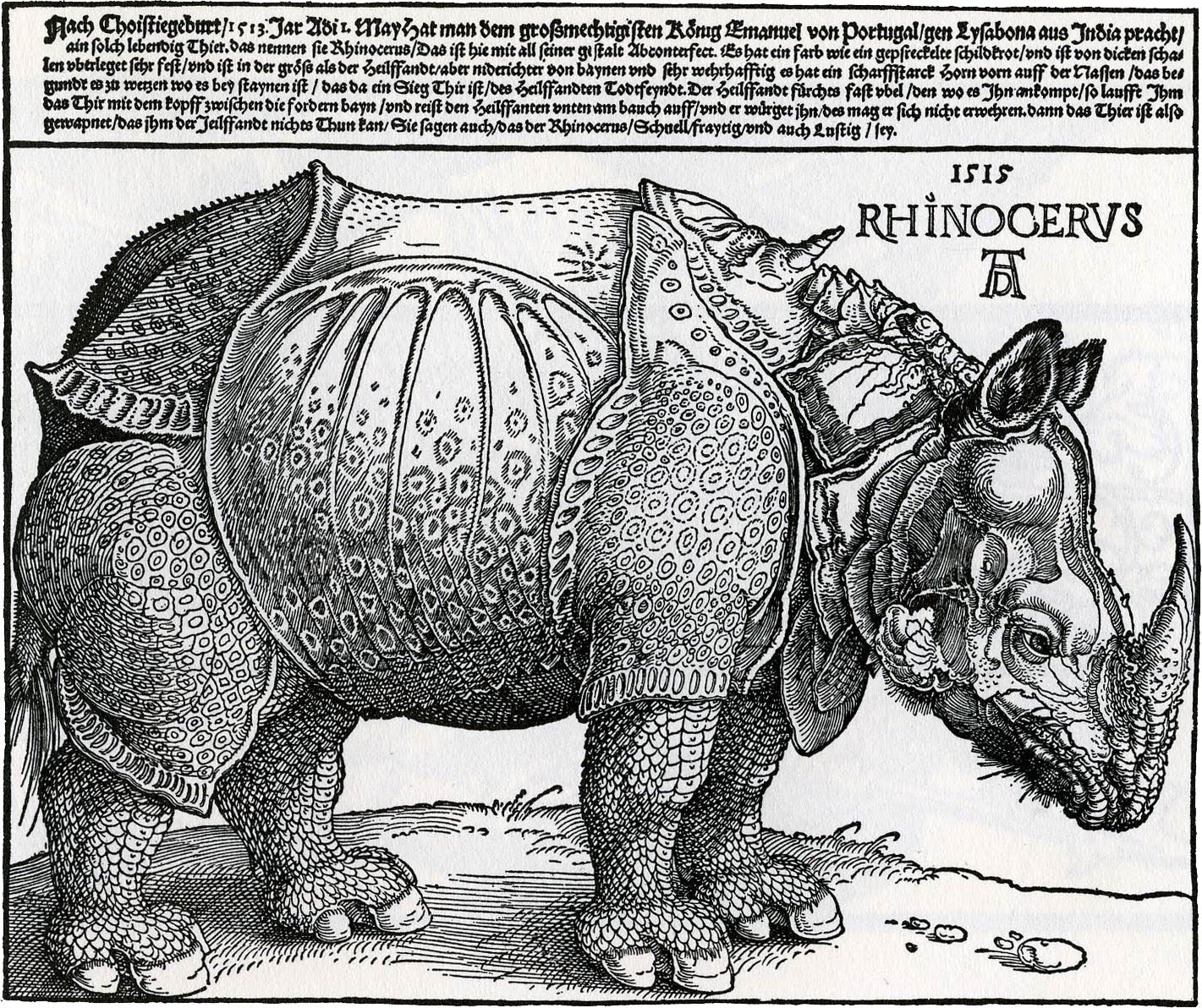
Melbourne is slightly obsessed with rhinos. They are part of a campaign to warn distracted pedestrians of the dangers of willy nilly wandering onto tram tracks. They appear on graffitied walls. They appear…(or, in fact, not appear, as the fragility of the 500 year old Albrecht Durer wood cut of a rhino means that it is kept safely)…in the vaults of the NGV.

I’m not quite sure what the connection is between Melbourne and the rhinoceros, but as the African Zulu proverb says, do not speak of a rhinoceros unless there is a tree nearby.

having my cake and eating it

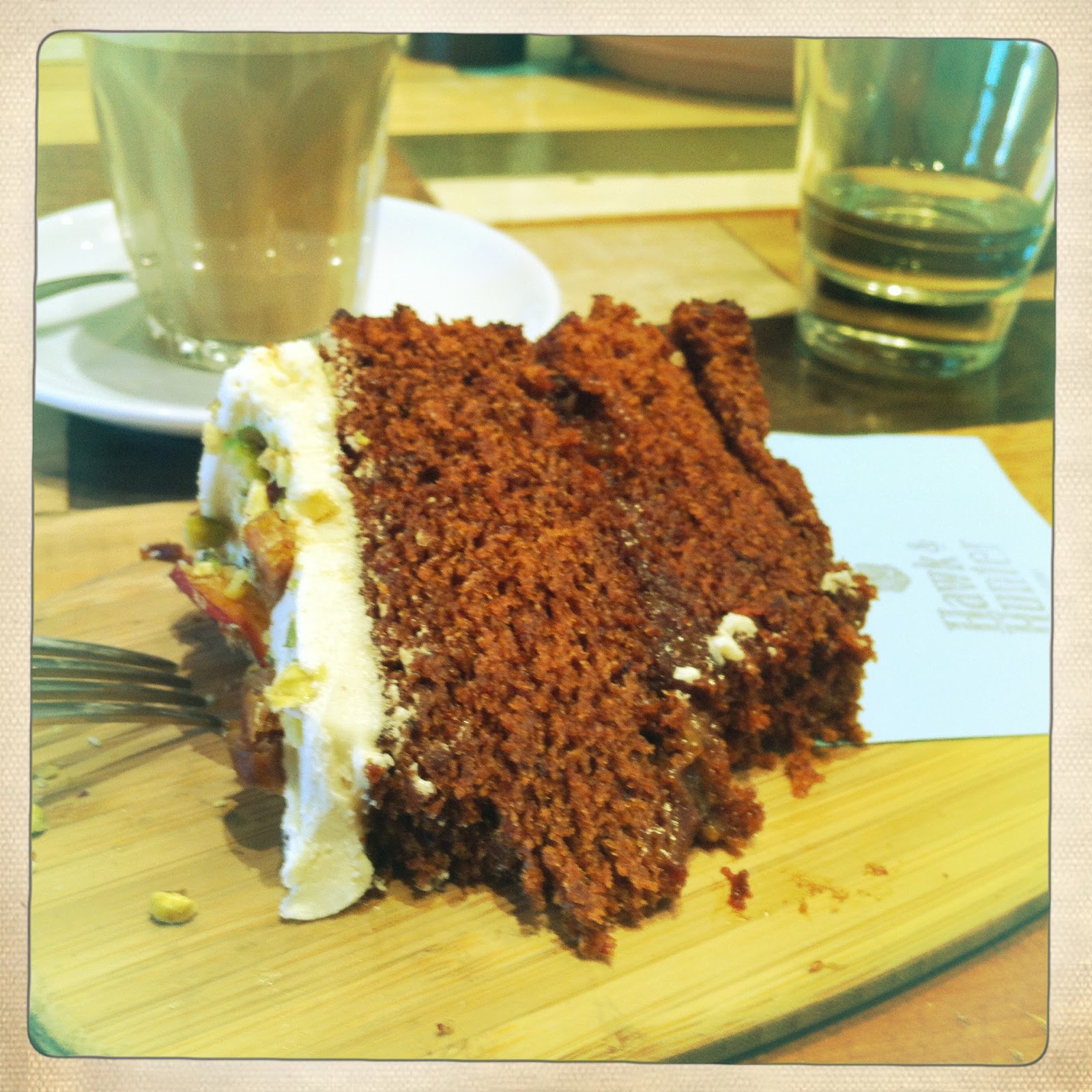
Sticky date and ginger…

Hawk and Hunter. Is it a cafe, a milk bar, a providore…What IS a providore? Well, let me tell you. A providore is one who makes provision. So yes. And H & H does provide. It provides a new hipster hangout, a haven for the harried, a haunt for handicraft…by which I mean art…there’s emerging artist’s work on the walls, I was just consumed by the alliteration. And speaking of walls, they are all exposed brick, industrial chic wonder. 
But I am hiding Hawk and Hunter’s actual charm beneath the bushel of my wordiness. It’s good. Friendly, staff, good coffee, nice-looking menu and delicious cake. 
Ripponlea, just opposite the train station.

Go Back to Where You Came From

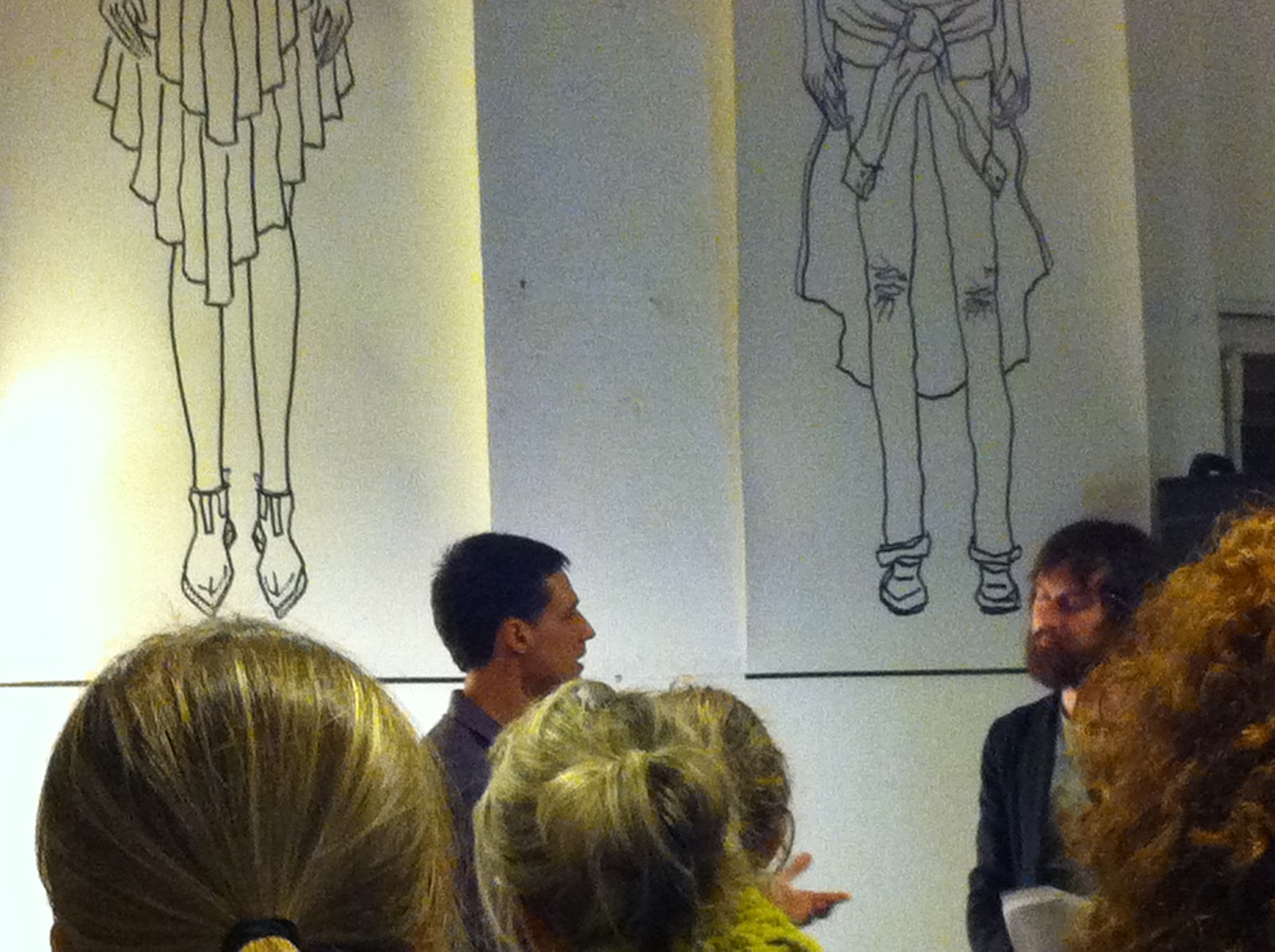
Another Dumbo Feather conversation night. Held in the city at Manchester Press, a cafe in a former print building. Dr David Corlett, a case worker and researcher who has worked with refugees and asylum seekers. He completed a doctorate in 2003 on Australia’s response to asylum seekers. He has hosted 2 series of a programme called Go Back to Where You Came From, which basically gets those antagonistic to asylum seekers in a position where they see what these people have fled. Dr Corlett’s desire is to humanise the issue. For him, it’s about protecting the people. The refugees and asylum seekers are fleeing countries in which Australian troops and peace-keepers have been deployed because the political situation is unstable so it is obvious that people would want to escape from that. Sending them back, which is what has been happening, is to put them back in dangerous situations.

A man in the audience referred to this week’s news item that an extraordinary 53, 900 New Zealanders have moved to Australia in the year to July. This number dwarfs the 9607 asylum seekers who arrived in Australian waters by boat. And no one bats an eyelid. Well…except to mock our accent with requests for us to say fish and chips and sixty-seven and make some sort of comment about sheep. 

Interesting point.