walk the line

Last May, after the exit-stage-left from my debut on stage, I boldly announced that my next project was to be learning the guitar. I had, for a long time, wanted to try this instrument more social than the flute I’d cut my musical teeth on. There really is no whipping out of a flute at a party for a rousing chorus of kumbayah. Campfire sing-alongs just don’t make the grade on the flute. And so the desire I had harboured burst forth from in me and I told all and sundry, “I’m going to learn the guitar”.

I did nothing. Well, I procured the guitar. It sat in the corner of my room. Apparently there is no osmosis in the guitar-learning journey, possession may well be nine-tenths of the law, but presence does not equal acquired knowledge. The black guitar sat in the corner, silently mocking my laxness.

Good things take time. I know this because I read it on the bottom of a menu. Statements such as these provide leeway. Leeway to take one’s time and herald the eventual outcome as quality because of the time that the aforementioned outcome took to manifest. Summer holidays are the perfect time for paused projects. January is even more perfect as scorning the idea of New Year’s resolutions is really just a smoke screen for the fact that there are several lurking there, but the fear of actually embarking on their realisation is overwhelming. Announcing intention is fraught. Once it’s out there, failure is the possible result of lack of achievement of said intention. I had made the mistake of announcing and now it was high time I took the bull by the horns, or the guitar by its neck and rather lovely curves and just did it.

I can play three chords. A, D, E. And, as the lovely young man on the website says, that means I can have loads of fun (in an endearing English accent) with tunes such as Bob Marley’s, Three Little Birds and Johnny Cash’s Walk The Line. He is right, that man on the website, it is absolutely fun. I can recognise what I’m playing, even if it is the William Shatner. Stilt. Ed. Version. Changing. Finger shapes. Takes time.

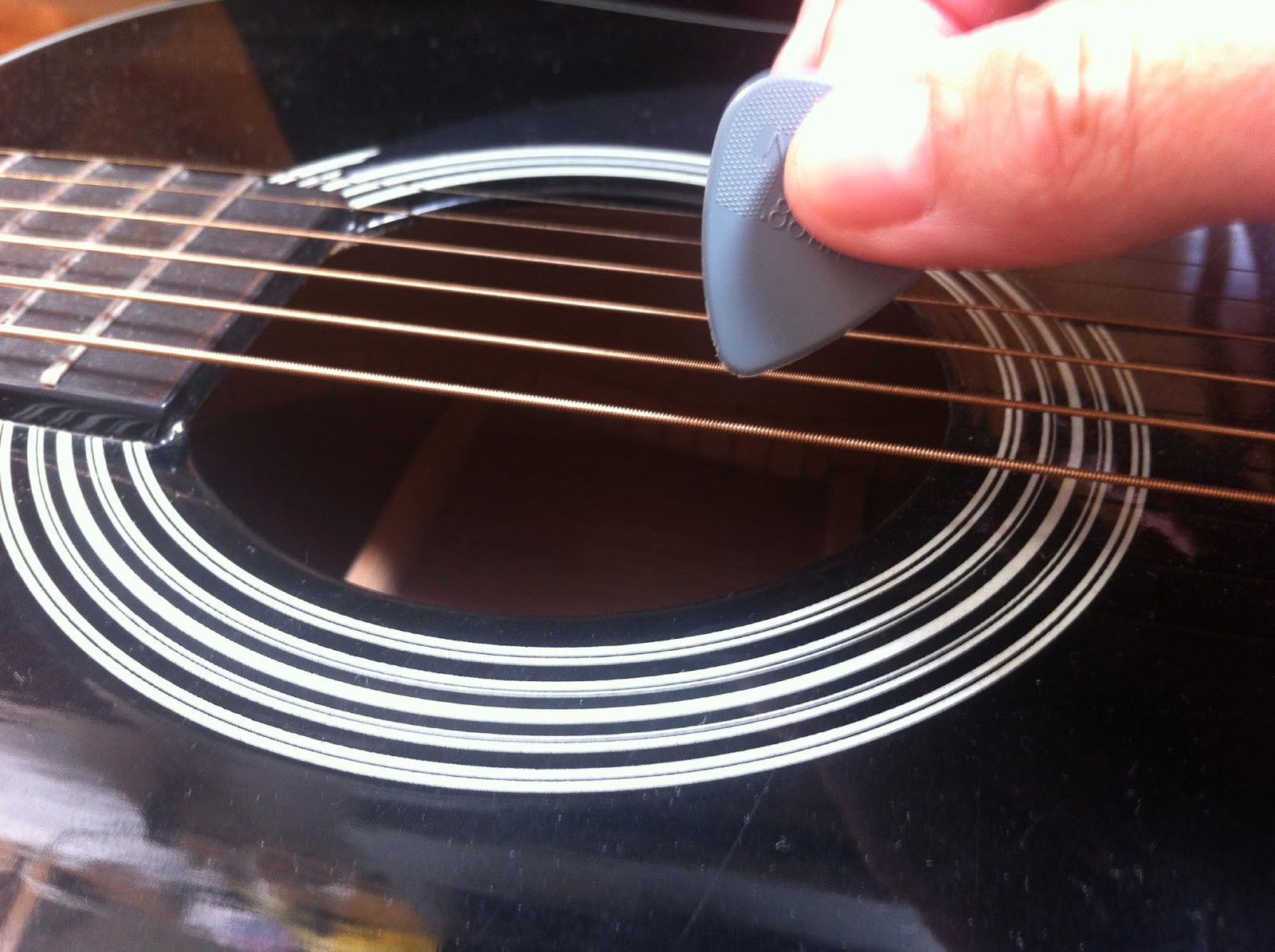
I have a newfound sense of respect and appreciation for guitarists. They pull some pretty complicated moves and there is a lot of coordination going on there. Strumming and picking and capos and singing too. Wow. I have a long way to go.

And what I’m really wanting here are Anna Coddington’s arms…

A few more rounds of kumbayah, and we’ll be there…no?

i think i’d be good for you and you’d be good for me

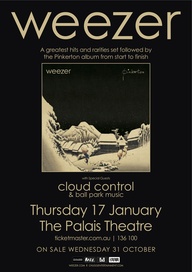
It can be a risky business, going to a concert by a band you loved years ago and with whom you associate a time, a place and feelings. A friend said he couldn’t go to such a concert as he would become overwhelmed with feelings of nostalgia and that there was something infinitely sad about a crowd of people gathered together and reliving their youth. He even used the word loser.

There was nothing loser-ish about the crowd that packed the Palais in St Kilda on a balmy 40 degree night. When Weezer announced they were playing the whole of their blue album from start to finish, there was an immediate demand for the same treatment for Pinkerton, the initially misunderstood and badly received follow-up to the band’s first highly acclaimed offering. It felt as though the crowd had a sense of pride in its own power to make the night happen…we asked for it, and we got it.

And there was certainly nothing loser-ish about the band itself. They were enthusiastic and full of energy and happy to be there. It must be great for the boys in Weezer who went through a dark time after Pinkerton came out in 1996 and was voted second worst album of the year by Rolling Stone records. But something miraculous happened with the gilding of time and by 2002, Rolling Stone readers had changed their mind and voted it the 16th best album of all time. That’s a pretty big change of mind. Now it receives cult-like appreciation.

Hearing it live was like living a memory. Has it really been 16 years? 

where are we now?

It’s familiar, but it’s not the same. And I don’t think that’s a bad thing.

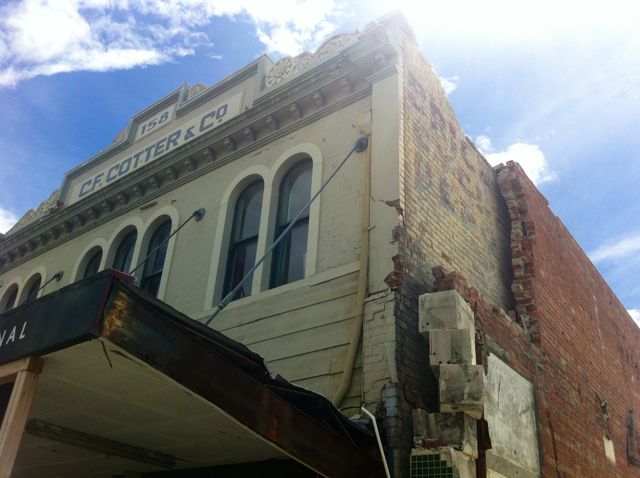
Walking through the streets like a tourist in my own city, marveling at the small footprint of buildings that housed people, ideas, stories, life.

Go, Christchurch, you good thing. You’re doing the best you can. People not from Christchurch ask, is it all ok now? And the answer is no. It’s not. The journey to ok is long.

But it’s on the way to being ok and there is a lot of goodness in that.

http://youtu.be/FOyDTy9DtHQ

Pirate espresso

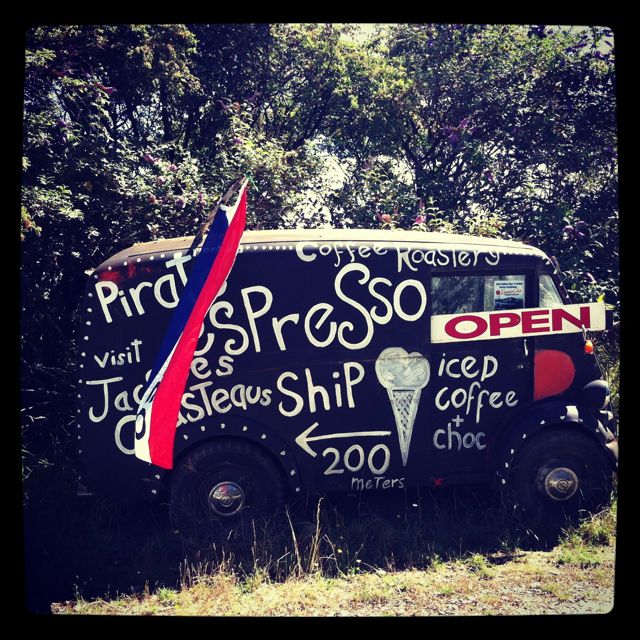
Pirate espresso…who could say no?! Pirate espresso on board Jacques Cousteau’s French-built vessel, the Physalie…? Oh la la…it’s the stuff dreams are made of for a desperado French teacher.

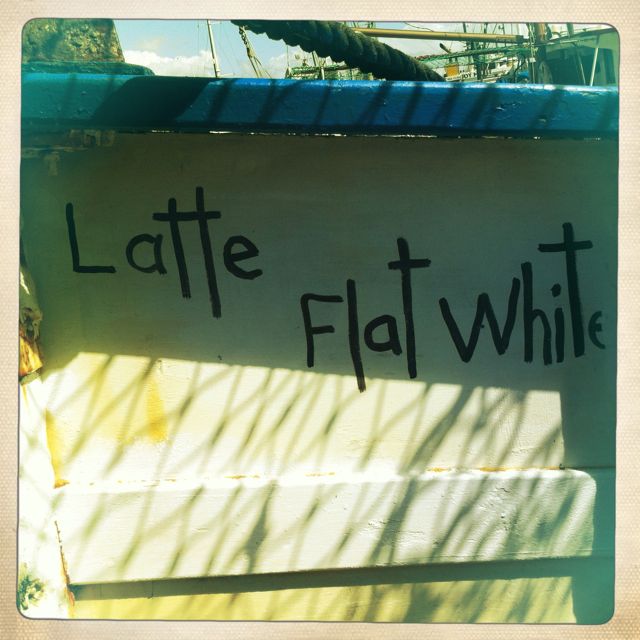
Overlooking beautiful Ligar Bay in the bigger Golden Bay, lattes and flat whites abound. The coffee is good, even if it does take a long time. But perhaps that’s the idea. Waiting for coffee, there is time to feel the sun on your face, talk to the person behind you in the queue, anticipate the caffeine.


Arohanui, Aotearoa

It was my belief that Pōhutukawa on the beach, golden sand, Christmas on the beach, was the stuff of myth and Telecom ads, designed to evoke some sort of collective resonance amongst New Zealanders searching for a sense of belonging and shared heritage. I was wrong. It’s real. It’s ours.

In a rental car whose model name was particularly apt for the region (Nelson holds the title of sunniest region in New Zealand), driving from Nelson through to Pohara was breathtaking. I loved it. Green. Hills. Breathing. Feeling.

Camping in the Nelson region over Christmas is a Christchurch residents’ rite of passage. I had never done it until now. Now that I’m in Melbourne, of course I wanted to go camping in Pohara…

I stayed with friends whose family had made the pilgrimage north every year for over thirty years. Now the children have had children and they all go north to camp by the sea.

Pohara means poor, destitute, poverty-stricken in maori and yet this is a region rich in beauty, flora, fauna, kai moana, vineyards, hops, clear springs. Beautiful. Mythical. I loved it. 

the dogs bark, but the caravan moves on


Life goes on, a new Mayan cycle of time begins. Whether that means anything or nothing to you, it is interesting to note the collective reaction to the possibility of yet another predicted apocalyptic event. Skeptic or believer, a lot of people were talking about it.

We have a linear view of history, or more specifically, our own history. And if it is linear, then I guess that’s why we wonder where we are going. Are there patterns of progress? Or is history random? If there are indeed patterns of progress in history, what then is the ultimate direction? What (if any) is the driving force of this progress? Philosophers such as St. Augustine and Hegel spent a lot of time thinking about eschatological matters, end points and the inevitability of humankind running its course.  
We do seem consumed by the final cadence. Whether that comes from a buddhist, christian or secular standpoint.
But ambition, competition, social rules of constraint, in the end, nobody wins. All that really matters, all there really is, is the moment. Feeling joy, even exquisite joy or something authentic in the moment. If you’re not feeling it, you must do something about that. We’re here now. This is it. Find something that works. Love, appreciate, strive to be thoughtful and good, create, don’t sit on the fence, don’t be lukewarm. Do it now.

oh to be a writer, a real writer!

“I’m not going to tell the story the way it happened, I’m going to tell it the way I remember it.”

Narrating our lives through Facebook, Twitter, Instagram, Tumblr, blogs…subscribing to our own myth, the myth that we have lives worthy of narrating, worthy of sharing. Seeking the best light in which to present ourselves and enjoying hipstamatic and instagram’s zany effects which help erase lines and spots and colour our experiences with the hue of faded, seventies coolness or X-Pro II style. We seek words and images that will connect us to others. We want to be heard and seen in a world where, increasingly, many feel mute and invisible. We want to leave a trace of ourselves, a scattering of breadcrumbs along the path. Follow them and find me…please.

The impetus to write is to impart certain knowledge, whether this is knowledge based in the fictional world created by the writer, or based on authentic information. Either way, the writer has an overriding idea that she or he wishes to convey. And then they seek whatever devices they can to amplify their meaning, win the reader over and get inside their soul. Although the latter is perhaps too intense a desire…

It all starts with an idea. From the initial idea, the writer commits it to paper, or in more modern terms, to the screen, arranging the work in a certain way and finding suitable material with which to express this idea. The text which ensues is an amplification or elucidation of the initial idea. Invention and intention are co-dependent elements in the craft of composition. In inventing a work, or inventing a way to relate auto-biographical adventures, the writer takes the subject matter and uses it to  meet a certain end, to fulfil her or his intention.

Authorial intention is the fundamental requirement in the act of literary creation to which all other elements are subordinate. The creation of a context, or, in other words, the selection of appropriate subject matter, the ordering of material and the use of some fancy footwork literary devices all follow on from the writer’s initial mental conception and give form to the idea.

A real writer knows what to do with an idea, or more importantly, can first of all recognise a good idea. A real writer sees the good idea, feels the potential emanating from it, picks it up, turns it over, and then seeks to convey that idea in such a way that the reader can feel the weight of it in their hands and their hearts. A real writer knows the fear of offering their newly clothed idea up to the world for the world to take from it what they will, to love it, hate it, spit it from their mouths. The real writer knows this fear and offers their ideas all the same.

Oh to be a writer, a real writer.

http://www.youtube.com/watch?v=gLISb4_gIxA

I, animal

A visit to the zoo after hours. It’s the stuff of childhood fantasy. There was a Willy Wonka moment as the group of about 50 ‘I, Animal’ goers, all with our head phones on and a very fancy O ipod touch around our necks swarmed through the gates, not really knowing what to expect, but feeling full of anticipation nonetheless.

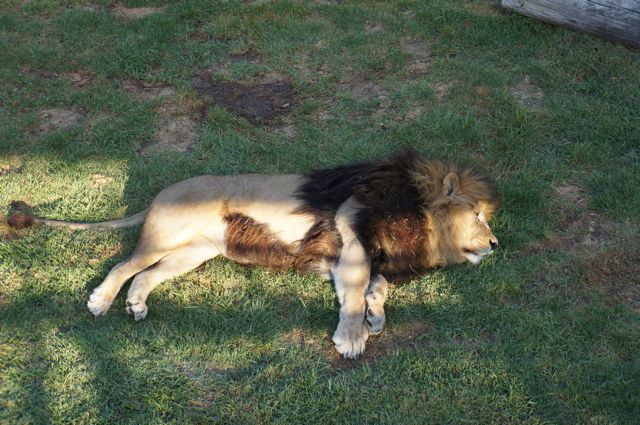
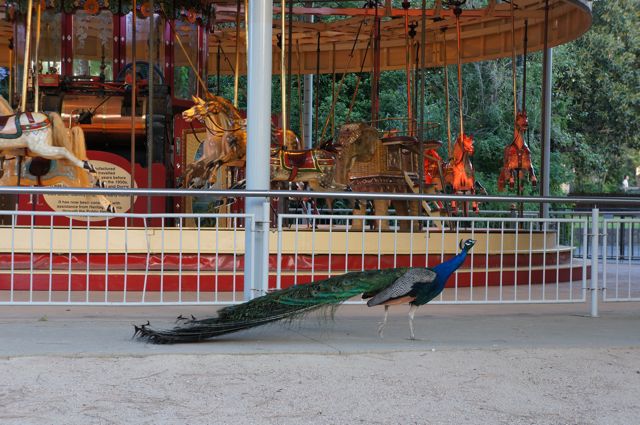
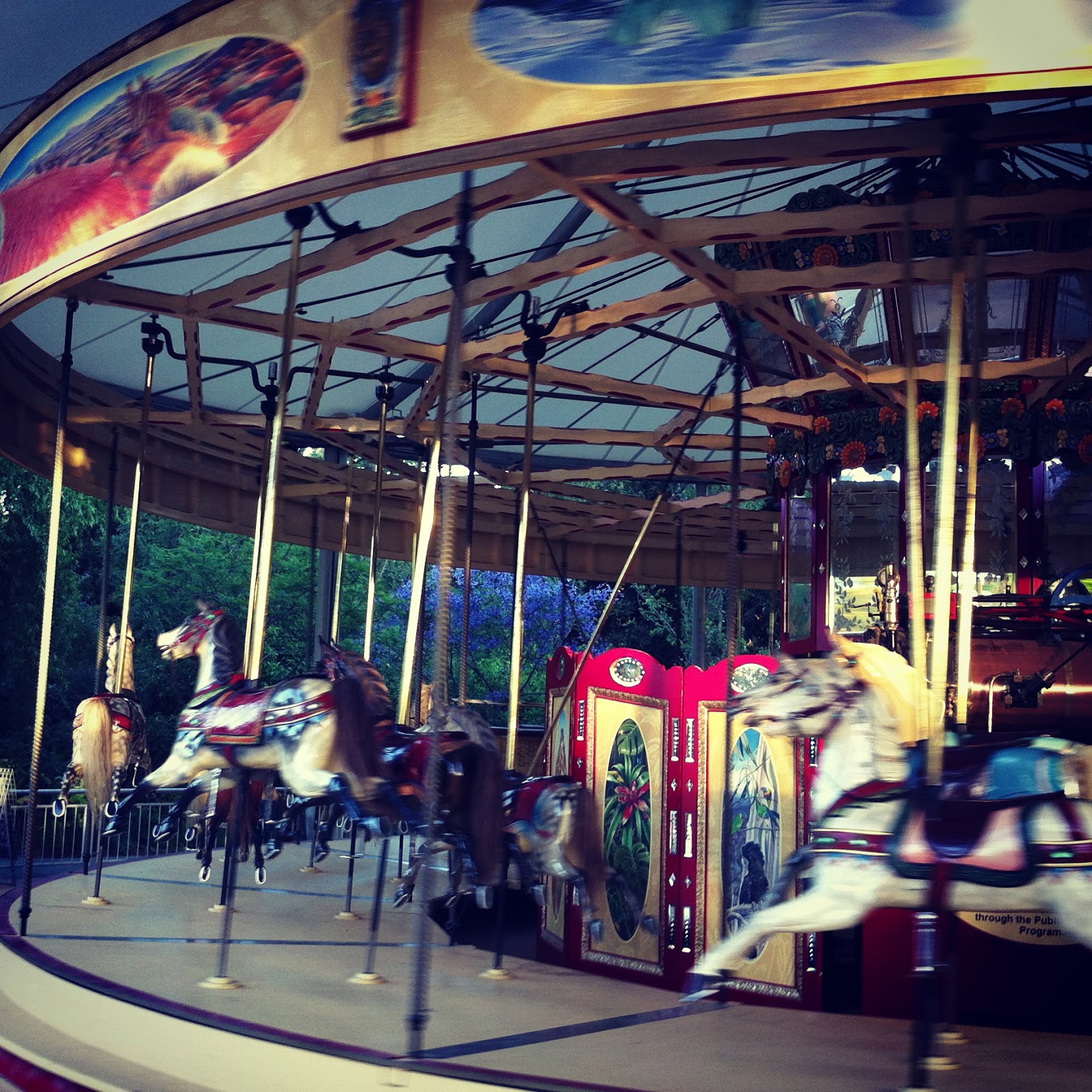
Guided by the voice of Zoe, we were led around the tour we chose when asked which animal we preferred: giraffe, elephant, monkey or penguin. I was on the giraffe tour. But the focus of ‘I, Animal’ was not the animals. Melbourne Zoo, instead, felt like a stunning backdrop for some introspection on a hot summer’s night. Led past hot looking lions, peccary pigs who could rip a jaguar apart and who are particularly smelly, on to the unusual tapir, which is like a cross between a rhinoceros and a horse, to the beautiful herd of zebra and finally to the majestic giraffe, Zoe then prompts you to find a quiet spot and turn your face to the sky and think deep thoughts of self-reflection—not something you expect at the zoo. The tour then ends with the opportunity to ride a beautiful old-fashioned carousel in some sort of we-are-all-children-of-the-world gesture of whimsy and letting go.

It was all a little music video-ish…walking down the central path with people peeling off into their various groups with hipster instrumentals coming through the headphones, I felt slightly manipulated in my emotions. But of course I loved it. Impeccable timing on the device, as the empty baboon pit became a lunar landscape as we were asked to reflect on the connection between Neil Armstrong’s giant leap and the baboon’s first encounter of the wide blue sky above, having only ever been enclosed, and as we turned to take in the outside enclosure, a man in a space helmet came up over the hill and with a sign told us that seeing is believing. And the music built into a meaningful crescendo.

I don’t really know why I was drawn to the giraffe in that awkward introductory moment when the ipod is making you pick an animal. How to choose? Is it an animal I’d most like to be? An animal I feel the most attachment to? Will my choice say something very profound about me? The pressure.  But I was happy with my choice. The giraffe is not only one of the most aesthetically well-designed animals around, but one of the most impressive examples of biological excellence in engineering.

Giraffes have developed special mechanisms to insure adequate blood flow up their long necks and into their heads. In addition to larger hearts and higher blood pressure than humans have, giraffes also have especially tight skin and strong muscles in their legs. The tight skin around the legs prevents the blood from pooling and the muscles help pump blood back up, so that enough blood always reaches the head and the giraffes don’t faint. NASA doctors have noticed that after astronauts have been in space they have a tendency to faint when returning to Earth and so they have carried out extensive studies to apply the principles of giraffe skin to NASA spacesuits.

The thought we were left with, as Zoe asked us to look up to the sky, is that we share this space, this planet with many other species. We are the only ones who seek to make nature adapt to our desires. We don’t appreciate how our own bodies are made and how they need to be treated with respect and nurturing, so it is hardly surprising that we crash through our surroundings to create some sort of in-the-moment comfortable state of fulfillment without a thought for sustainability and the creatures and life around us.