russian mountains

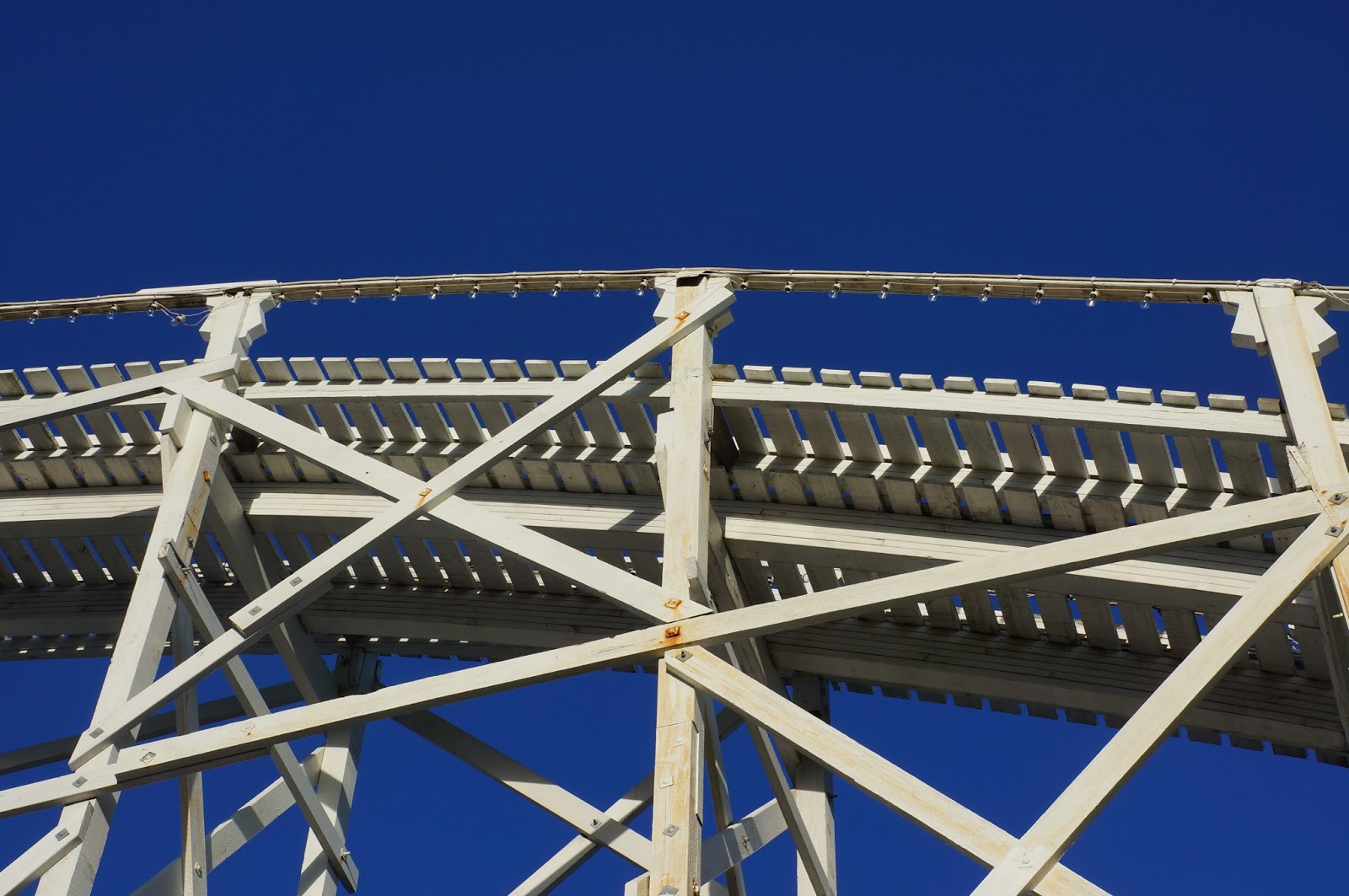
Lately I’ve been thinking a lot about rollercoasters. In French, they are called les montagnes russes, Russian mountains. This comes from the fact that the original structures were specially constructed hills of ice for luge thrills in Saint Petersburg. As early as the seventeenth century, people had a need to feel their stomachs drop out of their bodies and structures of around 70 to 80 feet with a drop of 50 feet were there for the pleasure of the Russian people. The French then muscled in on the act and in 1817 built a structure featuring wheeled cars securely locked to the track, guide rails to keep them on course, and higher speeds. To give them some credit, they did call this wonder Les Montagnes Russes à Belleville (The Russian Mountains of Belleville). So they didn’t do what I so often do and hear a great phrase and take it on as my own. Credit where credit is due.

I have always loved rollercoasters. It has been a while since I have been on one. If someone invites you to join them on a rollercoaster, it is either a genuine request to enjoy the thrill of the ride, the unknown nature of the terrain, the opportunity to share the adventure, or it’s a test to ascertain your level of risk and investment. Ups and downs. The thrill of that stomach-lurching drop and the giddy heights of the summit. The abandonment of control. Perhaps they are calling your conservative bluff. There are some things you can’t really know until you have tried them.

I have always loved rollercoasters.

http://www.youtube.com/watch?v=N1cbsLKXasQ

throwback thursday

Stand-up comedy. It can be a bit hit and miss. When you start the day with the wish that you have a happy Thursday, that it’s filled with a moment that makes you laugh, one that makes you shake your head and one that makes you smile…well now, that’s a tall order when you’re embarking on a day at  work. But then there’s throwback thursdays at Long Play.

The idea behind that throwback thursdays is that comedians get to re-visit their award winning work one more time. They put a lot of effort and thought and seemingly excruciating life experience into their act. They tour the festivals and then they’re done. But what about the ones who missed out? Or what about their own sense of unfulfilment…just one more show and I’ll be happy…

Tonight, Josh Earl was able to lay his Love Songs and Dedications to rest. Social observer, singer, haiku writer and just an all round clever funny guy, Josh Earl shone for his hour on the stage. It’s an intimate setting in the back room of Long Play in North Fitzroy and belting out a song for Josie in the supermarket to an audience of about twenty-five must be markedly different to reaching out to an audience of two hundred.

Josh Earl was the winner at the end of the day. Slick, clever and very very funny, he absolutely hit the nail on the head and made the text wish a reality.

nobody is who they seem

White rabbits.
Apparently, it is a common superstition amongst some to say ‘white rabbits’ on the first of the month. Or more specifically, ‘white rabbits, white rabbits, white rabbits’ must be the very first phrase uttered on the first day of the month should you wish to convince the gods of good luck that you are deserving of their favour for the 28, 29, 30 or 31 days which ensue. Theories on where this phrase originated seem to vary.
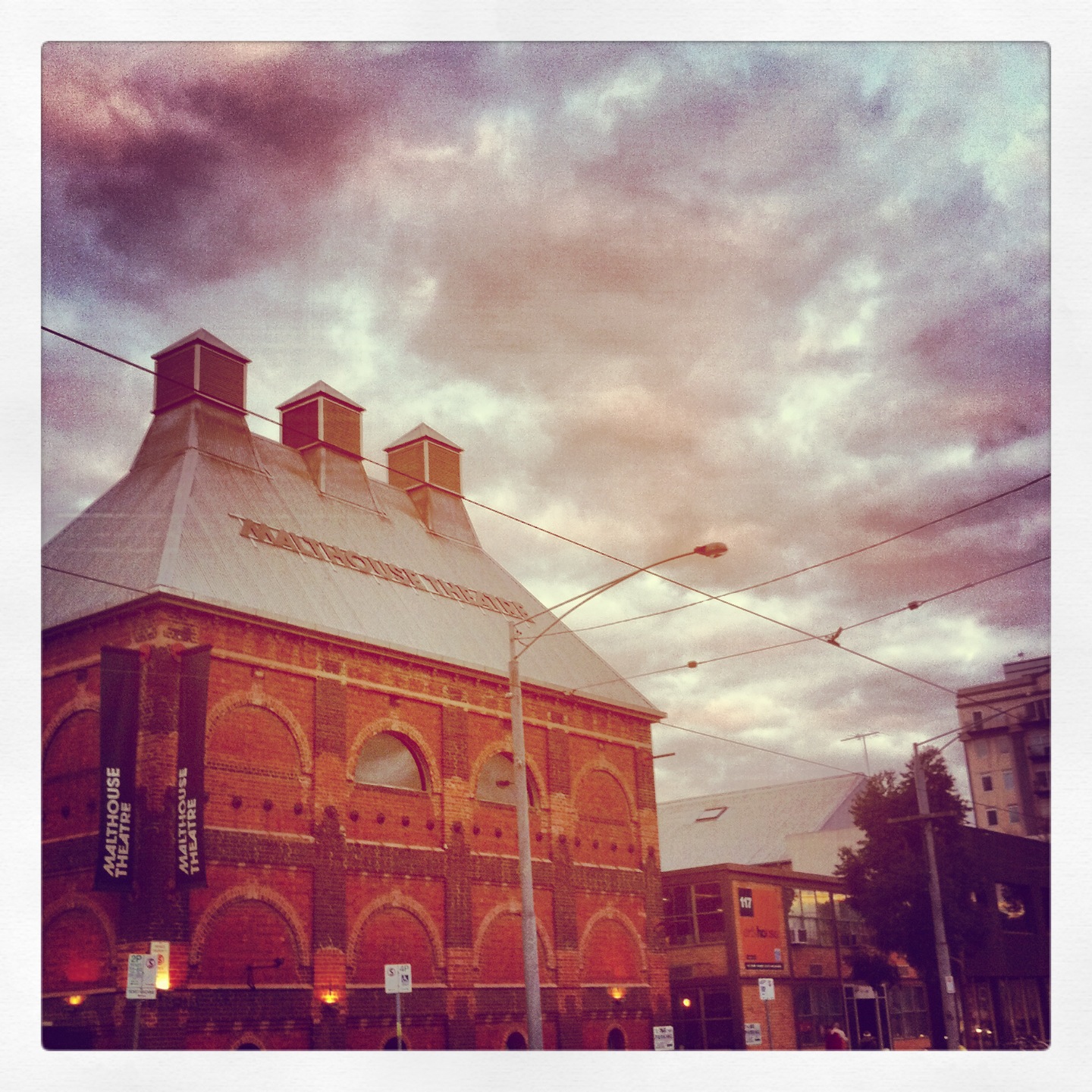
Last night I went to White Rabbit, Red Rabbit, a play by Nassim Soleimanpour at The Malthouse Theatre. This morning, the first day of a new month, I awoke with my head filled with thoughts about white rabbits. Will that bring me luck?
The first thing I thought of when I heard the title of this play, was the character in Alice in Wonderland. The waist-coated and pocket-watched white rabbit who leads Alice down the tunnels and onto a quest for adventure and understanding. He disappears and reappears as needed to provide clues or time-checks. Would this play be about a foray into wonderland?
The play is certainly a journey. For the playwright, the actor and the audience. And it is blatantly intended as such. Despite a conspiratorial lack of information about the play, the blurbs do all mention the fact that Nassim Soleimanpour, denied a passport as a result of his refusal to participate in Iran’s compulsory military service, wrote the play as a means to travel the world. He couldn’t travel, but his play could. And the nature of his play, the writer’s words spoken through the mouthpiece of the actor, allows him to do so.
The twist in this play, or in its delivery, is that the actor has never seen the script before they walk onto the stage and open the sealed envelope. At every performance, a new actor performs a cold reading of Nassim’s stream-of-consciousness storytelling. Since 2010, for an hour at a time, Nassim has been in theatres and festivals in cities all over the world. And we, the audience also travel. Nassim provides us with a brief insight into his life. We can almost taste the sour oranges from the tree outside Nassim’s window in Shiraz and we travel vast distances in our minds, seeking to sort through the allegory, the self-reflection, the questions of life and death, the idea of past and future and the deconstruction of the linear gulf that separates these to formulate our own response to the concepts that are slowly unveiled before us.
Nassim, through the actor, recounts the almost Orwellian story of the white rabbit who goes to a circus theatre and is asked by the security guard bear to cover her ears, ostensibly so that the other theatre-goers’ view is not impeded and is not offensive to those that do not have tall ears. The story appears to be about obedience and control or, in other words, about power and manipulation. We could be forgiven for believing that this is a specific comment about Iran and the writer’s experience of restriction. Soleimanpour has explained in interviews that it is not about Iran, but about the wider social phenomenon of obedience. 
At one point in the telling of this story, the actor plays the part of a rabbit pretending to be a cheetah that is impersonating an ostrich. Audience members are invited at various points to take on roles or take notes or take a photo. The actor is speaking for the writer, but by the end of the play we almost feel as though the writer is there. Nobody is who they seem.
There is more that is told or suggested or offered in the course of this play, but that would be telling. The beauty of White Rabbit, Red Rabbit is in the leap of faith you must make as you enter the rabbit hole of the play. You must be willing to accept that you don’t know where the play will take you and be happy to go along for the ride.
there’s no place like home

Wishing for something more, coveting the grass over the fence, yearning for the thing you can’t quite describe and yet you feel should be yours. Does everyone feel like that? Is it a symptom of a lack of appreciation, or a desire for enlightenment and fulfilment?

Dorothy has a lucky break when the tornado hits Kansas and carries her, her house and her little dog, Toto, away from the bleak, rural prairie life she has grown up in, to Oz, the epitome of all that is exotic and sparkly. By dint of her role as protagonist, Dorothy undergoes a holy grail like coming of age journey to enlightenment. Embracing all that is picaresque, Dorothy meets characters along the way who teach her lessons in life. She learns about self-confidence vs. self-doubt and friendship and deception and the manipulation of power.

Throughout Dorothy’s journey, her goal remains to return home. Even although home is a fairly unappealing place. Like any road movie, Dorothy, as the central character, has things to work out. She has a conflicted relationship to her home and origins, and the tension between the desire to leave and the need for stability is a common theme in film and literature.

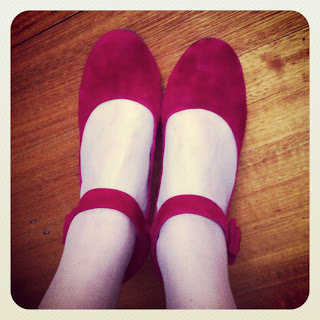
Dorothy’s ruby red shoes, which were silver in the Frank Baum novel, but became red with the need to exploit the new technicolour film stock, are the vehicle through which Dorothy gets a taste for power and self-confidence and provide us with a lesson about home. Because really. We leave our childhood homes and start to make our own lives. And while we might yearn for the simplicity of the back garden and the tree hut in the pear tree, the home-made caramel slice wrapped in waxed paper in school lunches, the Tolkien-encoded letters from the ‘tooth fairy’ and the fact that decisions were made for us, these things had their place in the past and we are striking out on the road armed with what we have and who we are. There is no place like home. But what is home? It is what we make or what is made for us. Preferably the former. 

Angus and Julia Stone – Yellow Brick Road (live in Paris)
http://youtu.be/fTF-RadkIKo

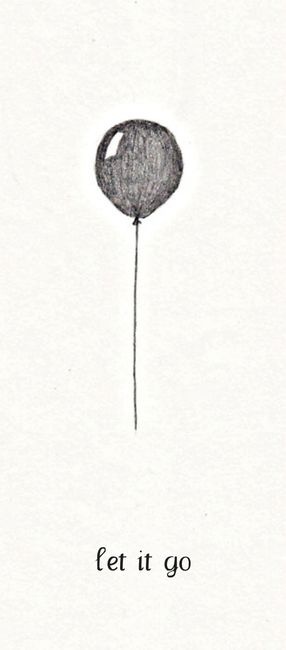
By letting it go it all gets done. The world is won by those that let it go. But when you try and try. The world is beyond winning. Lao Tzu

an angry storm

Why do we describe a storm as angry? Is it because they have the potential to wreak havoc? Is it because we associate darkness and a sense that the weather is out of control with something bad? Did we do something wrong and this is the result, the anger of the heavens?

The sun kissed the flowers, the wind was whistling in the tops of the trees, the leaves danced gracefully in the summer breeze. We give elements of nature human attributes. We can’t help ourselves. We are at the centre of our own perception, quite naturally. So, while it may appear like excessive pride on our part that we endow everything outside ourselves with human characteristics and are seemingly claiming that nature and the world must serve our needs by association, it may just be because we need personification to help us relate to our environment and work out our place and role within it. 

juicy at the expense of flesh

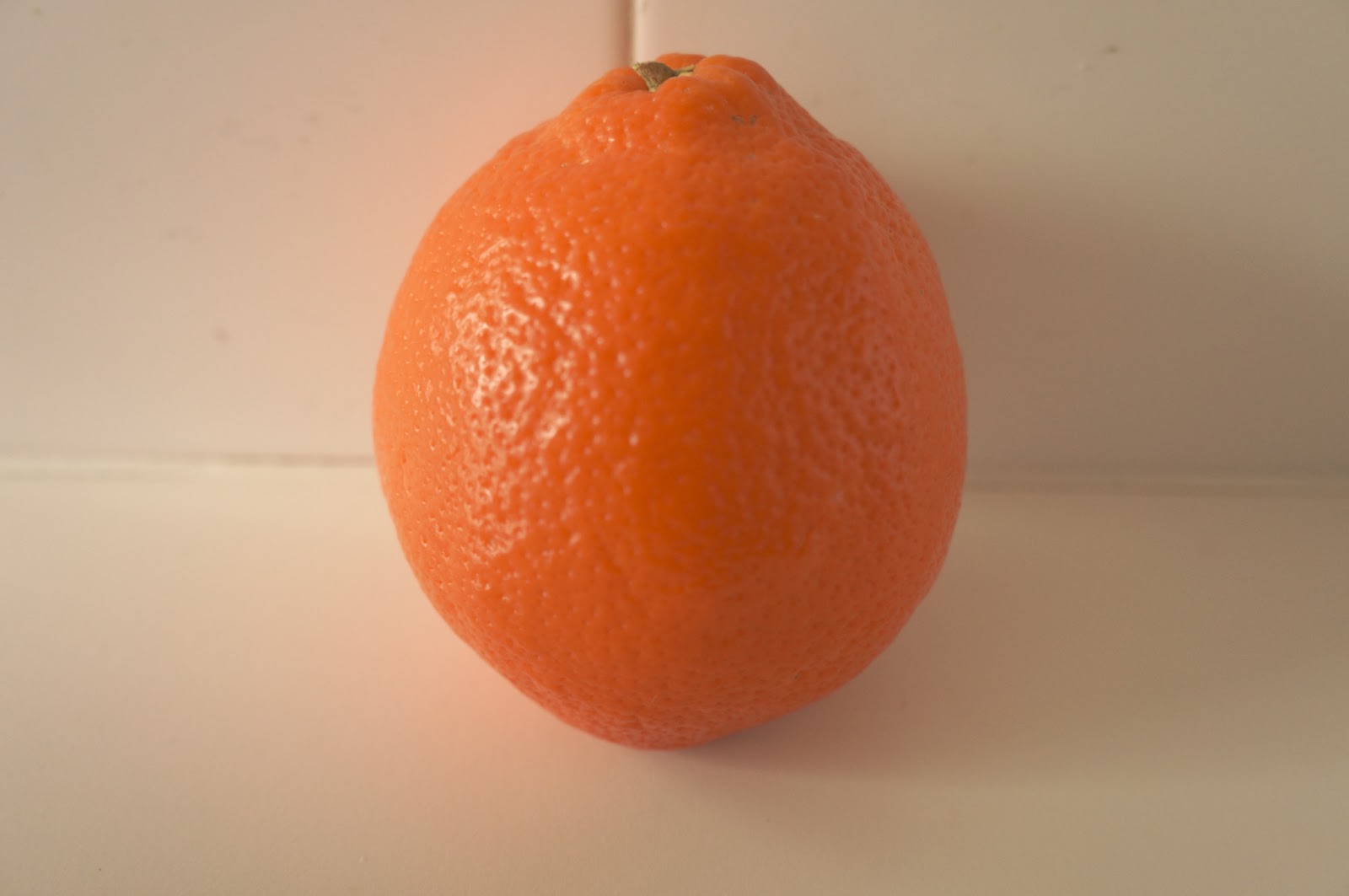
6 for $5. Bargain. I carried them home from the market in my black string market bag, as they staunchly exuded their orange glow in the grey Elwood day. Tangelo. Sometimes called honeybells, although I have never heard that word cross anyone’s lips. The size of an adult’s fist apparently. Really? Which adult? There are a lot of adults and their fists are all quite different in size. I went to school with a girl who could fit her whole fist in her mouth. She had a fairly large mouth. And a fist the size of a tangelo. A tangelo is a hybrid of a tangerine and a pomelo or grapefruit and it is described as being ‘juicy at the expense of flesh’. Roll that phrase around your mouth. Now that is a sexy collection of words.

Can you buy memories? If so, I paid $5 for 6 tangelos and a sharp and vivid evocation of the past.  These are good tangelos. With the taste of the sweet tangy juice on my tongue, I was in Tauranga on my grandparents’ orchard/farm. The scent of orange blossom in the air, the sound of the chooks in the shed, the thought of later picking out the lumps from the willow pattern icing sugar jar and letting them dissolve on my tongue. And eating an orange that tasted like sunshine straight off the tree.

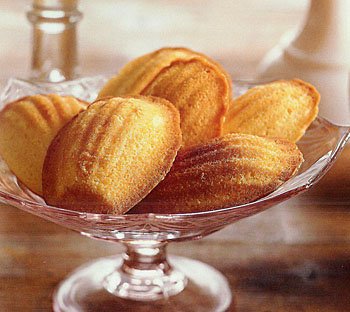
Marcel Proust was the first to use the term involuntary memory in his novel, A la recherche du temps perdu (In remembrance of things past). He describes an incident where he was eating a tea-soaked madeleine and a childhood memory of eating a tea-soaked madeleine with his aunt is suddenly triggered and along with it an exquisite sensation of joy and a series of memories about his childhood home and town.

Unexpected moments where we unwittingly unleash the essence of the past. Portals between the present and what has gone before.

we all hold monsters inside

sometimes they escape us

HG Wells’ Invisible Man, Robert Louis Stevenson’s Dr. Jekyll and Mr Hyde, Plato’s Ring of Gyges and Palahniuk’s Tyler Durden of Fight Club notoriety. All of these stories afford the protagonist a disguise, an excuse, for acting on his baser urges. And we love these stories. Because they tap into the eternal question of whether we as intelligent people would, given invisibility or an alter ego, continue to behave in a moral way if we did not have the fear of being caught or punished. When you are taken over by someone else, or you have the freedom to act as you please without being seen, then you are no longer responsible for your actions. Surely. The cynical view is that we behave the way we do for fear of punishment not for any sort of authentic desire for goodness.

We have a – and I’m going to go out on a generalising limb here – collective human obsession with good vs. evil. In philosophy, religion and ethics, good and evil appear as polarised forces on each end of a linear spectrum. The presupposition is that an evil person is the diametrical opposite of the good person. There is no grey on this spectrum. There is black. And white. Those who subscribe to a Buddhist perspective, see good and evil more as more of an antagonistic duality, and those who desire enlightenment must seek to assume the duality of these two forces in order to attain oneness.

Either way, we all have the capacity for choosing a moral or immoral path. Although in some this capacity is diminished through context, experience or neurological malfunction. Recent studies have implicated the amygdala (the little almond-shaped mass of nuclei located in the temporal lobe of the brain involved in many of our emotions and motivations) in morality and when dysfunctional, in psychopathy. The characters depicted in the above tales could very well be psychopaths. The amygdala is thought to respond to cues indicating distress in others, and so guiding individuals away from antisocial behaviour. Reduced amygdala functioning in more psychopathic individuals suggest reduced responsivity to the thought of causing harm to others when contemplating personal moral dilemmas. Without such amygdala activation, individuals may be undeterred from conning and manipulating others, predisposing to impulsive, irresponsible decisions and engaging in criminal behavior without feeling guilt. Even better if there is someone else to take the blame.

Perhaps these stories have so much resonance for us because, far from taking some sort of moral high ground and sitting back complacently on our heels in the knowledge that we are not psychopaths and that we make the right choices, we are merely relieved.

Where is my mind?

http://www.youtube.com/watch?v=ufERJEdcfAY

without our feather, we can fly

I moved to Melbourne two years ago today. It feels as though it has gone quickly and yet so much has happened. Right before I moved, I had a farewell and forty party, which, while cheesy on the alliteration front, seemed an obvious choice if one were to name such a party. I looked around at all my friends and family and thought, why am I leaving? Everyone I love is here. These are great people. But it was time for a new chapter.

My wise friend, Mark, suggested I write a blog so that I could share my experiences in a new city. Sometimes it feels conceited to be writing down my thoughts and putting them up in a public forum. Why does it need to be public? It could just be a journal for me. Nevertheless, I am doing it and I will continue to, if somewhat sporadically, blog. What started with discoveries of my new location seems to have segued into a more existential exploration of the deeper recesses of my mind, peppered with a new cafe or trip out of town. I’m ok with that. Without wanting to sound like a valedictorian speech by crow-barring a quote in, Oliver Wendell Holmes Sr. a physician by profession but also one of the best regarded American poets of the 19th century said, “Man’s mind, once stretched by a new idea, never regains its original dimensions.” 

I am working on my next entry, inspired by a newfound addiction to a game app, Fort Conquer (unlikely, I know, but I’m ok with it). My thoughts around the monsters in it have taken on their own monstrous proportions and I am following a circuitous thread that needs to be reigned in. If threads can be reigned in. It is coming. 
  
There is something to be taken from every new experience. Sometimes the decision whether to embark on a new experience or to embrace the current one can feel fraught. At least for me. Holding fast to that which is good was part of my primary school motto which has strangely leaped into my head as I write. We can cling to what we know and fear taking risks. But eventually there is peace once the decision is made and with it, the knowledge that a new chapter brings new insight, adventure, feathers in our cap and people who open our eyes a little more. I know more than I knew before.


Answer to the Ultimate Question of Life, the Universe, and Everything.

According to wikipedia, and therefore, to be believed and quoted, 42 (forty-two) is the natural number immediately following 41 and directly preceding 43. Let’s just sit with that for a while and allow the profundity of it to settle.

Um.

So.

I think that’s enough time. 42 also has the incredible property of being divisible by 6 and 7, which is great for me, given that these particular numbers allow me to demonstrate the broadness of my New Zealand accent in a very effective way.

42 was dragged into popular culture by Douglas Adams in The Hitchhiker’s Guide to the Galaxy, as the number calculated by an enormous supercomputer as the answer to the ultimate question of life, the universe, and everything. When pressed on how he came up with 42 as this weighty number, Adams is reported as saying casually that he just came up with the number at random as he was going to work one day.

Random or not, I’m hoping for a lot from 42.

Lenka, The Show (my soundtrack for now)
https://www.youtube.com/watch?v=LolyDqQ3Al0

Docklands

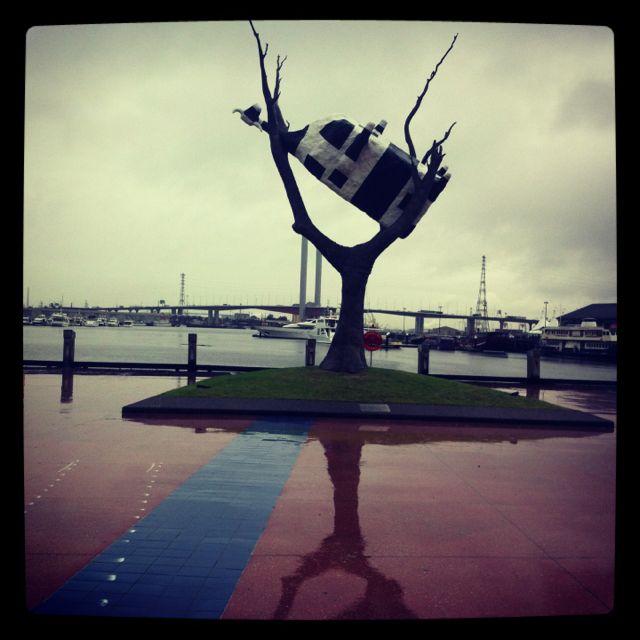
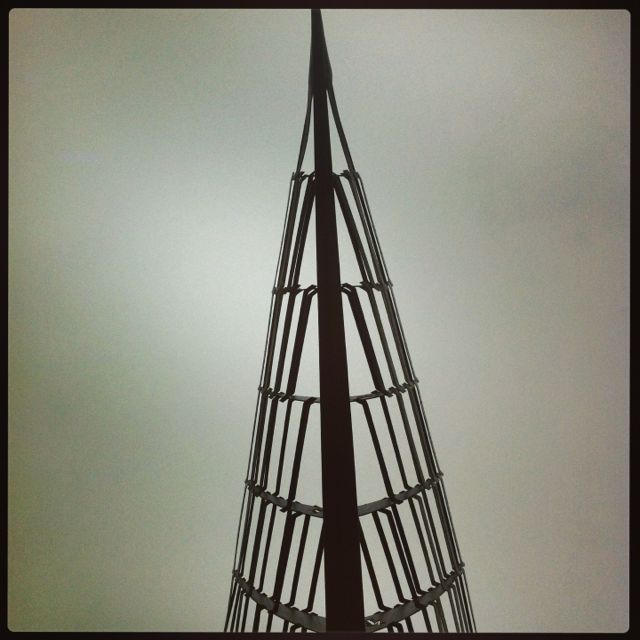
Docklands. A nice idea? A fabulous urban space in the making? Melbourne Docklands is touted as a world-class sustainable development. The grand plan is to extend the CBD by reclaiming former swamp and an extensive network of wharfs. The hope is that this area will be a successful mixed-use community for residents, office workers and visitors, that it will be vibrant area for entertainment, living, shopping, health, heritage and culture. So far, it’s not getting there. When I listened to the representative from Places Victoria, the Urban Renewal Authority, speaking in the Corporate Head Office, a heritage listed five star office, it’s easy to believe the dream. There is a lot of good being done in Docklands. There is thought behind the cranes and the waterfront vision. But down on the ground, it feels empty, un-human. The attempt at creating culture on a barren wasteland manifests itself in odd sculptures in random places. Do you hear sculpture exude its connection with art and humanity if there is no one to hear it? Walking around Docklands on a cold, raining day felt soulless. I can’t see how it will work. Not for a long time anyway.

The average age of people living in Docklands in 25-34. Narrow field. There are no schools. There are buildings and water and…well, there’s a Village Green…It’s a patch of grass they’ve sown. In amongst the buildings. And there’s an observation wheel that has never worked. Correction. It worked for a week before the design flaw revealed itself. The engineers did not count on the heat of the Victorian summer and the effect this would have on the metal structure. Brilliant. 

If you build it, they will come. 

But not always.

I wanted to like Docklands. 

But I didn’t.