today was brought to you by the letter P

A puncture on Punt Road. There is something delightfully alliterative about that concept.

As those of you who are familiar with Punt Road can testify, Melbourne’s busiest conduit between north and south of the city holds little that lends itself to the poetic. Getting a puncture in the middle lane of Punt Road in the rain is the antithesis of all that is poetry.

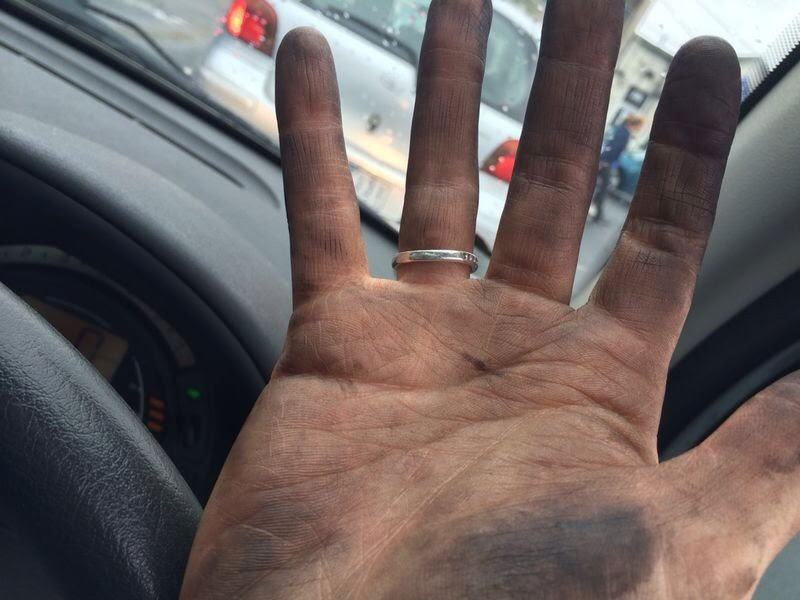
I can change a tyre. I really can. But it has been a while and the last time I had my tyres changed, it was in the specialty tyre place and I swear they used a machine to tighten those nuts. Plus, I have a French car and, despite my desire to embrace all things French, believe I actually am French and, in lieu of that do a really good job at pretending to be French, throwing my arms around wildly and inserting random oh là làs here and there, I have to say, French cars are very annoying. Changing a tyre is definitely a two person job. Tight nuts aside, there’s some tricky holding the tyre in place to align the nuts type of action which would have been impossible for me to perform singlehandedly. Happily for me, an unsuspecting guy, who usually packs his own lunch and who, happily for me, unfortunately for him, had opted for the Thursday Thai option on Victoria Street, made sympathetic eye contact and ended up doing his good deed for the day in helping me change my tyre.

Twenty minutes and much gratitude and filthy hands later, I was good to go. And appreciative that in this big city, people are still willing to help. Even to help a crazed looking women holding a jack in a very unconvincing way.
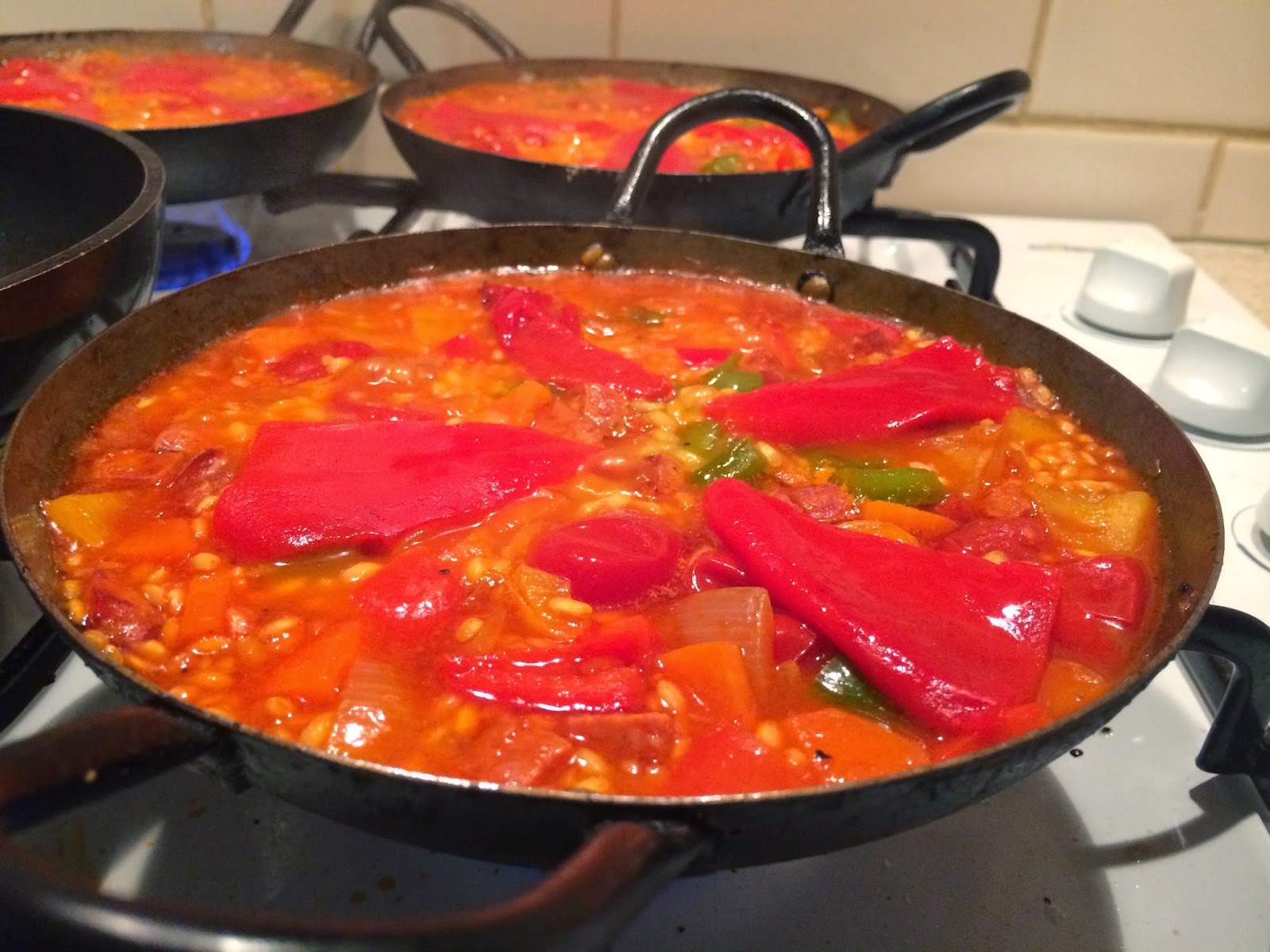
The P-ness certainly got better with dinner at Phil and Suzanne’s.

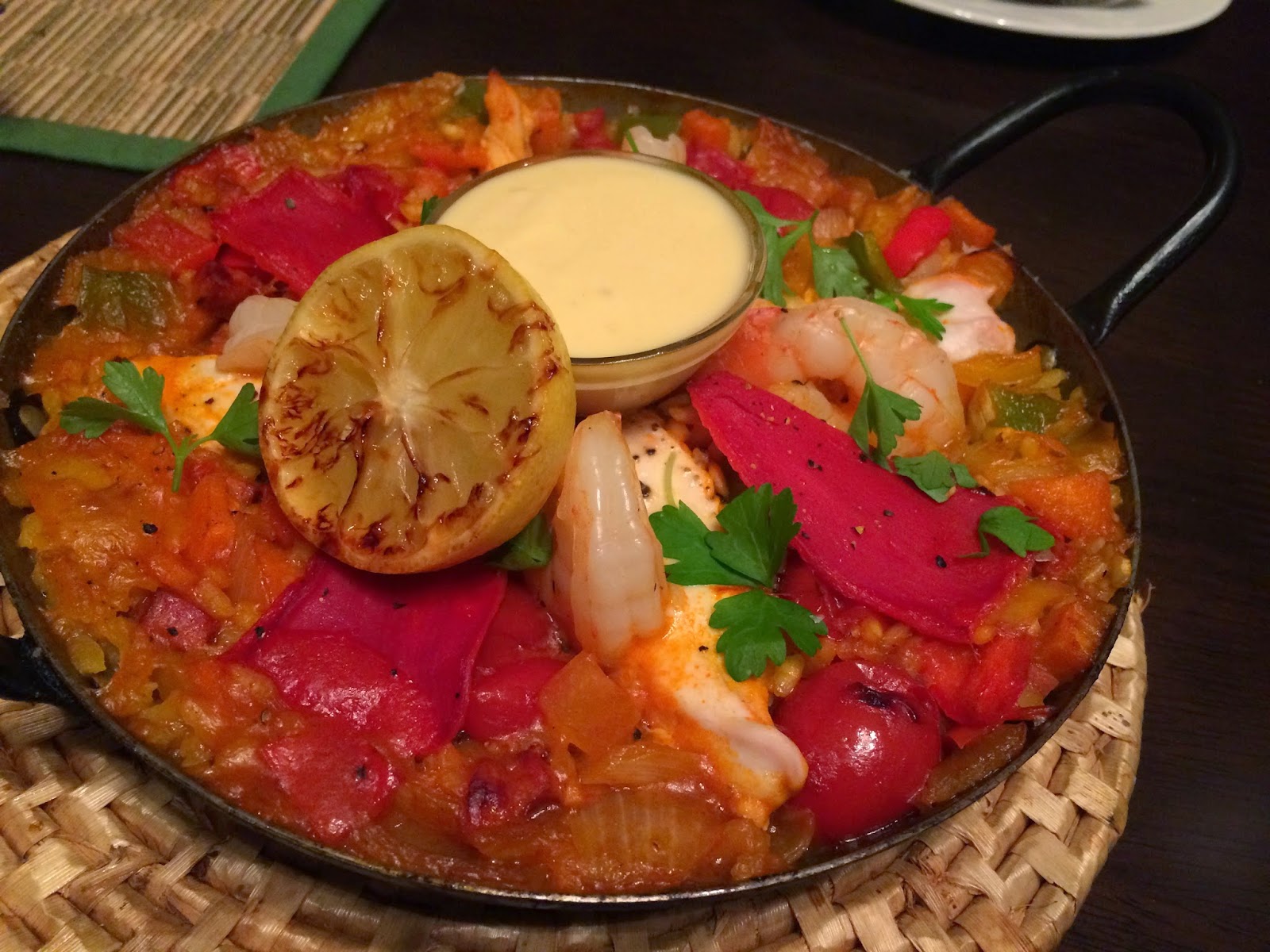
Paella night. Is there a better night?

Phil is my friend for many wonderful reasons and it also happens that he is a chef and he loves to cook beautiful food for those he cares about. I am a very happy recipient of his gift.

Now Paella is an identifying symbol of the Valencians, the Spanish people from the east coast of Spain. An identifying symbol carries a great deal of weight and there are conflicting stories about what constitutes a ‘real’ paella.

Phil says that there are many secrets to Paella. The big thing to aim for when cooking paella is achieving a thin oily crust on top of the tomatoey-ness, which is absolutely a word and I defy you to tell me otherwise.

The three essentials for Phil’s Paella are
1) Sugo, a rich Spanish tomato sauce
2)seafood stock, and here, Phil advocates bonito flakes steeped in water for 3 hours
3) saffron water, which is pretty much what its name says…saffron soaked in water

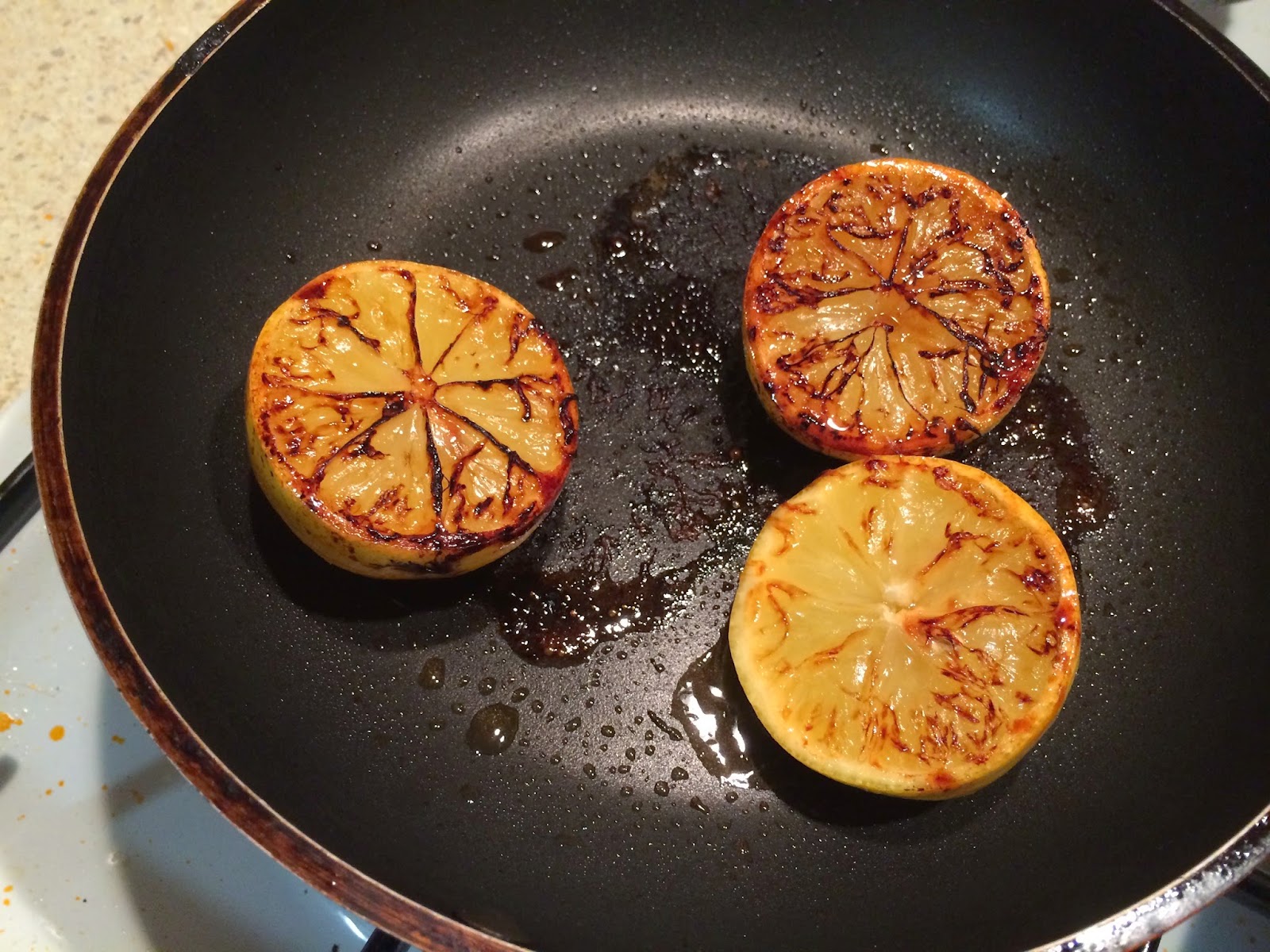
I think Phil knows what he is talking about. The delicious combination of almost sticky rice with tomatoey richness, prawns and chicken which had absorbed the rich Spanish fragrance and the finishing touch of aioli and grilled lemons…the perfect way to celebrate P Thursday.

Gracias, mi querido amigo.
Irish Stew

You know, it’s all well and good being fancy pants and food editory and suchlike. Tasting the offerings of very clever chefs and appreciating the finesse and expertise behind their dishes. But I think the best meals are those spent with friends, in their home.

Tonight I joined my Mexican, Irish, French and Chinese friends for Irish stew. And it was delicious. And made by an Irishman, with the secret colcannon mash centrepiece in the middle of the bowl ready to soak up the tasty sauce and succulent lamb. Kale may well be the superfood of the 20-teens, but the Irish have known that for ages and mixed it in with the mash to provide all we could possibly need in terms of goodness and taste.

Rain outside. Good people, good conversation, good food.

That’s where it’s at. 

g & t

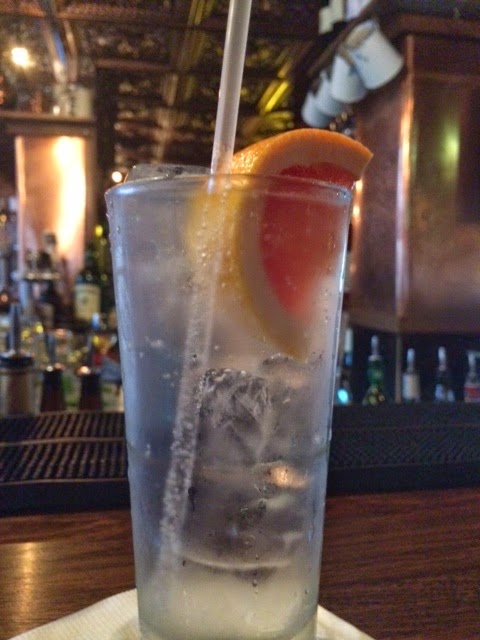
International gin and tonic day. It’s new. 2010. And a welcome addition to the days-needing-to-be-celebrated calendar. I don’t know who invented this 9th April treat, but I can see how these ideas spread.

Food editor success tonight. Happily this overshadows the food editor ineptness of Sunday night. Unwilling to let IG&T day go by without a nod to the British East India Company, I went down to the neighbourhood Cajun smokehouse. 

Armed with advice about the perfect equation of Tanqueray 10 and grapefruit, and having one in front of me, I explained to the guy behind the bar the significance of this day in the bar almanac. And then I watched with pride as he sold gin and tonics to every woman who came in. I see a whole new career unfolding before me.

Gin dates back to medieval times. It was medicinal then. And owes its popularity to William of Orange and his wife, Queen Mary, who were evidently partial to the juniper and became poster royalties for the drink.

The tonic aspect happened, as many great inventions do, out of necessity. In the days of the British East India Company hanging out in India and wearing funny shaped hats, malaria was a huge dampener on the ex-pat parties. Soldiers in India in the 19th century were already given a gin ration (of course?!) and quinine was being used to combat malaria. So they combined these two excellent liquids, along with water, lime and sugar to produce the  medicinal cocktail we affectionately term G & T. 

Gin has earned some less favourable epithets over the course of its history…mother’s ruin, it makes you cry…I’m thinking anything at the wrong place and time can have adverse effects. I’m not going to blame this fine-tasting drink. Especially on it’s International Day.

Whatever the brand, and whatever the fruit or vegetable accompaniment, Hendricks and cucumber, Beefeater and lemon, Tanqueray and grapefruit, my tip is that gin and tonic is best shared with someone lovely and enjoyed as part of some light and some deep conversation. If that isn’t possible, enjoy the moment anyway.

My Tanqueray 10 and tonic was perfect. And, far from ruin, I have a conversation with the chef lined up for my first Jo the Food Editor flavouring in the food section of The Northsider. 

Happy Gin and Tonic Day!
 

get cape. wear cape. fly.

I’d like to be super. You know. Undies on the outside heroic. 


I’m just me.


What is this me? I feel as though there is a collection of mes. (I am struggling with the plural of me…the English language clearly does not allow for multiple personalities) Depending on the day. Is the me that I am a mirror of the experiences I have had; the people I have known? Or is there a core me?


Sometimes we allow ourselves to be defined by who we have always been. Who people believe us to be. We can hold on to past hurt, sadness, desire for recognition, lost-ness, fear and we can believe this to be our identity, our presence amongst others. We know how to sit with that. We know how to react when the pressure is on. We have a default. This identity we have chosen. 


But what if that identity is just a mask. Not a great mask. There are no tourists lining up in Venice to buy this particular mask. Because as easy as this mask is to put on, it’s not really all that comfortable. It’s not really us.


Maybe the past is an anchor holding us back. Maybe you have to let go of who you are to become who you will be. 


Maybe you have to take it slow. Lose control and allow.


B-Ball in the J:AM

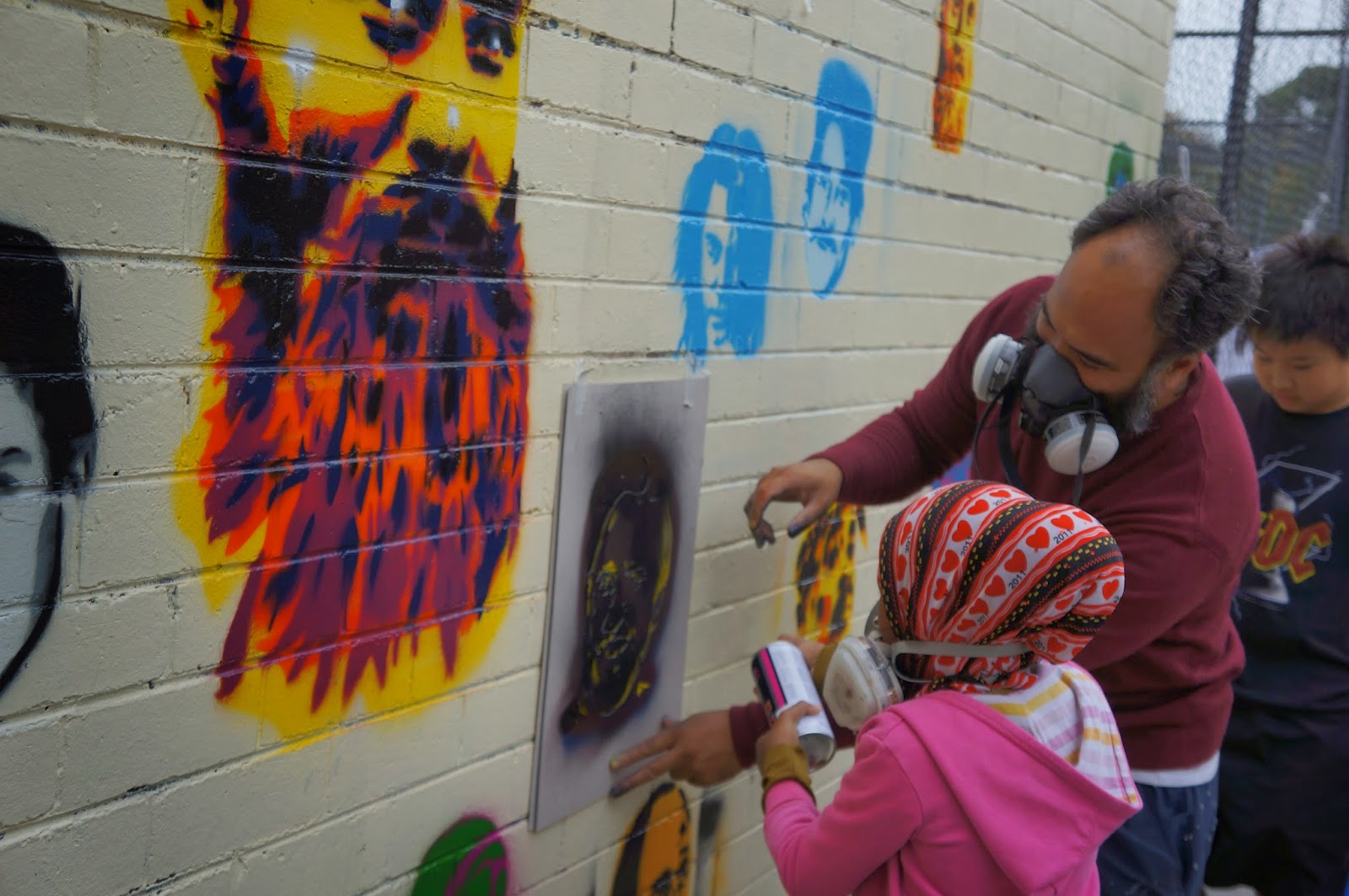
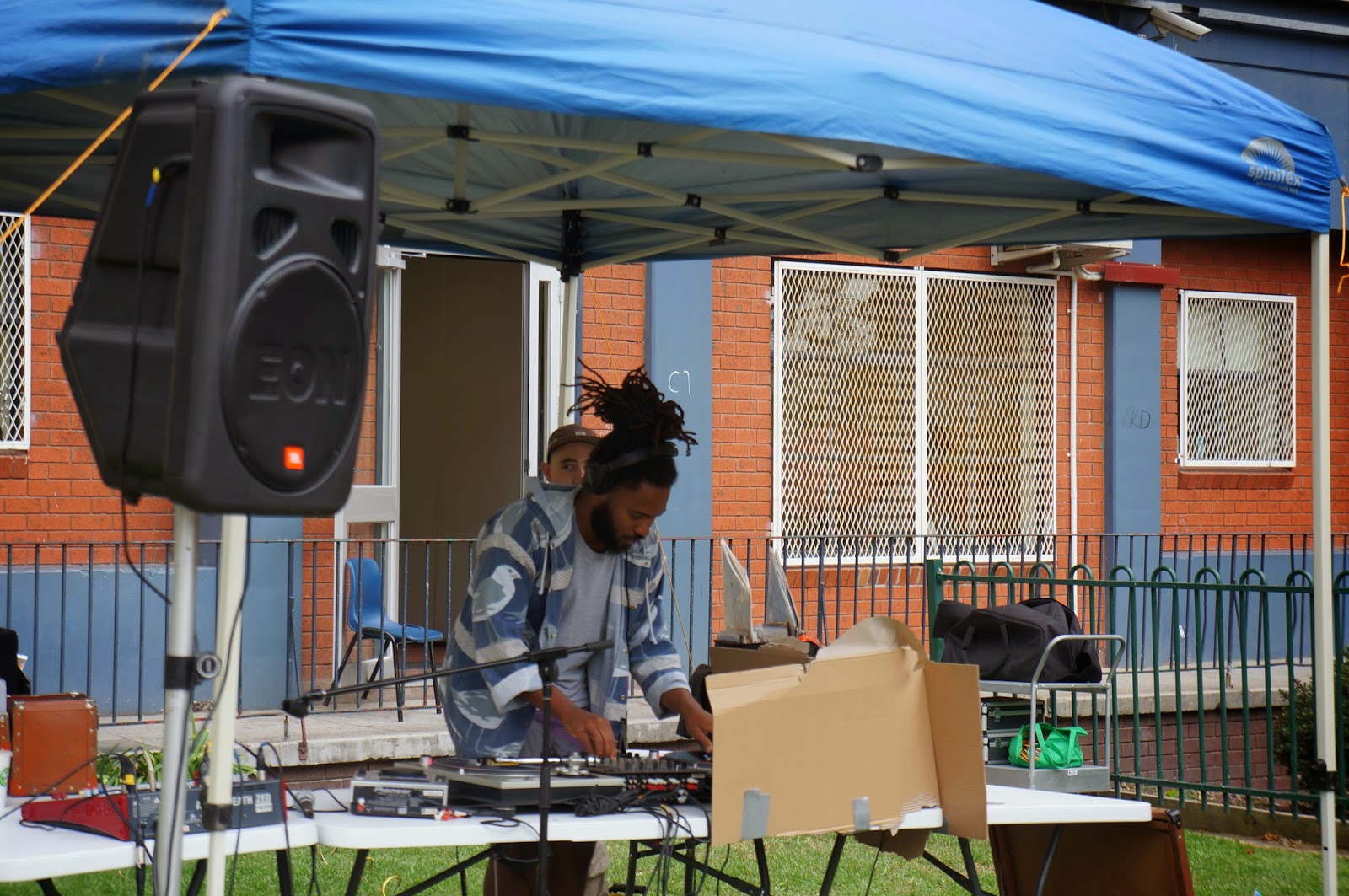
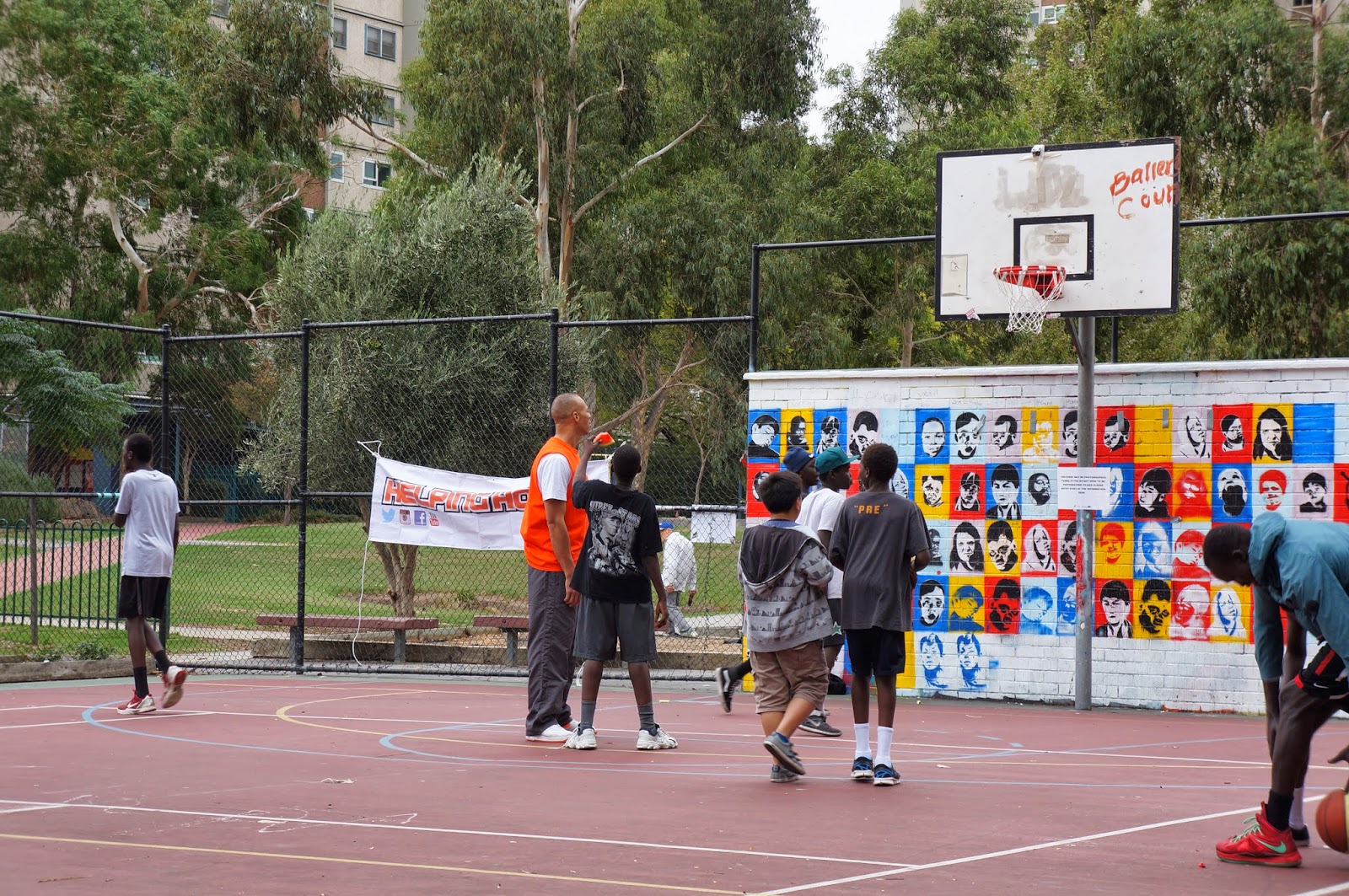
B-Ball in the J:AM is the result of a collaboration between the Yarra Youth Services and the Foreign Brothers and kick starts National Youth Week in Australia today on 8th April and it just so happened that it was down the road from me in the Atherton Gardens Housing Estate in Fitzroy.  

Foreign Brothers is Yossi Arad, Arthur Tanzi, Dominic Wagner and Alexandre Schoelcher, four friends who met in Melbourne, and share the same philosophy of collecting, documenting and promoting our community’s diverse talents. 

The first Foreign Brothers event was geared more towards adults. A music and visual extravaganza in a laneway last November as part of Melbourne Music Week. Music, performance, art-making all came together in a slick night of entertainment and community involvement. 

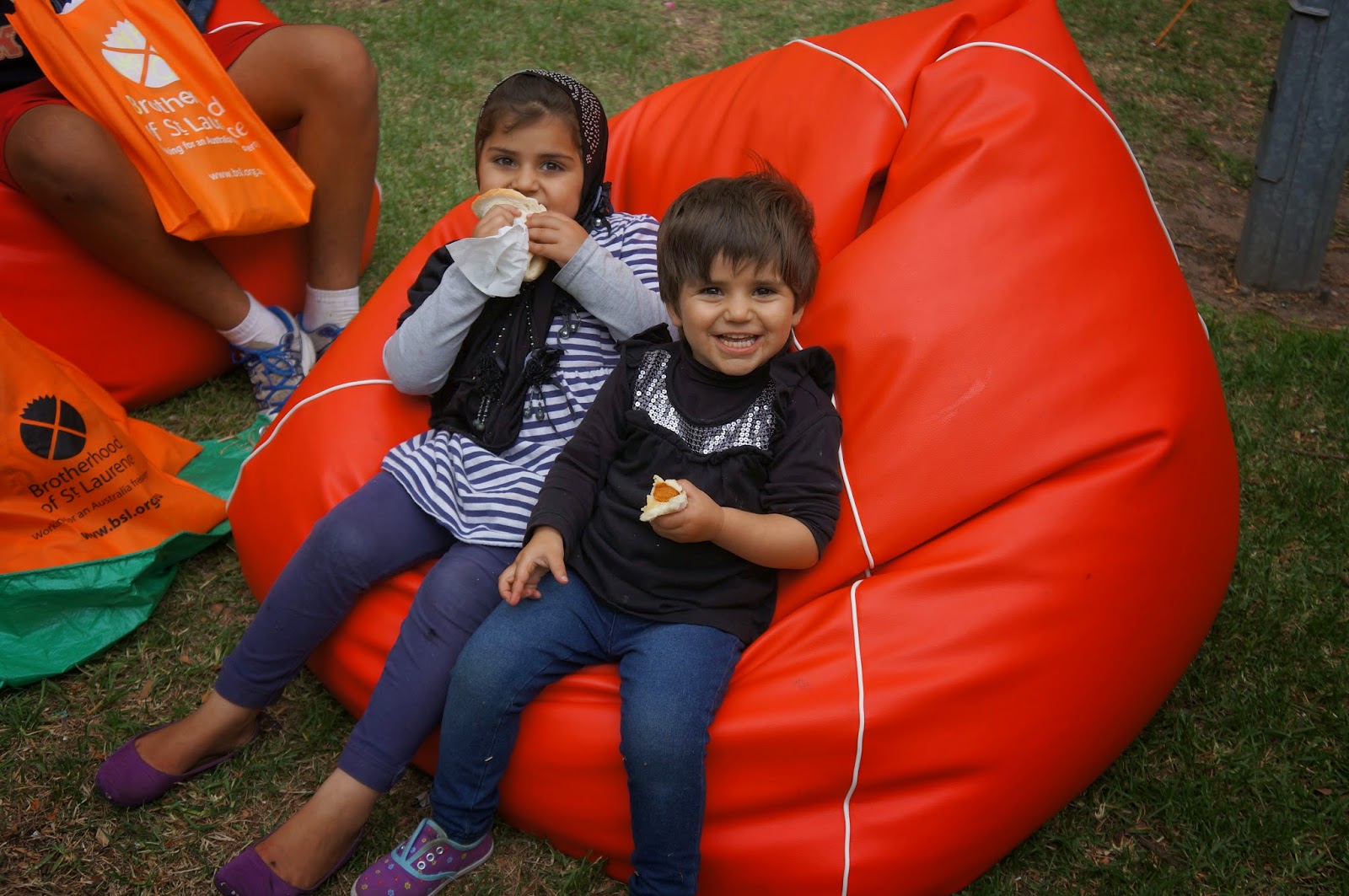
Today it was the children living in and around the Fitzroy community who got to enjoy the goodness created by the Foreign Brothers. And there were a lot of smiles.

No strangers to the neighbourhood, Helping Hoops set up a half-court basketball tournament and Mike and his coaches provided encouragement and advice to the budding basketballers.

Stenciling, face-painting, juice from the Vegie Bar, sausages on the barbeque, a skating zone and live DJ sets all came together to create a festival atmosphere on a day when rain threatened and then came. But no before a lot of children had a really great time.

Nicely done, Foreign Brothers.


the dinner project

Lesson #1 in Food Editor-ness. Avoid becoming so excited at your role that you gesticulate wildly when speaking to chefs. While the gesturing may well be some sort of innate wannabe French thing which appears charming to the seasoned friend, to the outsider, it may detract from the stern, knowledgeable and slightly aloof persona the Food Editor should convey. It also contains the possibility of knocking over a water glass in an extremely sitcom manner, flooding the table and soaking the fortunately Melbourne standard-black dress you had donned for the occasion.

Sigh.

I can’t say I was overly happy at providing the comic element to my table of 7 for the evening, but luckily the quality of the food and the wine served at the Autumn offering of The Dinner Project far over-shadowed my rookie mistake.

The Dinner Project is an Australian not-for-profit venture raising money for charities through dinners created by chefs who are willing to donate their time, energy and innovation for the greater good. Originally started in Sydney, The Dinner Project has now had three very successful seasons in Melbourne and, judging by the numbers who attended last night’s dinner, will continue to do so.

Inspired by The Mission Street Food project in San Francisco, Australia’s The Dinner Project has three main objectives: 
* to provide a platform for passionate chefs to showcase their cooking skills  and gives them the chance to collaborate with their peers outside the specific kitchen they currently work in. Last night’s chefs were all sous-chefs, which meant that the dinner allowed them to explore and experiment with their own flavours and techniques and wonderings.
* allowing the public to enjoy inventive food at a reasonable price and in an informal setting
*to raise funds and public awareness for charitable causes

The Autumn Dinner Project began with a fresh-tasting cocktail of gin, umeshu (japanese plum wine), ginger, sparkling wine, and finished with sparkling water. 

Flatbread, smoky eggplant dip, chickpeas tantalisingly roasted in seaweed salt  and wasabi and Mt Zero olives were the palate teasers.

The entrée came from Dan, who first started cooking in a small Japanese restaurant called Yardbird in Hong Kong in 2011 and then moved to Melbourne in May 2013 to work for Cumulus Inc. Dan’s choice of Seared King Fish, radish, yuzu kosho (a spicy japanese seasoning) and ponzu (a citrus-based sauce) was fresh, light and slightly zingy. Accompanied by a glass of 2012 Ophalum Albarino, this was a lovely way to enter the meal.

The next course was created by Jun, whose philosophy is all about cooking slowly and sustainably, taking time with food, as we should do with life. Jun had spent the morning foraging for pine mushrooms in Woodend to create the beautiful dish, so plainly labelled “Roots, Grains and Mushroom’. Barley, red quinoa, sweet potato chunks, the heady mushrooms, and some tiny roast brussel sprout leaves provided a beautifully woody, salty, nutty harmony.

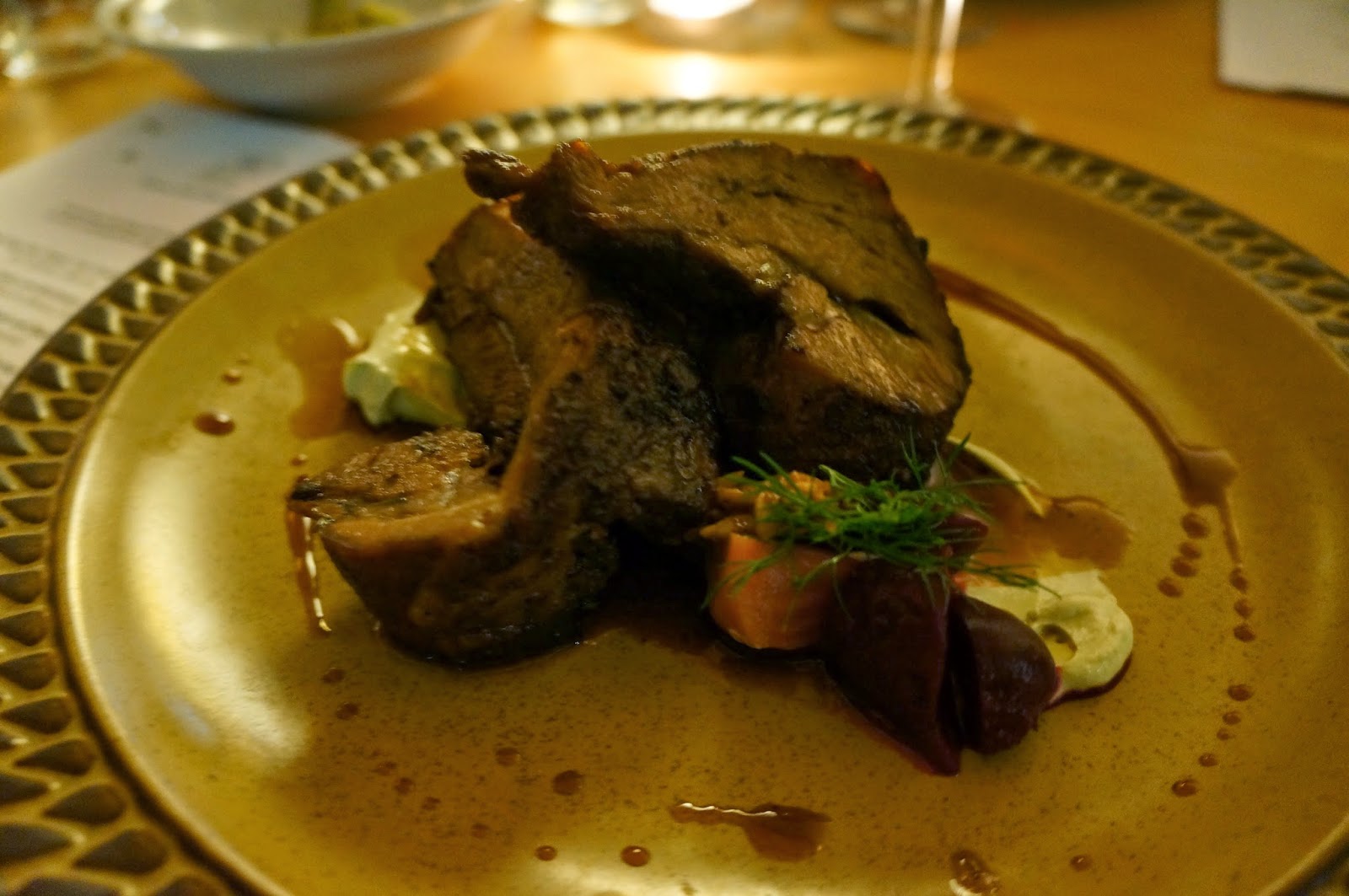
The main course of Lamb mechoui, came from Cush. Slow-cooked lamb shoulder…8 hours worth of slow-cooked with subtle moroccan spices, served with labneh, a sort of strained greek yoghurt, marauding as a soft cheese, and earthy seasonal beetroot. To accompany this incredibly rich and flavoursome dish were bowls of freekeh (quasi-newcomer to the unpronouncable and yet highly fashionable and super-foodish ancient grain brigade) and walnut salad and a hearty red wine, Ponce Depaula Monastrell.

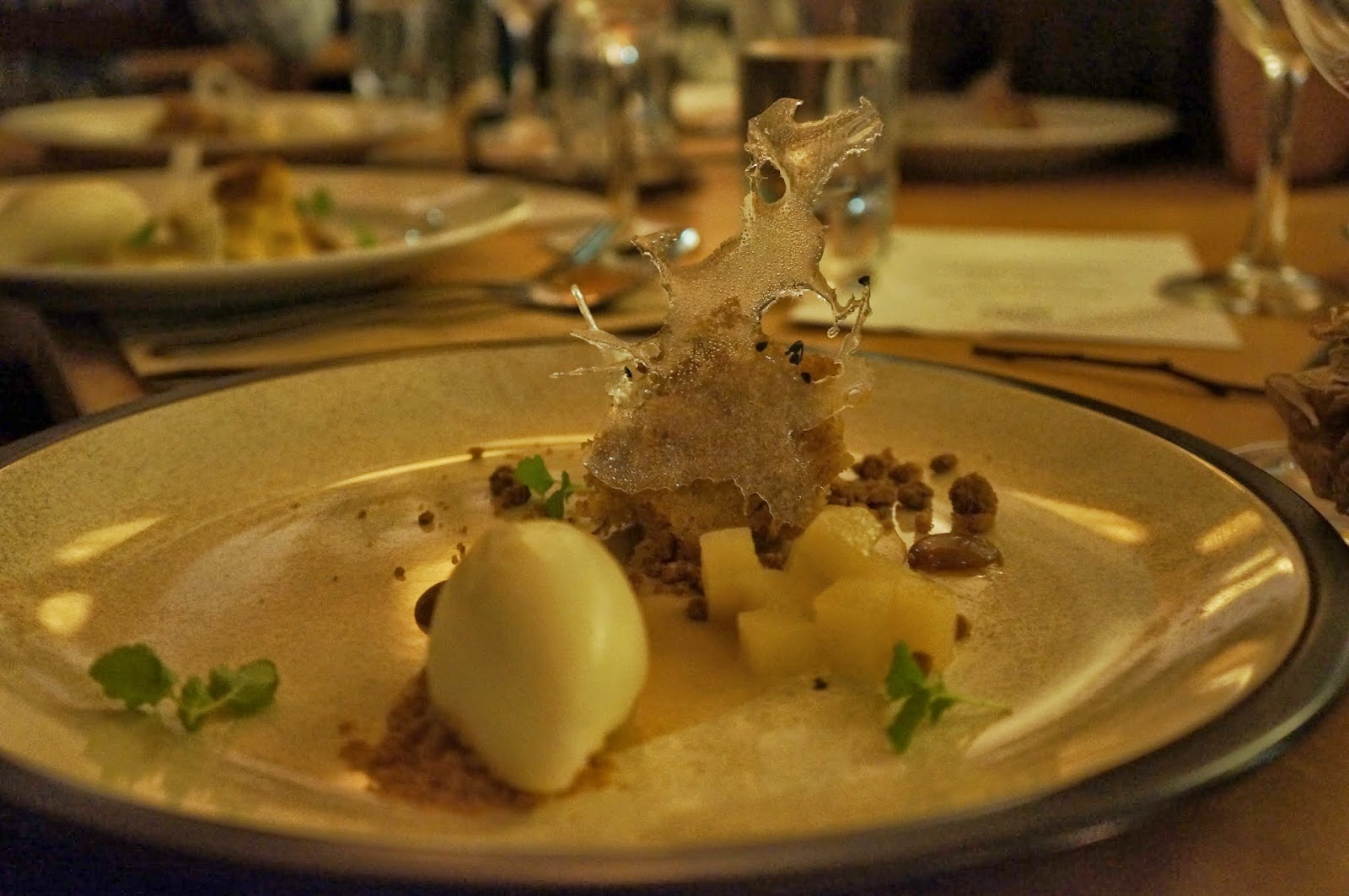
But wait, there’s more. Gemma, the pastry chef from Tonka, finished the meal with an elegant and cleanly uncomplicated Ginger cake, walnut toffee and pear sorbet. Further enhanced by a glass of Friends of Punch ‘Berry’s Creek’ Noble Riesling, this was a lovely cadence to a beautiful meal. 

Autumn is a beautiful season. Sad, poignant, as we let go of the warmth and possibility of summer and look towards the shorter days and cooler climes of winter. 

Thank you The Dinner Project for providing a sparkly nod to this in-between season and reminding us that it is not in-between at all, but a beautiful moment all of its own, which we should savour and share.
 

poisson d’avril

In sixteenth-century France, the accepted calendar was the Julian Calendar and the start of the new year was observed on April the first. It was celebrated in much the same way as it is today with parties and dancing into the late hours of the night.


Then in 1562, Pope Gregory introduced a new calendar for the Christian world. King Charles IX then declared that France would begin using the Gregorian calendar, which shifted New Year’s Day to January 1.

There were some people, however, who hadn’t heard or didn’t believe the change in the date, so they continued to celebrate New Year’s Day on April the first. Others played tricks on them and called them “April fools.”

Today in France, people who are fooled on the first of April are called Poisson d’avril, which literally means April fish. One hilarious (?!!) custom is to stick a cardboard fish on someone’s back. Wow. Watch out for that one. Very tricky.

Why a fish? There are various suggestions for this. The first of April coincides with Lent when the Church forbade Christians to eat meat. Fish was tolerated and was often used to as an offering or a meal on the Aprilfirst new year. Another suggestion is that the sign of Pisces is represented by a fish and falls near April.

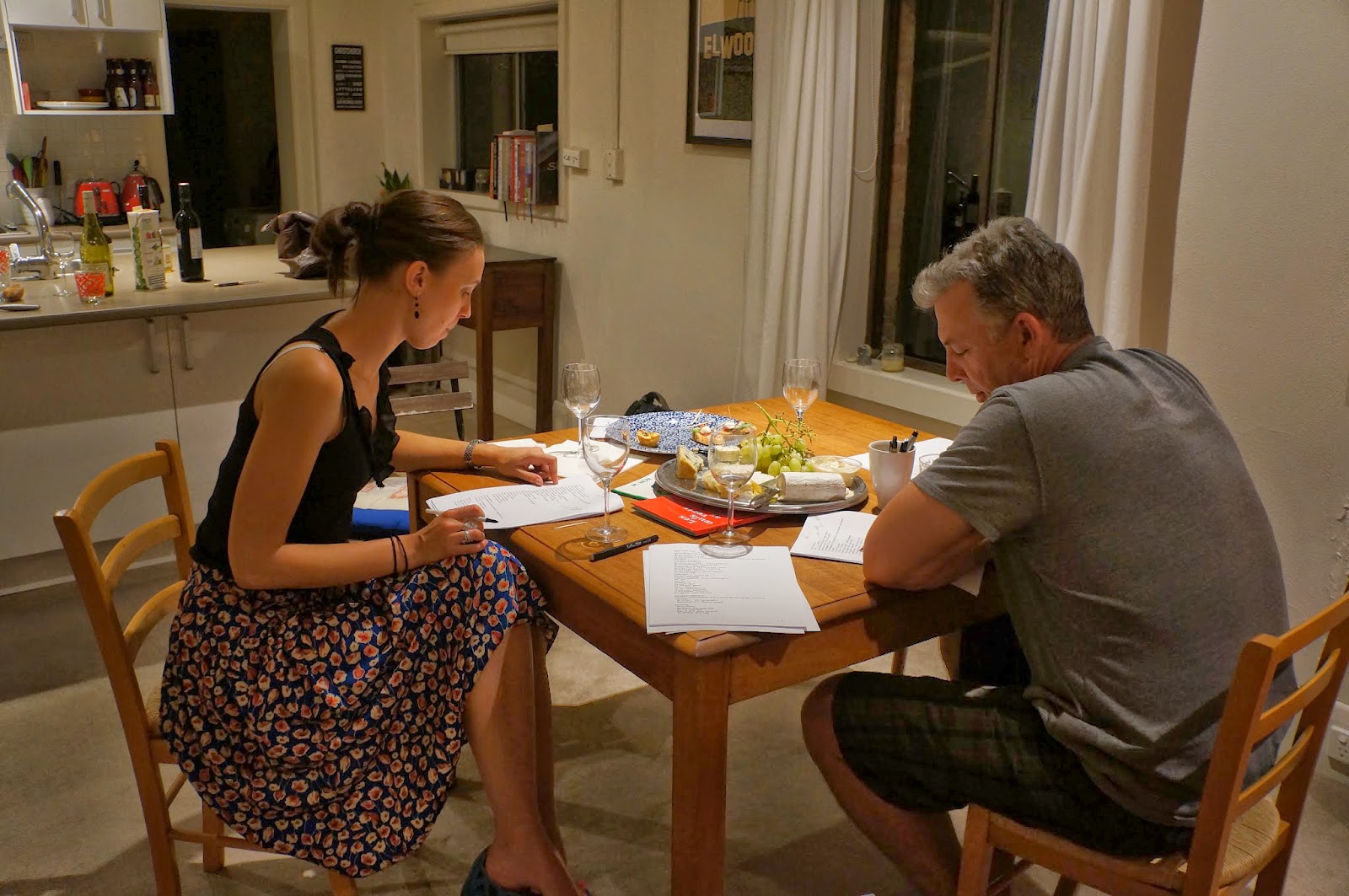
I chose to celebrate poisson d’avril day by holding the inaugural ‘a little bit of frenchiness in Abbotsford’ French class. A few friends had expressed interest in learning French. My first of April gift to them was to offer them some useful phrases, a taste of French, to start the Julian new year.

With a little (read great) help from my (French) friends, we had zones even. A slightly more advanced verb zone and a zone for the lovely ones who are just starting the journey of embracing the French. 

What I appreciate is how willing everyone was to enjoy the evening and the taste of French. 

We’ll do it again. 

half-way through

The other day my friends described me as hectic. Intelligent and vibrant, they were lovely to add. But also hectic. 

Hectic is not onomatopoeic. But the word does generate the feeling or action it labels. And I don’t really think hectic and anxious are great characteristics.

I agree with my friends. I AM hectic. I have been hectic for a while. The good side of hectic is perhaps where my vibrancy comes in. I love discovering new things, being challenged, rising to the challenge, being successful in my endeavours. I love people and exchange and inspiration. This is all good. 

What I think is perhaps not so good are the reasons behind the hectic way in which I tend to throw myself at life. I have been doing it for the last 4 or 5 years. It is about distraction, proving a point, proving myself, filling in gaps, living in the moment, not allowing time for too much reflection. Perish the thought that I over-reflect.

This year I have felt less inclined to be hectic. And in the last four weeks even less so. Which inevitably has allowed for much of the completely self-indulgent reflection which has been evident in my recent posts.

Don’t get me wrong. I live a charmed life. There are just some areas I need to improve.

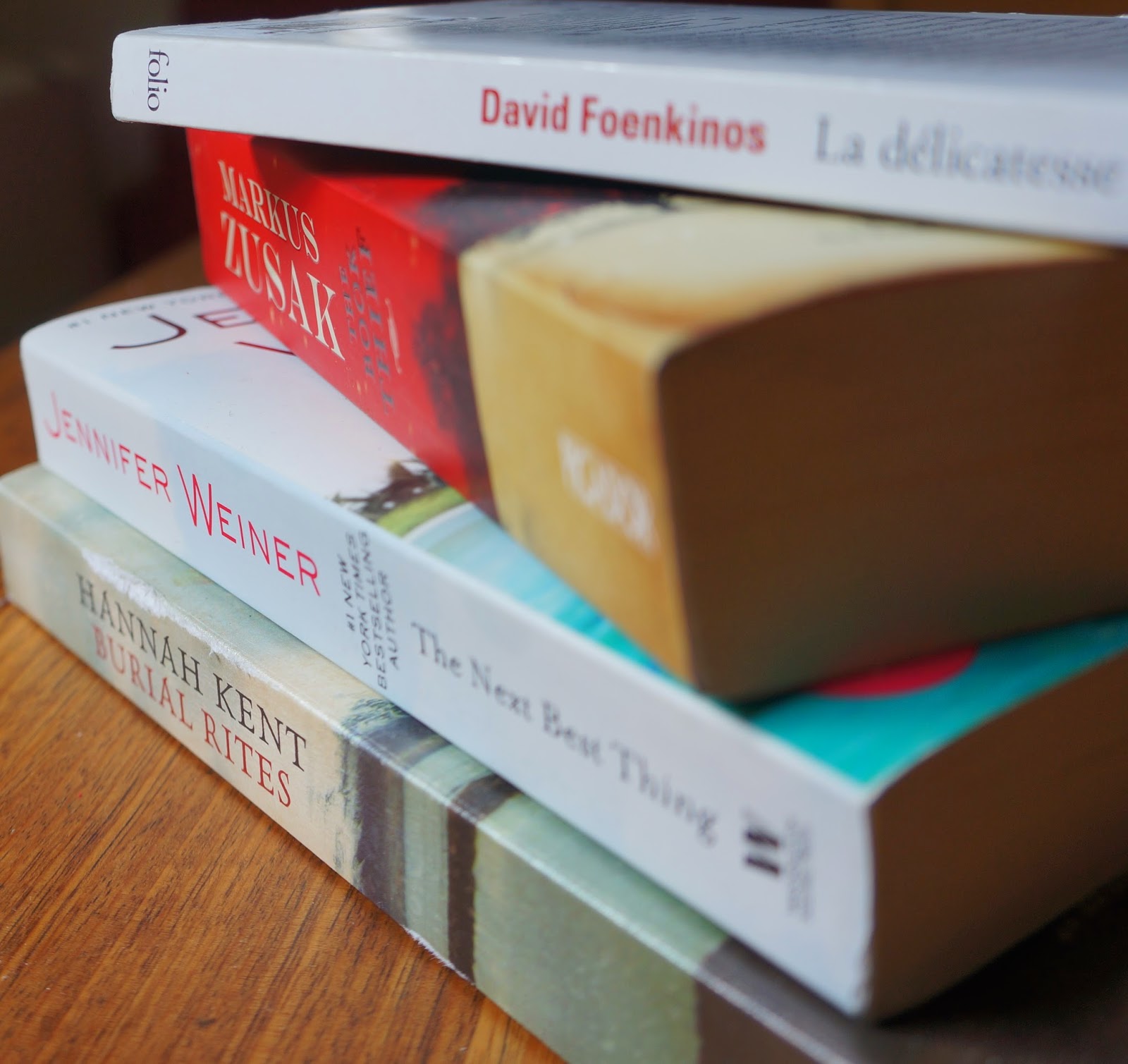
A blatant example of my hectic head is the fact that I have started four books, got halfway through each one, and then started a new one. I want to finish them. I particularly want to finish Hannah Kent’s book. It is so beautifully written and captures so vividly the Icelandic anguish of the protagonist. And it was a thoughtful gift.

My goal for the next three weeks is to finish all four of these books. To sit quietly on the red couch and absorb and appreciate the thoughts and writer’s craft.

And to replace hectic with thoughtful and aware presence and appreciation.


art as therapy

Alain de Botton. My favourite philosopher.

It occurs to me that I have a lot in common with Alain de Botton.

Ok. Well. Not really. Alain was born two years before me. In Switzerland. He was brought up speaking French and German until he was sent to boarding school in Oxford and English became his primary language.

Hmmm. Ok, not so many similarities.

Moving on. 

He did lots of fancy academic things as an undergraduate and went on to complete a Masters Degree in Philosophy. Alain started a PhD but stopped to start writing books for the general public. Great move. 

His first book, written at the age of 23, Essays in Love, was a simple and honest account of the rise and fall of a relationship. From the first ripples of excitement at the meeting through the getting to know and the learning the ways through to the question of how and when to say ‘I love you’. Right through to the demise and the excruciating sense of loss at the end.

Alain de Botton went on to write numerous essays, novels and has become best known for his works of non-fiction sometimes described as a philosophy on everyday life. He has a talent for using his very clever brain to deliver profound reflections in an accessible package that so succinctly reflects common experience and wondering that we, the non-philosophers, struggle to pin-point and name in any kind of coherent way. And I speak for myself.

So. Pretty much nothing in common with Alain de Botton.

Tonight I saw the man in action. His latest offering involves the subversion of three international art museums, Melbourne’s NGV, Amsterdam’s Rijksmuseum and the Art Gallery of Ontario, and a book he wrote in collaboration with philosophical art historian, John Armstrong. 

The idea behind Art as Therapy is that we are often told that art is important. We are not as often told why we should see it that way. Alain and John have some suggestions. Which, of course, are multi-faceted. But multi-faceted is as appropriate in a philosophical approach to the importance of art as it is in diamonds. Except I have never been one for diamonds. Give me philosophy any day.

Alain thinks that art can help us with life. 

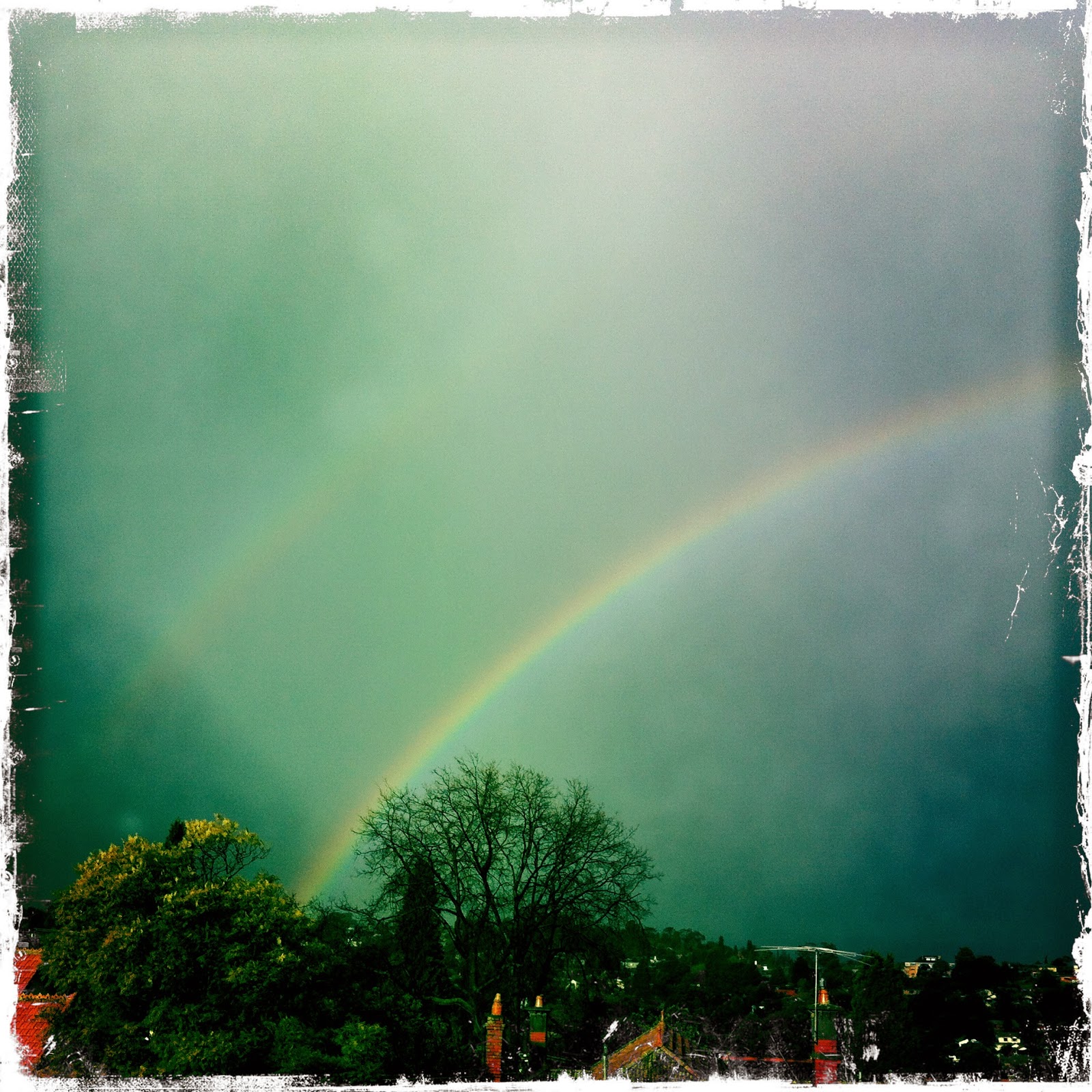
Art helps us remember things by preserving experiences and helping us remember things we might forget. Like the way a rainbow looks when it is so bright that its mirrored image is nearly as bright as the original. Or the way the moon looks when it is such a nice morning that it decides to hang around just to glory in it. Faced with these soul-filling images, we are for a time relieved of our preoccupations and can just enjoy the beauty. Art does that for us, capturing moments, beauty and forcing us to focus, for a brief period of time, on life’s most meaningful aspects.

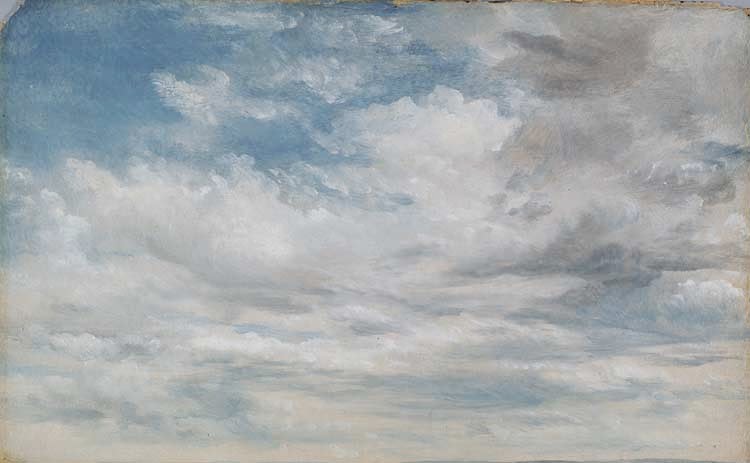
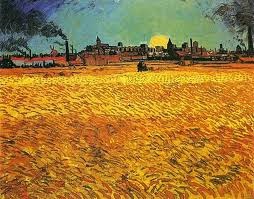
Historically, in art, Constable did that with his clouds. Or Monet with his beautiful field.

Art can also offer us the feeling that others have felt the same pain that we have.

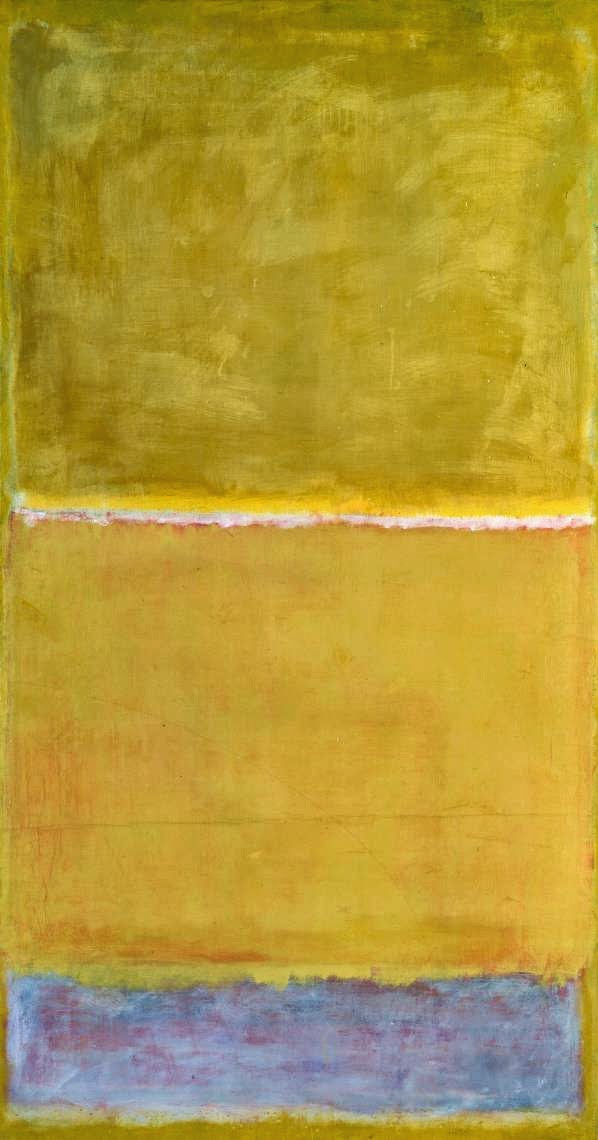
Mark Rothko, whose work, Untitled, appears in the Tate Gallery, explains his paint on canvas as being the outpouring of his own sadness meeting with that of the person looking at the work. Our experience as humans is a collective one. We just don’t always acknowledge that.

Art is so often classified in terms of their chronological and historical relevance. This is easiest for curators. But Alain believes that conventional museum displays avoid the potential available for art to heal.

Art can connect us to each other and to ourselves. Art  is a tool that can help us by inspiring, consoling, redeeming, comforting, expanding and reawakening.

What Alain and John are suggesting is a different approach to consuming/appreciating the art in the galleries. Rather than chronological ‘schools of art’, should we not perhaps inhale the works as mirrors which reflect our love, our pain, our questions on life? These two men have been offered the chance to create a path of discovery for us through these three museums. A meandering path. If you live in Melbourne, you can follow this yellow brick road from this Friday, 28 March until 28 September. There is even a free app to assist you on the road.

Who am I kidding? I have nothing in common with Alain de Botton. I would never have come up with that.

But I wish I had.


Passata Day


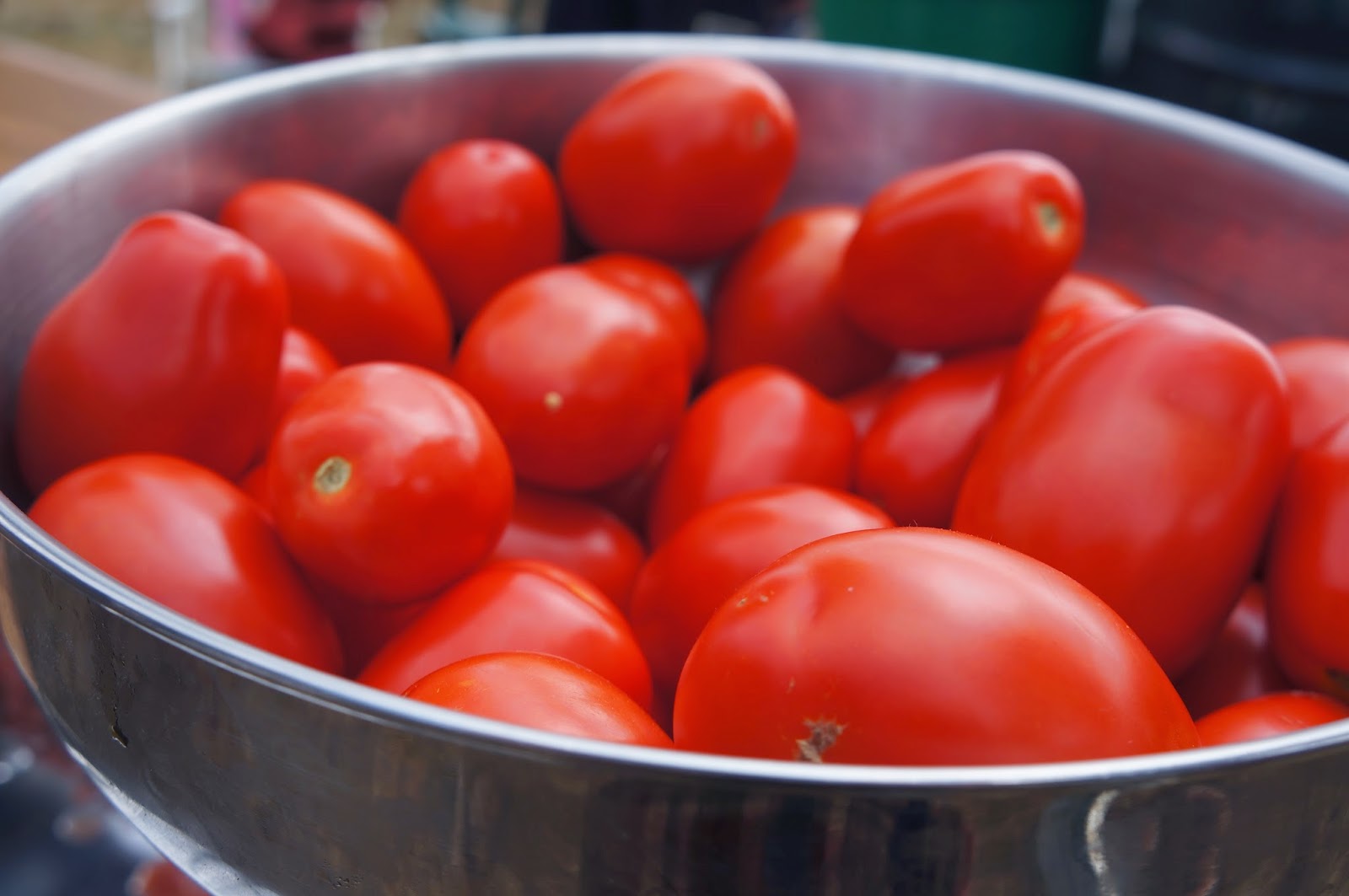
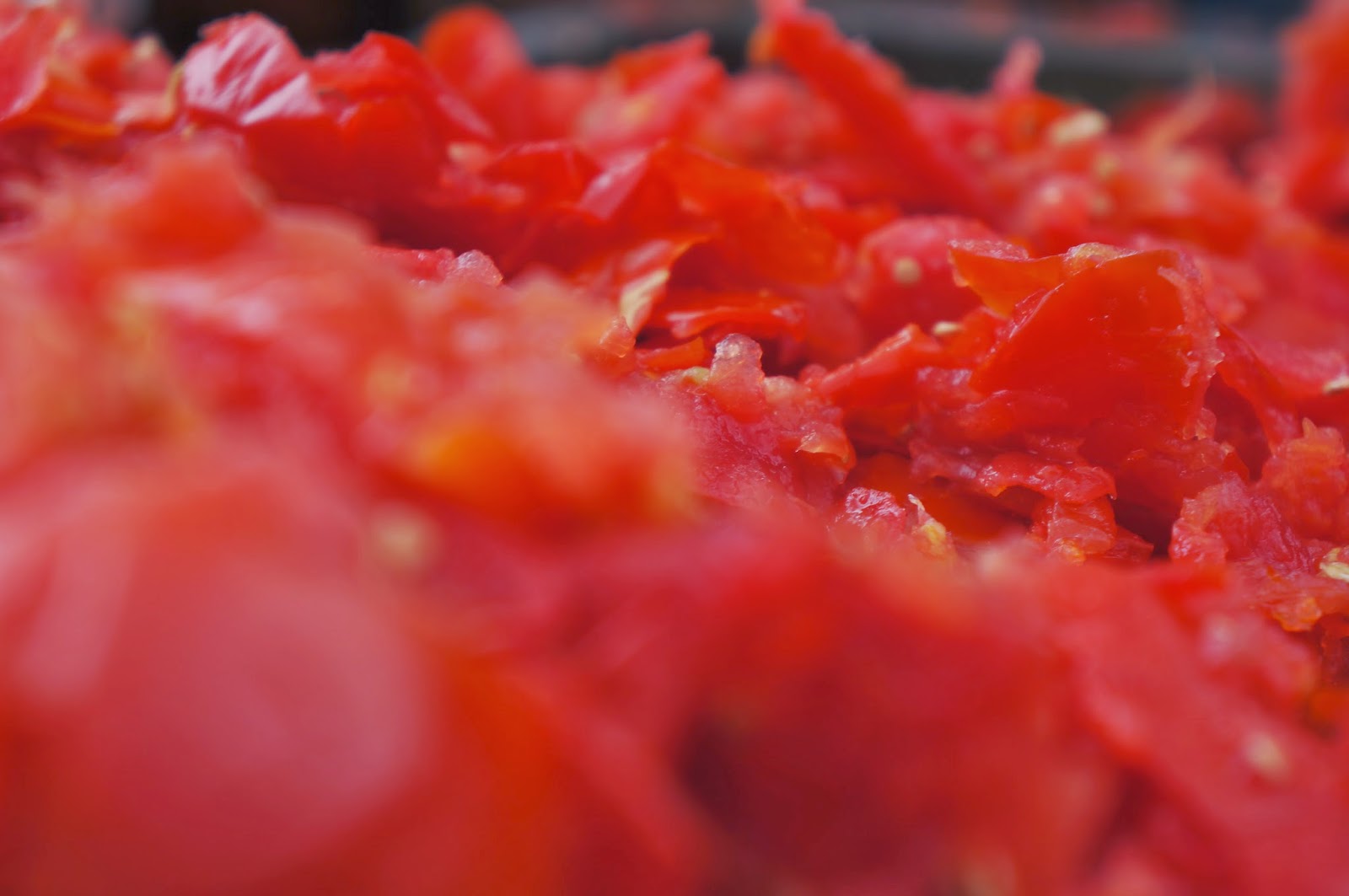
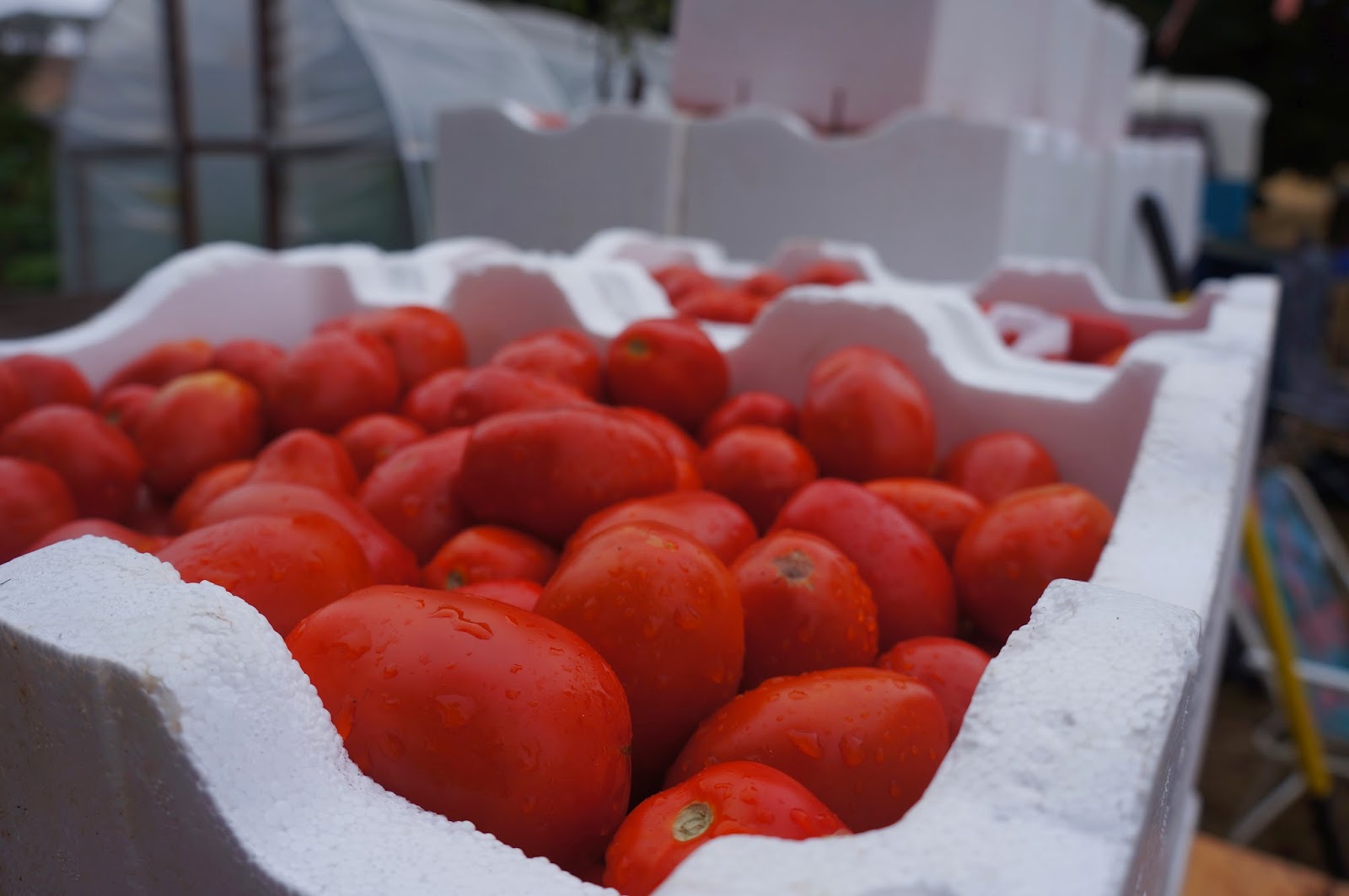
Tomatoes. The taste of summer and an essential ingredient in Italian cooking. Traditionally in Italian culture, communities get together as Summer draws to a close and tomatoes are ripe and abundant and make passata, summer in a bottle, to see them through the Winter months.

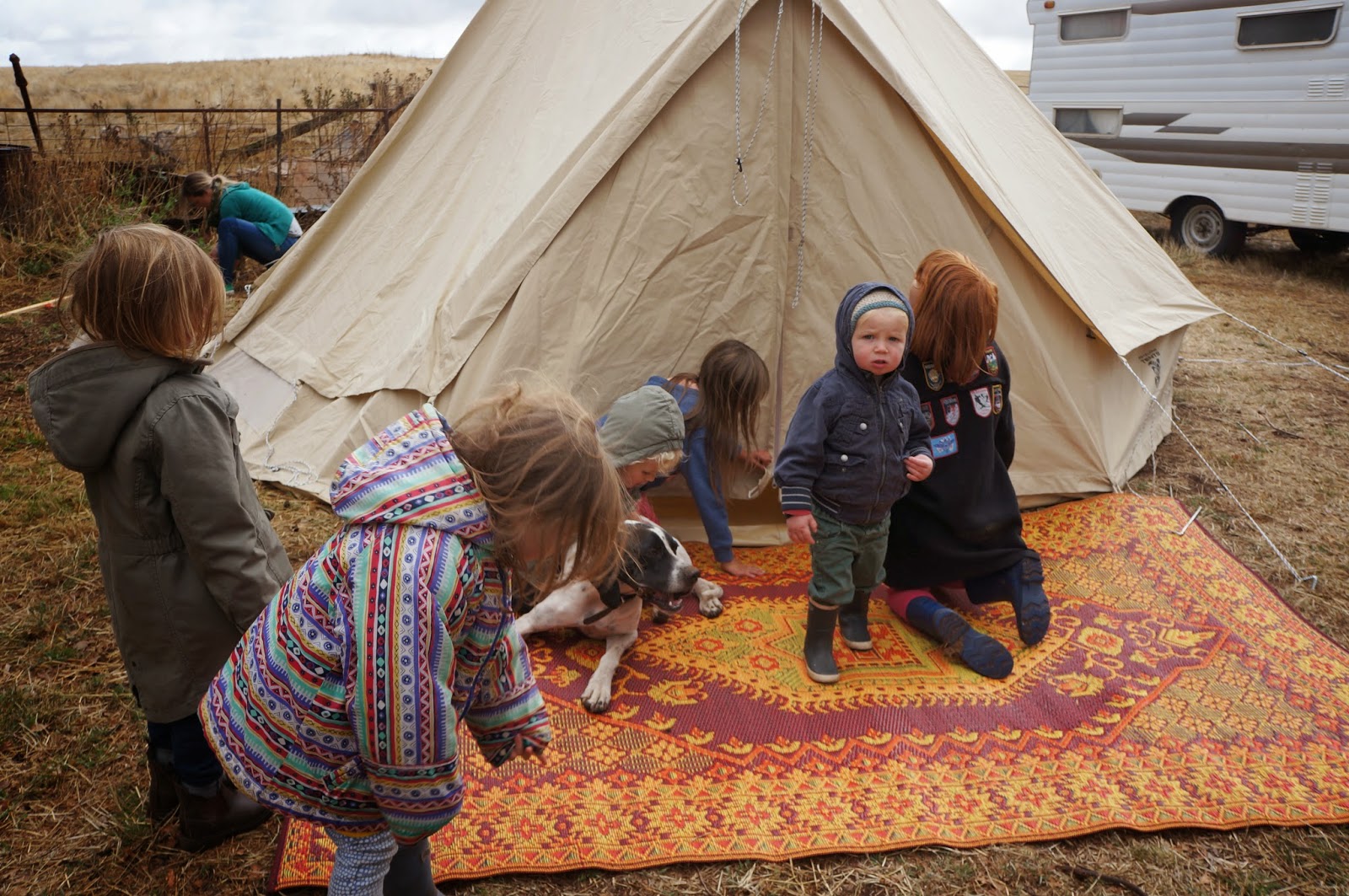
Not having any kind of cultural attachment to communities who have these traditions, I wannabe-ed myself amongst it with a bunch of strangers. Well, almost strangers. Rohan and Kate were my ‘in’ after the self-sufficiency workshop last August. http://lyttelfishbigpond.blogspot.com.au/2013/08/low-and-slow.html City girl once again grabbing sound-bytes of authentic experience.

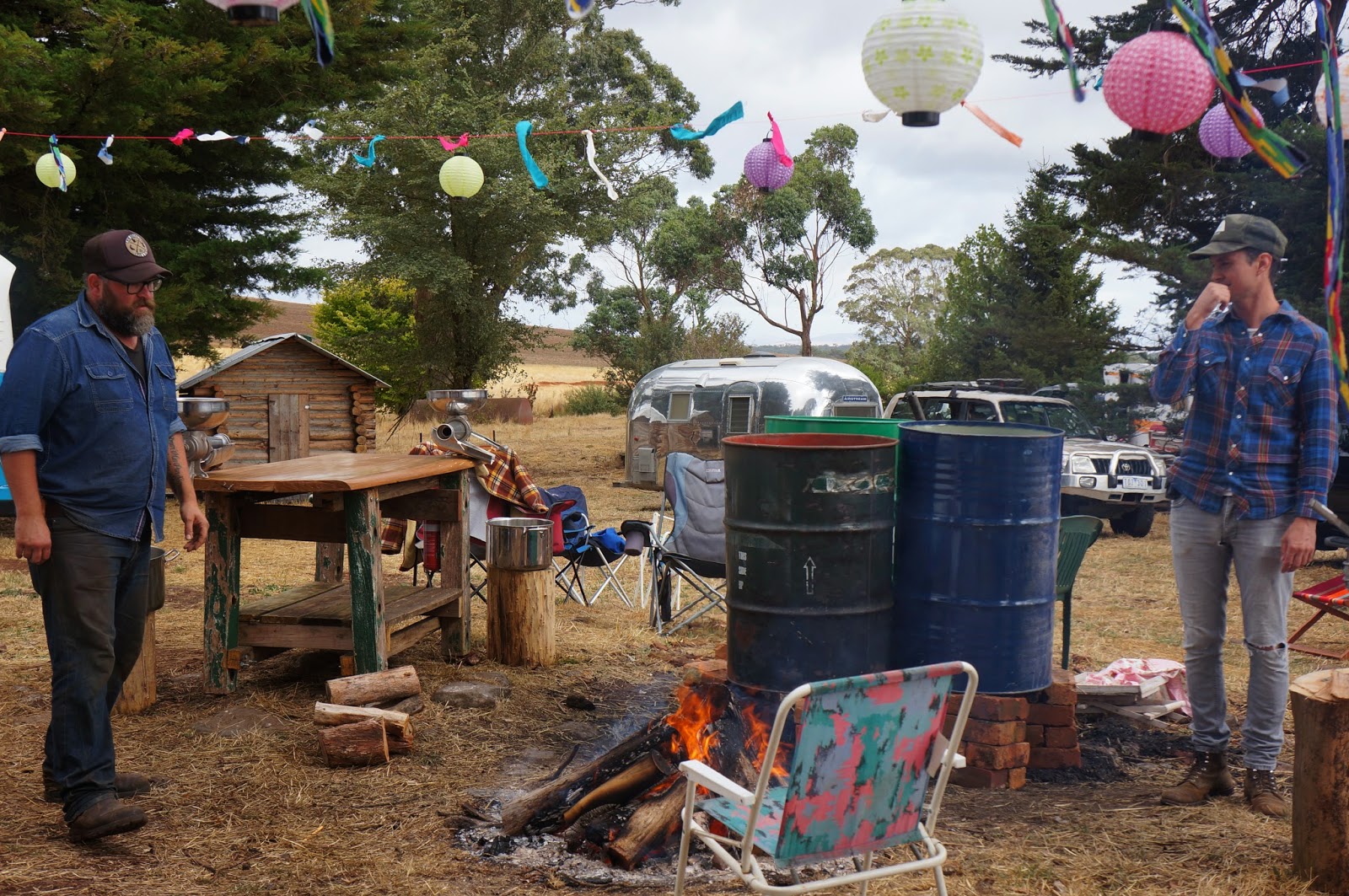
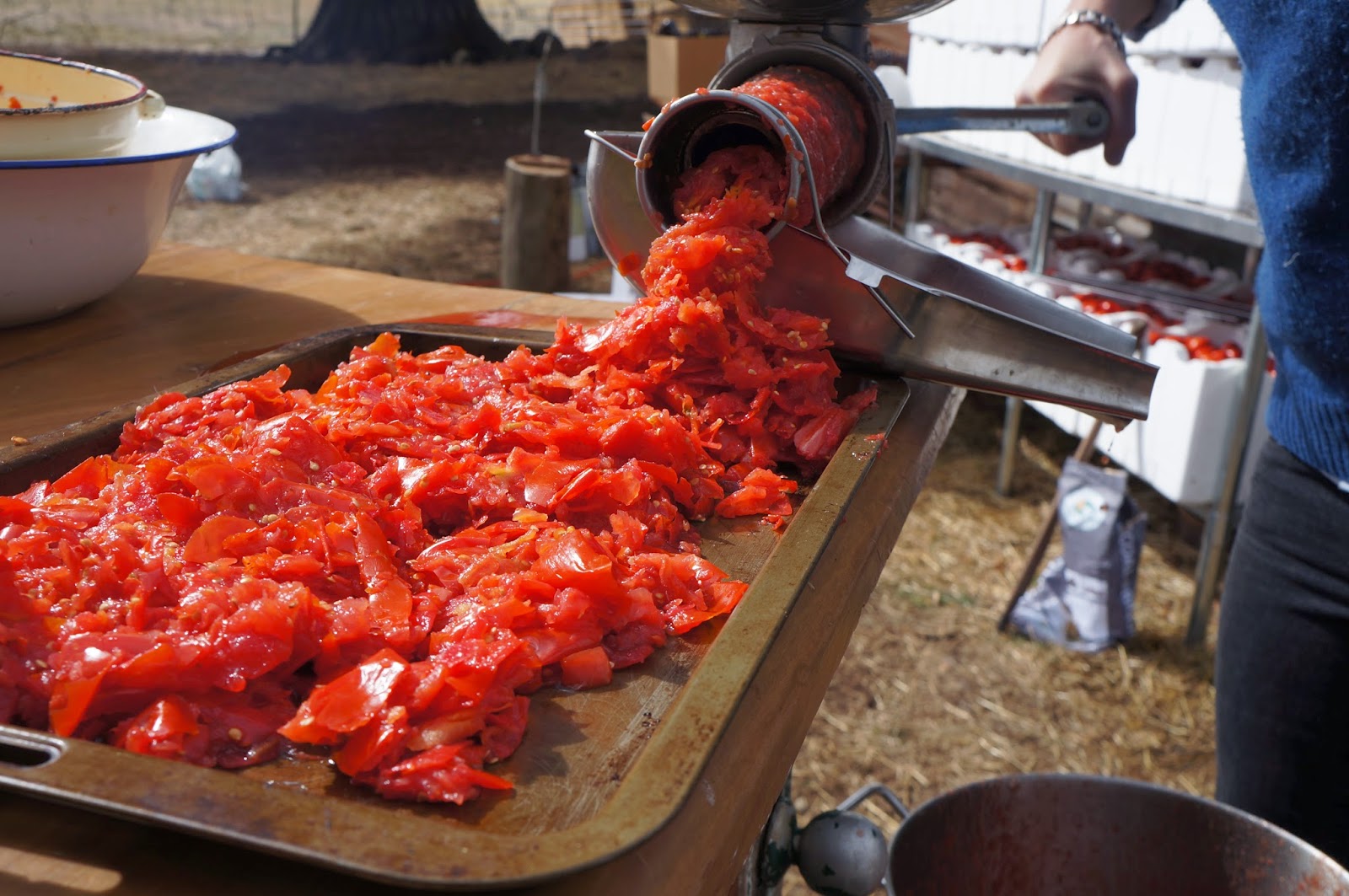
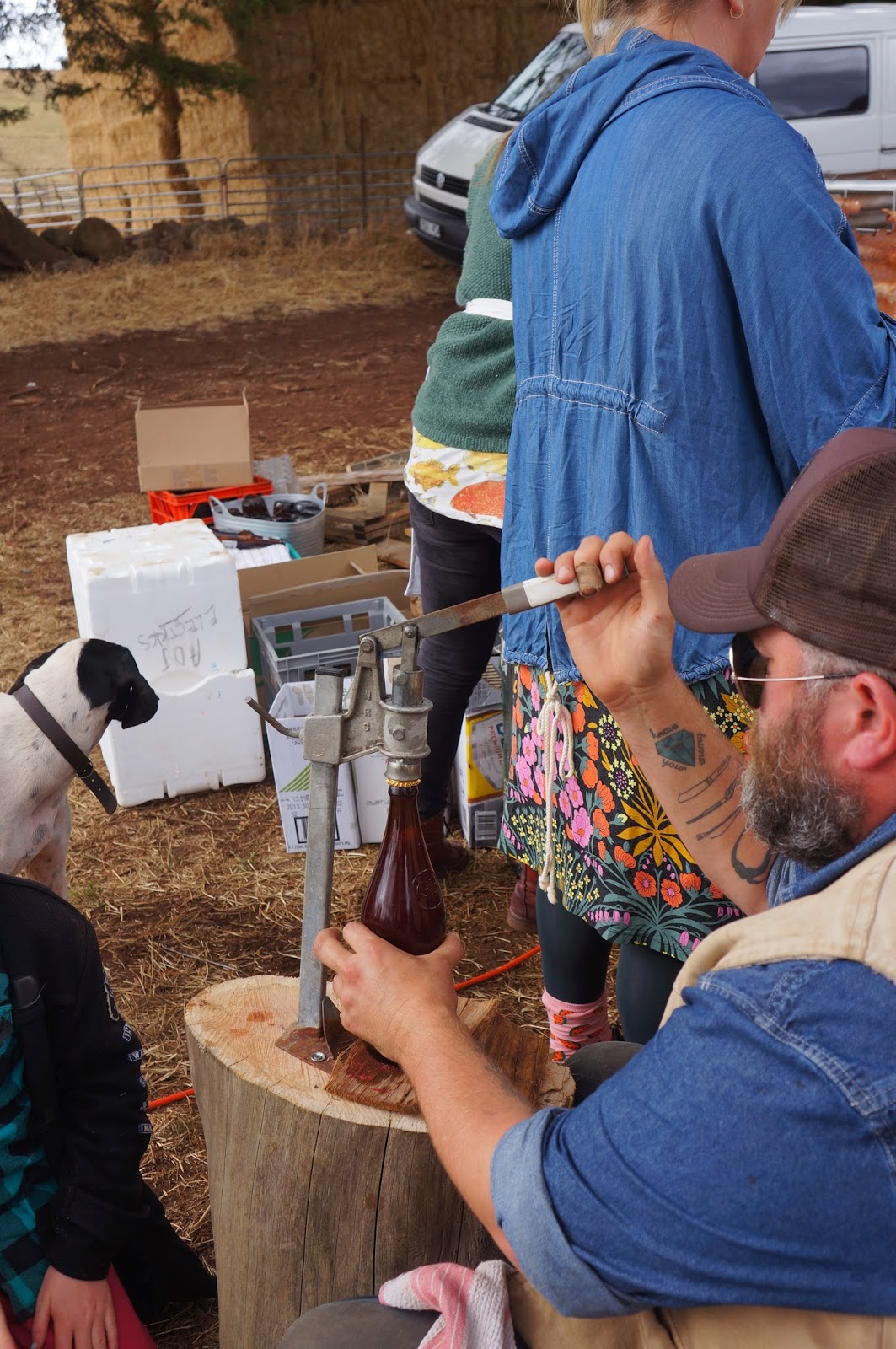
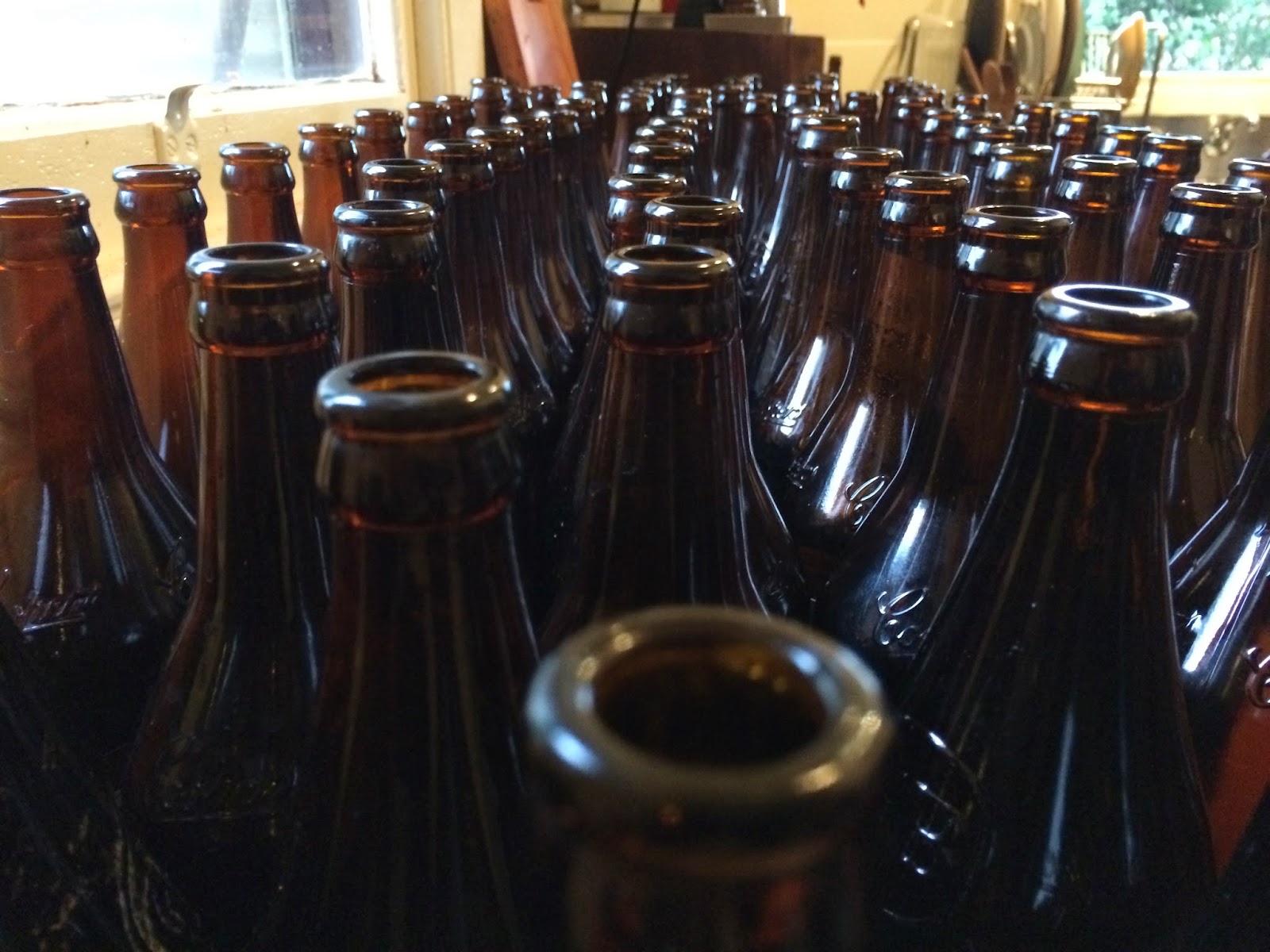
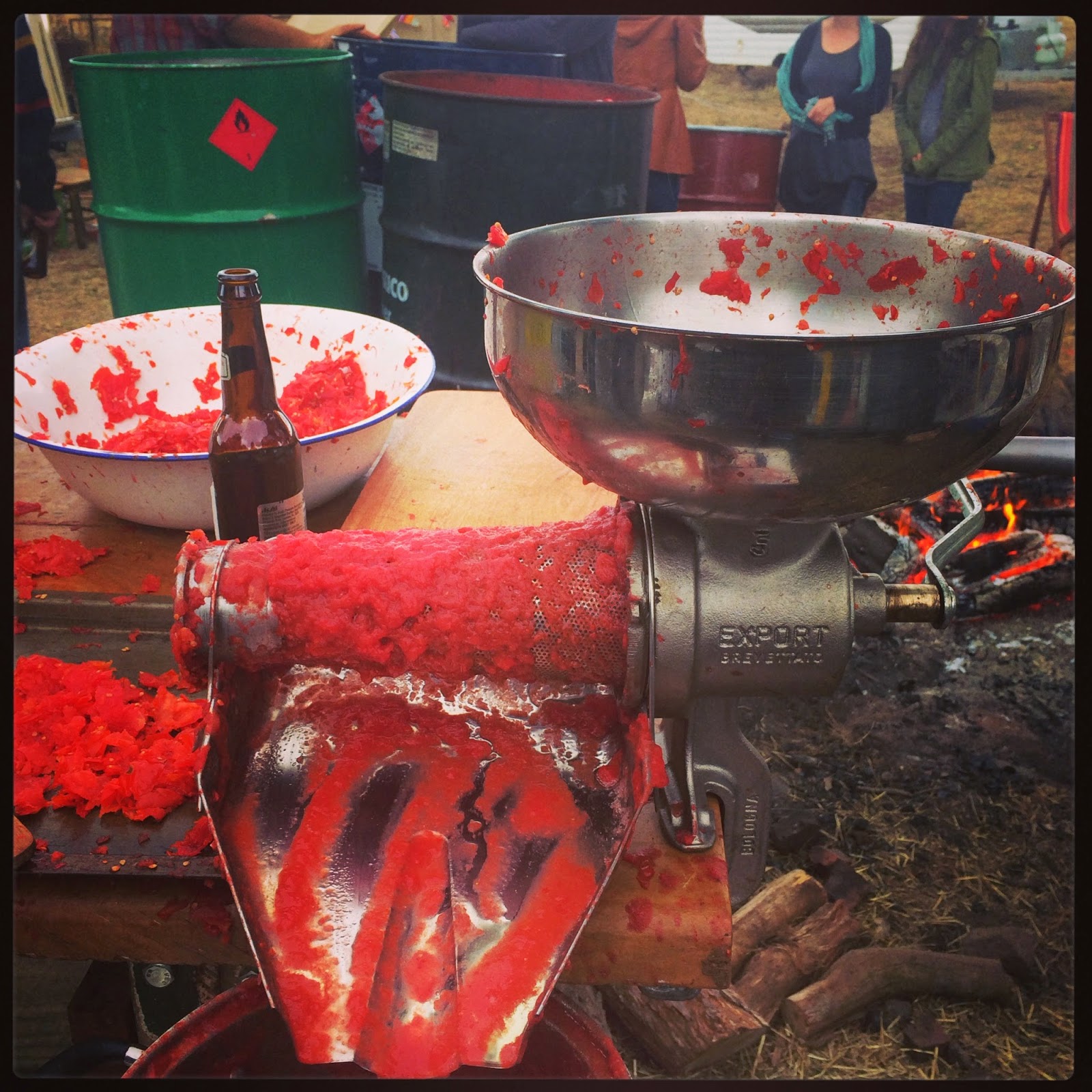
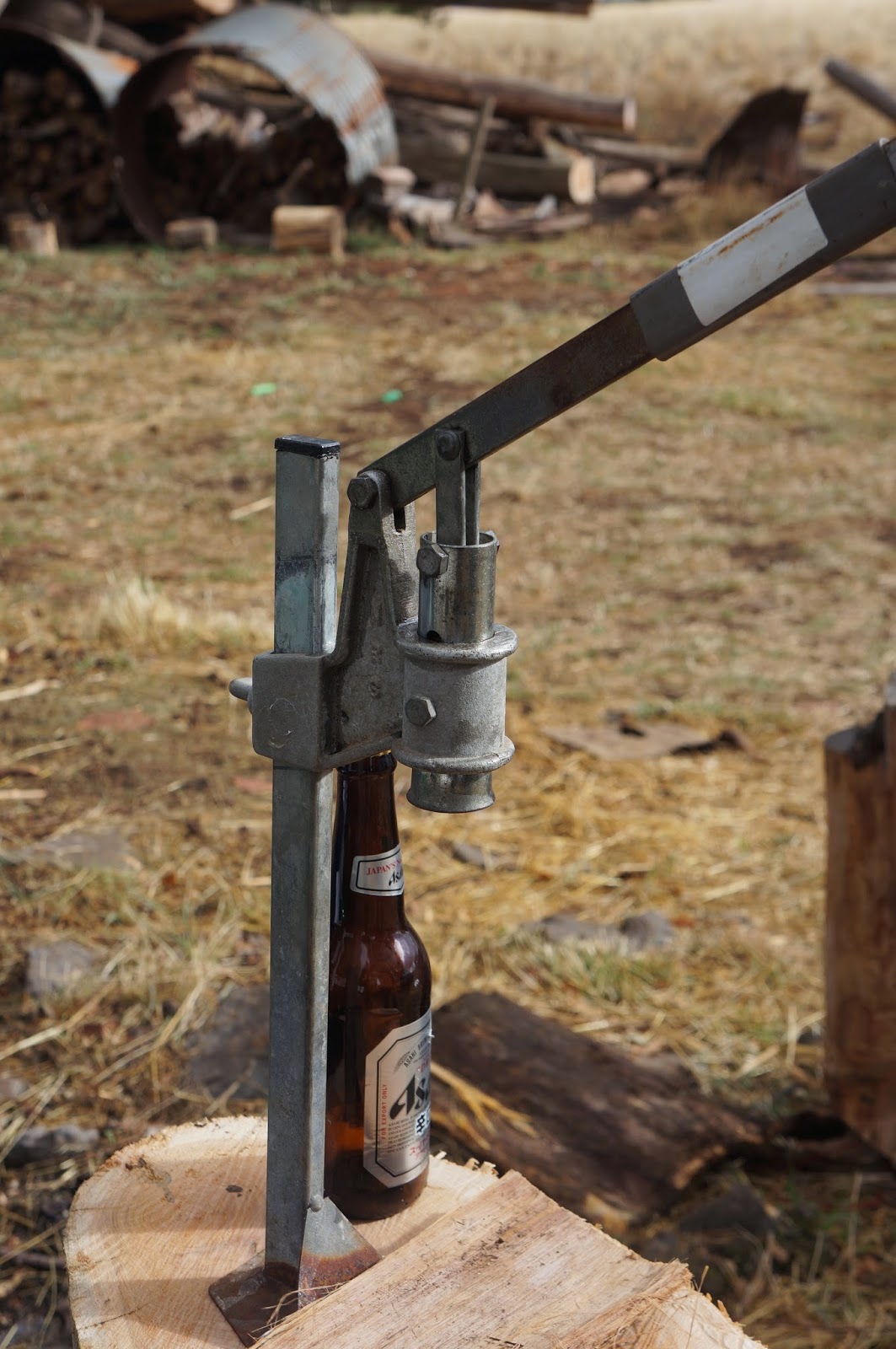
It was a big day. There were a lot of tomatoes. The tomatoes are softened in big pots of hot water then passed through a tomato press, twice. Then bottled, capped and put into big drums of hot water over a fire for the final heating and sterilising. I spent most of my time on the tomato press. I have a blister and a tired arm. And I also have 12 Asahi bottles of passata.

Passata Day isn’t just about making tomato sauce. It’s about bringing people together, sharing and talking and working and laughing. And it’s about the moment, maybe months later when you open a bottle of passata, and you get to taste Summer again.