The first time I tasted whisky was in the Highlands. I was on a Highland Fling. This sounds a lot more exciting than the reality. The fast-paced tour of the Highlands in a mini-bus was tantalisingly called a highland fling and by the end of the four days I did feel as though I had been flung from Edinburgh to Glen Coe to Culoddin to Sterling. I loved it and had some sort of nostalgic feeling of belonging to this country my parents were born in.
Anyway. The whisky. When we crossed the line into the highlands, our tour leader pulled off the road with, I seem to recall, a skid. She pulled out a bottle of Dalwhinnie seemingly from nowhere, filled glasses and made us all salute the Highlands.
Dalwhinnie is a highland single malt and tastes like the moors. Well, the moors on a rare sunny day where the scent of warm honeyed flowers is in the air. It is floral and light and, to me on that first tasting, like golden nectar.
Whisky has many faces and reputations attached to it. It can be top-shelf or cheap and paper baggish. The kind of whisky I’m talking about is single malt and, therefore tending to the top shelf, although I can’t really afford the very top shelf of whiskies. Some of the ‘best’ whiskies have been in storage for decades. A decanter of Macallan 1946 went for $460,000 in 2010. Glenfiddich had a barrel of whisky that had been ageing since New Year’s Eve 1955. When Janet Sheed Roberts, the granddaughter of Glenfiddich’s founder William Grant, died at the age of 110, the company decided to honour her by making 15 bottles from the aforementioned barrel. An American whisky connoisseur bought a bottle for $94,000.
So these kinds of prices are way too fancy pants for me. Clearly. But why are some whiskies more expensive than others and where does the ‘e’ come into it?
Whisky is from Scotland. Whiskey is Irish. And then there’s Bourbon. All bourbon is whisky but not all whisky is bourbon. Tricky, isn’t it. Whisk(e)y can be made anywhere in the word with differing degrees of success and acclaim and price tags. Bourbon can only be made in the US. The US got all French about the appellation of Bourbon, attaching a rigid set of rules to what can be labelled Bourbon. Firstly, Bourbon has to contain at least 51% corn (as opposed to whisky whisky nancy whisky which can be made with any combination of grains), bourbon must be produced at no more than 160 proof (80% alcohol by volume vs. less than 190 proof for whisky), bottled at no more than 80% alcohol by volume (whisky is no less than 40%) and bourbon must be stored in NEW oak containers whereas whisky doesn’t mind hijacking the flavours of other alcohol. In fact, most Scottish whisky distillers will use American bourbon casks for the first 12 years of single malt maturation before transferring them to French oak for the finishing touch.
So there you go. Fascinating.
But where did all this talk and wondering about whisky come from?
A whisky tasting.
I like knowing about stuff, finding out more. Stretching my mind and my experience. We’ve established I loved the whisky I saluted the highlands with. And I didn’t stop there, I drink whisky. I like it. A lot. Some people question that. Whisky can seem harsh and inaccessible. I think it’s just about knowledge.
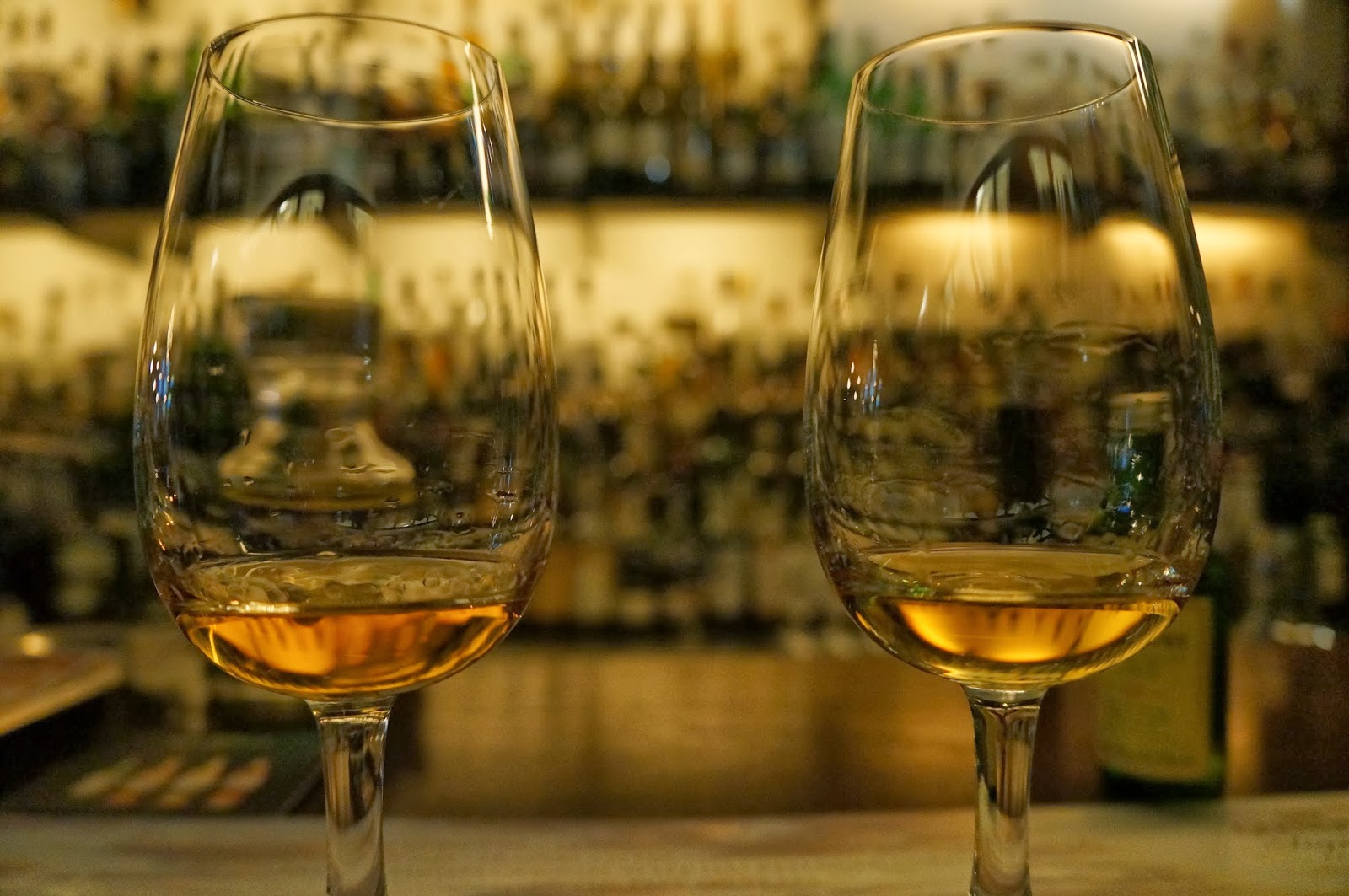
Knowledge abounded at the Whisky and Alement tasting. It was a rainy, cold Melbourne evening and the cosy bar with a wall of whisky was cosy and inviting. I felt as though I had teleported into Scotland. To add to this slightly skewiff feeling before I had even started sampling the drink, was the fact that the person leading us through the tasting was Scottish.
Laura Hay is fresh off the boat from Scotland. She is the perfect person to be the Glenlivet/Chivas ambassador in Australia. Laura loves whisky. I mean really loves it. With an ardour far exceeding moderation. Laura lived three doors down from the Glenlivet distillery. She has been involved with whisky since she can remember. Laura doesn’t make snowmen, she makes snow bottles of whisky. Loves. It.
So, despite the fact that Laura has talked about whisky many times to many assembled groups of people, her enthusiasm was infectious and it felt as though we were her first collective, the first set of people she wanted to share the love with.
The Glenlivet distillery was founded in 1824 and has operated almost continuously since then. It draws water from Josie’s Well. The barley comes from Crisp Malthings, Portgordon. Glenlivet’s stills are lantern shaped with long narrow necks and this combination of ingredients and tools, creates a light tasting spirit, not the ashy, peaty flavours of other single malts.
The whisky is matured in either casks which have been used for bourbon or those which were used for sherry and port. This also has a bearing on the matured flavour.
The science happens in the distillery, the magic happens in the cask.
Glenlivet is categorised as a Speyside distillery. This is the area around the Rivery Spey in northeastern Scotland. Speyside whiskies are generally classified as light and grassy, which the Glenlivert are, or rich and sweet, as some other distilleries in the area are.
A distiller may make several different versions of their whiskies available, perhaps different age statements or with different finishes. Each of these will be known as an expression, which sounds very poetic to me.
The tasting.
1. 12 year old
Bright and lively gold. Smells like tropical fruits, maybe pineapple.
NOTE. Nosing the whisky. Single malt whisky is the most complex whisky in the world. Put your nose in the glass and inhale. It’s best to have your mouth slightly open so that you are not overwhelmed by the alcohol content. Ethanol can be a shock to the system. The idea is to appreciate the aromas. Take your nose away from the glass, then return to breathe again. Get to know the whisky. Then drink. The initial flavours are fruity: fresh peaches and pears, vanilla (probably from the bourbon cask). But there are nuts there…almonds, marzipan, hazelnuts.
2. 15 year old
The whisky is in American oak casks for the first 13-14 years and then transferred to new French oak casks for the last year. Limousin oak provides a vanillin flavour.
Deeper gold.
Rich with creamy toffee. Orange peel. Still the nuts. Toasted this time.
George Smith was the founder of the distillery. Whisky distilleries had been around for centuries but during prohibition, may went underground. The women made the whisky and the men smuggled it.
When King George IV visited Scotland for the first time in 1832, he demanded that some of George Smith’s whisky be brought to him in Edinburgh , so endorsing the illegal drink.
3. Nadurra
16 years in cask. Nadurra is the purest expression of whisky. Almost as it would have been drunk, straight from the cask as they did in the old days. It’s name means natural in gaelic and the distillers refrain from chill filtering it, leaving it at barrel-strength. The alcohol content is enhanced, as is the experience.
Gold.
Floral and sweet spice.
Smooth and silky. Honeyed.
Adding a little water enhances the flavour, brings out the ginger.
4. 18 year old
Golden autumn.
Elegant and complex. Rich and sweet.
Smooth with bursts of spice and oranges.
The angels’ share is the 2% of volume which evaporates each year the whisky matures. I like that the angels take their share. I hope they enjoy it.
















































 lyttelfishdotcom